Introduce
Choosing the correct HDPE liner thickness is critical for any geomembrane containment project. Global buyers often make two costly mistakes: choosing ultra-thin liners to cut upfront costs, which leads to tearing and leakage, or overbuying thick materials that cause unnecessary transportation and material waste.
Made of high-density polyethylene resin, HDPE liners deliver excellent chemical resistance, UV stability, and puncture resistance. They are widely used in aquaculture, landfills, mining, and wastewater treatment. This guide explains how to pick the optimal HDPE liner thickness to balance cost, durability, and long-term project safety.
1. Why HDPE Liner Thickness Matters?
In the geosynthetic industry, liner thickness directly determines the comprehensive physical performance and overall service life of HDPE geomembranes. Many buyers underestimate the influence of tiny thickness gaps. Even a 0.5mm thickness difference can significantly change critical indicators, including puncture resistance, tensile strength, anti-tearing property, and outdoor weather resistance.
1.1 Impact on Project Durability
Thicker HDPE liners can steadily withstand heavy water pressure, sharp broken stones, and long-term external friction. They maintain stable physical performance even in harsh natural environments with extremely high and low temperatures or severe chemical corrosion. This advantage makes thick liners irreplaceable for industrial heavy-duty projects.
1.2 Impact on Project Budget
It is undeniable that thicker liners mean higher raw material production costs and higher container transportation fees due to increased weight. For simple, low-demand containment projects, unnecessarily thick liners will severely compress the profit margins of engineering contractors and wholesale distributors.
1.3 Impact on Installation Difficulty
Ultra-thick HDPE liners are stiff and difficult to bend or fold. Such materials require professional hot welding equipment and highly skilled local construction workers. Complex installation conditions will inevitably prolong construction time and greatly increase overall labor costs for overseas projects.
2. Core Factors to Determine HDPE Liner Thickness
Before placing bulk orders with HDPE liner manufacturers, every overseas buyer needs to analyze four core decisive factors to avoid blind and irrational selection. These universal evaluation indicators apply to all conventional commercial and industrial containment projects across global regions.
2.1 Project Application Scenario
Different industrial sectors have distinct anti-seepage, anti-corrosion, and pressure-bearing requirements. The actual application scenario is always the primary basis for reasonable thickness selection, which cannot be generalized with a single standard specification.
2.2 Subgrade and Base Condition
Flat and smooth sandy or clay foundations are completely suitable for thin and lightweight liners. In comparison, rough subgrades mixed with sharp gravel, broken rocks, and hard impurities require thicker liners to prevent irreversible piercing damage during installation and daily operation.
2.3 Expected Service Life
Short-term temporary projects with a usage cycle of 1 to 3 years prioritize economic benefits, so thin and cost-effective liners are the best option. For permanent fixed projects that need more than 10 years of service life, thickened liners are essential to resist natural UV aging and long-term material fatigue.
2.4 Liquid Properties
Pure domestic water and neutral raw water require relatively low chemical resistance. However, complex media such as municipal sewage, mining acidic leachate, and industrial composite wastewater definitely need thicker liners for enhanced long-term corrosion resistance.
3. HDPE Liner Thickness Recommendation by Industry
Combining international engineering standards and our real export cases, we summarize universal industry thickness standards for global geomembrane projects. Overseas buyers can quickly match the most suitable liner specifications according to their specific project types.
3.1 Aquaculture & Small Water Ponds (0.5mm – 1.0mm)
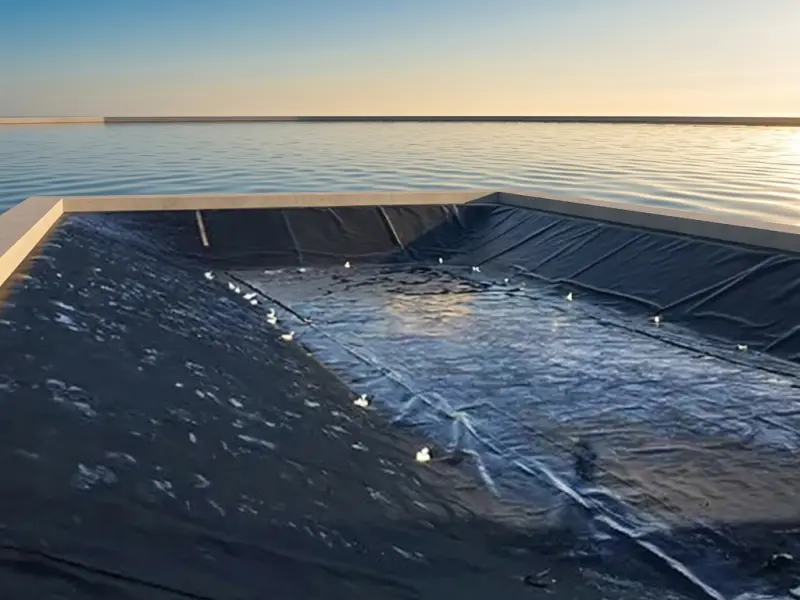
Common fish ponds, commercial shrimp farms, and small landscape ponds feature low water pressure and manually smoothed subgrades. For these conventional aquaculture projects, a thickness of 0.5mm to 1.0mm is completely sufficient to meet daily usage demands.
This thickness range boasts high cost performance, lightweight texture for easy transportation, and simple installation and daily cleaning. It fully meets basic anti-seepage needs for aquaculture without causing extra material waste for small-scale farm owners.
3.2 Water Reservoirs & Artificial Lakes (1.0mm – 1.5mm)
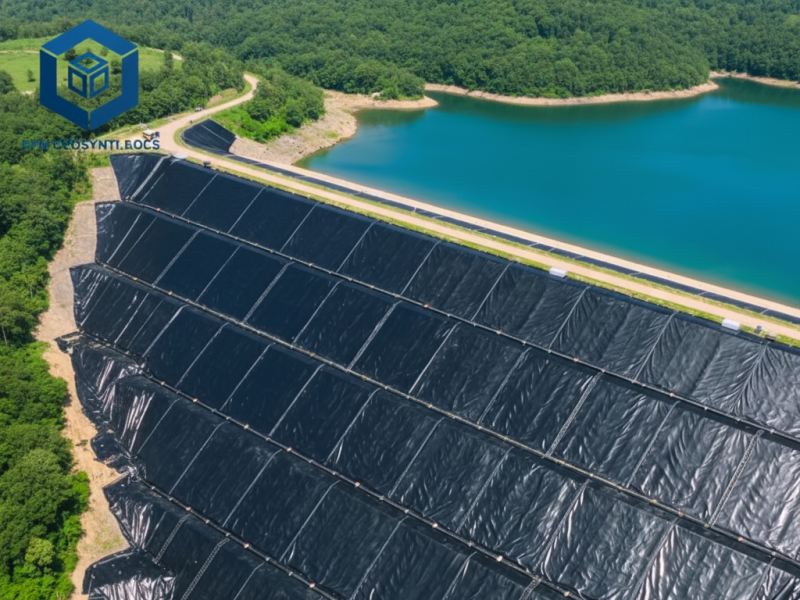
Medium-depth artificial water bodies with a depth of 1.5 to 6 meters bear stable and continuous water pressure all year round. In this case, 1.0mm to 1.5mm HDPE liners are recognized as the best choice by global engineering teams.
These medium-thickness liners have strong tensile resistance to adapt to seasonal water level fluctuations. They can also effectively prevent underground water leakage and peripheral soil erosion for large water storage facilities.
3.3 Municipal Landfills & Sewage Lagoons (1.5mm – 2.0mm)
Municipal landfills and sewage lagoons contain a large amount of toxic organic leachate and harmful chemical residues. To comply with strict international environmental protection regulations, 1.5mm to 2.0mm thick liners are mandatory for such public infrastructure projects.
Thickened HDPE raw materials can tightly block the penetration of harmful substances, effectively protecting the peripheral soil and underground groundwater from long-term irreversible pollution.
3.4 Mining & Industrial Chemical Tanks (2.0mm – 2.5mm)
Mining heap leach pads and industrial chemical storage tanks face the harshest service conditions, including strong acid-base corrosive liquids, frequent heavy machinery rolling, and sharp, hard ore residues. For these high-risk scenarios, the recommended thickness is 2.0mm to 2.5mm.
This ultra-thick specification provides ultimate puncture resistance and stable chemical inertia, ensuring long-term safe operation for high-risk industrial mining and chemical projects.
4. Common Thickness Selection Mistakes to Avoid
4.1 Only Focus on Low Price
Many inexperienced overseas buyers deliberately choose ultra-thin liners below 0.5mm to reduce initial procurement costs. However, these thin products are extremely easily damaged during laying and construction, leading to project rework, water leakage losses, and much higher long-term comprehensive costs.
4.2 Blindly Pursue Extra Thickness
Blindly pursuing extra thickness is another common mistake. Applying 2.0mm industrial-grade thick liners for ordinary small fish ponds causes serious budget waste. Moreover, excessive thickness will also increase container transportation pressure and on-site hot welding difficulties.
4.3 Ignore Environmental Exposure Time
Most buyers ignore the influence of outdoor exposure time. All outdoor uncovered projects must select thicker anti-UV liners. Common thin materials age rapidly under long-term direct sunlight and will crack and lose impermeability within 2 to 3 years.
5. Bonus Tips: How to Optimize Your HDPE Liner Purchase
5.1 Match Thickness with Surface Treatment
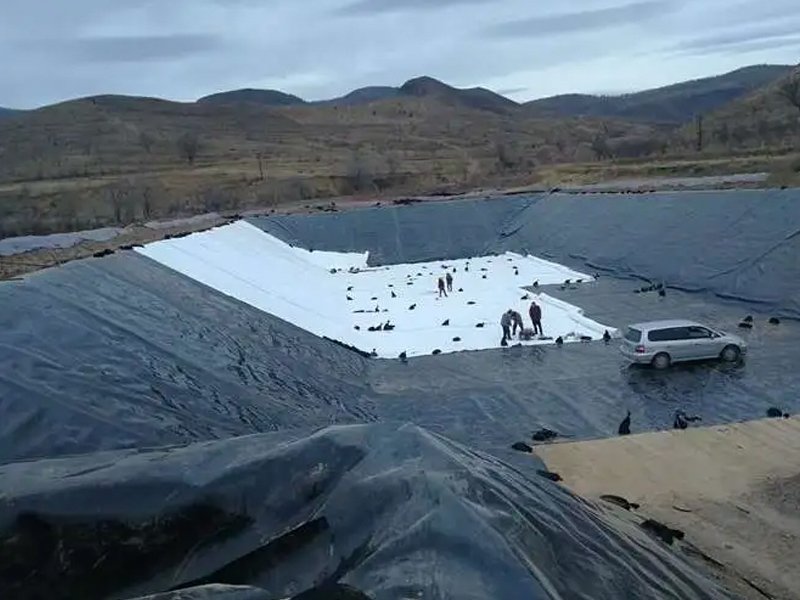
For construction sites with rough and uneven subgrades, buyers can lay an extra layer of non-woven geotextile as a protective cushion. This practical method allows engineers to use standard-thickness liners instead of upgrading to expensive ultra-thick customized products.
5.2 Prioritize Virgin HDPE Raw Materials
We strongly recommend that buyers prioritize virgin HDPE raw materials. Virgin-grade liners have uniform and stable actual thickness without cutting corners. In contrast, recycled HDPE materials usually have uneven thickness, poor toughness, and inferior outdoor weather resistance.
5.3 Consult Manufacturers for Custom Solutions
If your projects have special extreme requirements, such as ultra-low temperature resistance, high salt corrosion, or high-pressure bearing, do not decide specifications blindly. Contact reliable manufacturers in advance for customized thickness and professional anti-aging raw material formulas.
6. Final Conclusion
After reading this complete guide, you can summarize the selection logic: thin for light use, thick for harsh conditions. Always confirm the application scenario, subgrade flatness, and expected service life before bulk ordering.
Keep this clear industry standard in mind: 0.5-1.0mm for conventional aquaculture, 1.0-1.5mm for large water storage facilities, 1.5-2.0mm for municipal waste treatment, and 2.0-2.5mm for the heavy-duty mining industry. Reasonable specification matching helps every buyer balance product cost and long-term performance.
Need a free HDPE liner thickness consultation for your ongoing project? As a professional HDPE geomembrane exporter, we provide one-to-one, customized project-matching services. Feel free to send us your detailed project parameters to get an accurate personalized quotation right now.