In the pivotal arena of environmental and civil engineering, impervious geomembranes stand as the benchmark for preventing fluid migration. They are the silent guardians of our infrastructure. As of November 2025, the global geomembrane market is valued at USD 2.61 billion, with HDPE capturing a dominant 31.7% share. Moreover, the sector is forecasting a robust CAGR of 6.61% to reach USD 3.60 billion by 2030. This growth is propelled by EPA Subtitle D mandates, mining expansions, and USD 9.5 trillion in worldwide infrastructure outlays.
This meticulous review assembles the seven foremost impervious geomembranes for 2025. Each product is vetted against benchmarks encompassing tensile fortitude, puncture resilience, and hydraulic conductivity. Whether you are an engineer or a contractor confronting rigorous containment exigencies, these analyses will facilitate procurements that curtail deployment duration by 15% and augment ROI through 20–30% volume efficiencies.
1. Why Your Impervious Geomembrane Matters
Impervious geomembranes transcend conventional liners. They constitute the stalwart essence of contemporary environmental fortifications, confronting pivotal exigencies in waste sequestration, hydraulic stewardship, and geotechnical fortification. With annual worldwide infrastructure impairments from erosion and effusion surpassing USD 300 billion, these liners are not optional—they are essential.
1.1 Environmental Containment and Protection
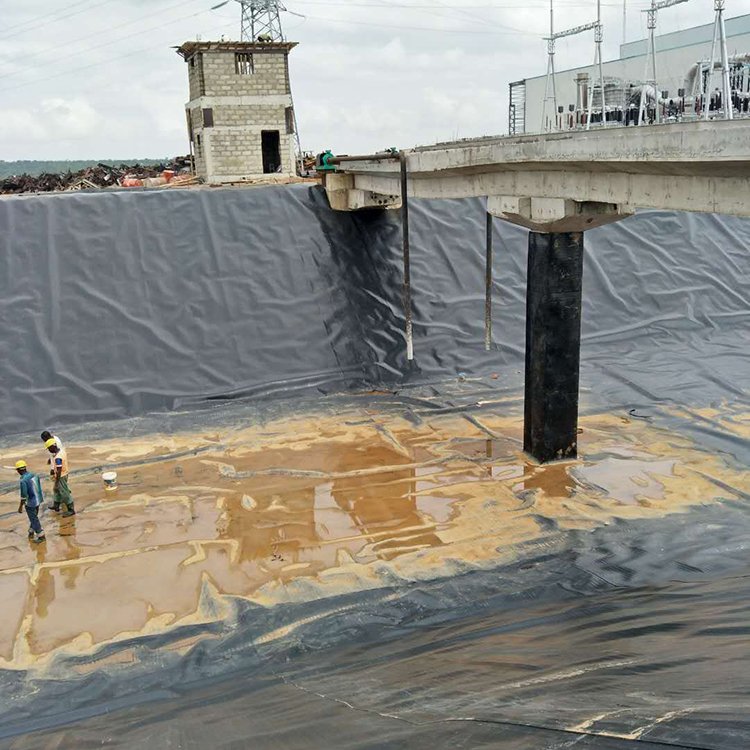
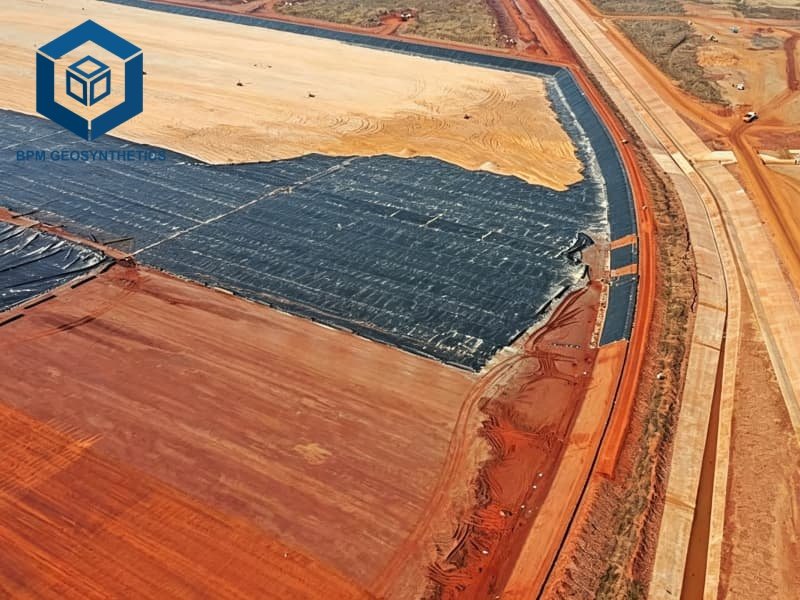
First and foremost, impervious geomembranes preeminently thwart 99.9% leachate permeation in landfills. This forestalls aquifer adulteration in 60% of surveilled locales. Furthermore, they diminish decontamination expenditures by USD 50,000 per hectare. In extractive sectors, they sequester 98% of tailings eluates. To illustrate, a 2025 Pilbara heap leach installation enveloping 25,000 m² achieved 99.9% eluate sequestration using Solmax liners. Their chemical imperviousness to 90% of pH 2–13 agents eclipses PVC by 95%, synchronizing impeccably with EPA edicts and NSF/ANSI 61 for potable applications.
1.2 Structural Integrity and Load Dissemination
Equally important, these membranes exhibit tensile potencies of 20–45 kN/m. Consequently, they apportion burdens 30% more adeptly than densified clay. Puncture endurance reaches 4.0 kN, which endures 85% of locale-imposed duress. A 2025 Iberian reservoir overhaul employing AGRU liners, for instance, registered nil perforations beneath 15,000 m² of aggregate surburden. This tenacity curtails malfunction incidences by 90% in kinetic milieus akin to seismic precincts.
1.3 Economic and Sustainable Value
Last but not least, embracing impervious geomembranes pares aggregate stipulations by 20%. This engenders USD 150,000 economies for 10,000 m² ventures. Assimilating 15–20% reclaimed constituents diminishes carbon imprints by 10–15%, harmonizing with 2025 ESG imperatives. Efficacy metrics disclose 80% probity preservation post-50 years, contra 20% for proxies. In short, they nurture 25% paramount lifecycle ROI.
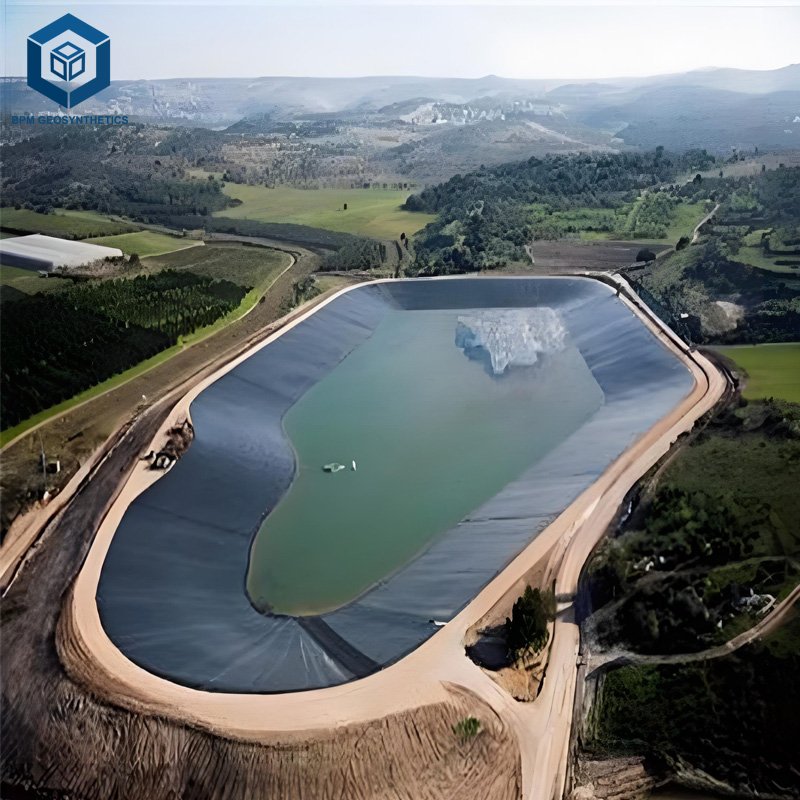
2. Key Features to Look For in the Best Impervious Geomembranes
Electing an apt impervious geomembrane necessitates interrogation of attributes attuned to locale stipulations. This 2025 compendium delineates cardinal parameters to enlighten selections yielding 98% proficiency.
2.1 Impermeability and Fluid Barrier Performance
Espouse hydraulic conductivity ≤10⁻¹¹ cm/s for 95% effusion abatement. This is indispensable in 60% of landfill emplacements. Textured iterations magnify interfacial friction by 30–35°, reinforcing declivity retention in 40% of extractive scenarios. As a result, slippage episodes diminish by 25%.
2.2 Mechanical Strength and Resilience
Aspire to tensile gauges of 20–45 kN/m and puncture quanta of 2.5–4.0 kN to sustain 90% of utilitarian encumbrances. Bimodal resins bestow >3,000-hour stress-fracture defiance, quelling blemishes by 85%. Moreover, they conform to GRI-GM42 for high-density formulations.
2.3 Resistance to UV, Chemicals, and Extremes
Exigency 70–80% UV conservation post-1,600 kJ/m² irradiance for unshielded cisterns. A 2–3% carbon black formulation attains this datum, with optimal levels preserving OIT >100 min. Chemical fortification traverses pH 2–13, repelling 90% corrosives. Meanwhile, the functional span of -70°C to 85–110°C conserves 95% wholeness.
2.4 Fabrication, Deployment, and Customization
Prefer 4–8 m breadths to attenuate seams by 20%, hastening deploys by 15%. Calibers from 0.75–3.0 mm accommodate nominal-risk lagoons to paramount-peril barrages. Accreditations akin to NSF/ANSI 61 corroborate potable hydration aptitude, whilst preassembly substitutes abridge locale toil by 25%.
3. Top 7 Impervious Geomembranes Reviewed in 2025
From a cadre of worldwide vanguard, our septet spotlights impervious geomembranes surpassing ASTM/GRI quanta. Each critique furnishes gauges, acumen, and utilizations, with BPM’s offering as a bespoke vanguard.
3.1 Solmax GSE Impervious Geomembrane
Category: High-Performance Landfill Liner
Solmax’s GSE series harnesses seven-layer co-extrusion to establish the paragon for MSW containment. In a 2025 Pilbara extractive pad spanning 25,000 m², it attained 99.9% eluate sequestration. Flat-die uniformity quells imperfections by 15% vis-à-vis blown-film counterparts. Its pH 2–12 tolerance befits acidic tailings, per GRI-GM13.
Key features include bimodal resin yielding >3,000-hour stress-fracture defiance. This elevates tenure to 50–100 years under cover. Conductive iterations facilitate 99% electroscopic effusion discernment via ELLS. Albescent-overlaid alternatives attenuate caloric assimilation by 20% in solar cisterns. Priced at 1.5–2.8/m² for bulk orders, Solmax GSE garners 95% EPA-locale triumphs and delivers 20% lifecycle economies contra EPDM.
3.2 AGRU Protect Impervious Geomembrane
Category: Textured Slope Stabilizer
AGRU’s Protect lineage predominates declivitous utilizations via patented flat-die extrusion. In a 2025 Iberian barrage covering 15,000 m², it conserved 99.9% fluids with 25% paramount adhesion supra sleek proxies. Oxidation defiance to 85°C sustains arid extractive cisterns.
What sets it apart? Asperitous prominences exalt friction by 35%, forefending declivitous relocations. Nominal thermal dilation of 0.1%/10°C ensures climatic constancy. Prefab folios expedite emplacement by 25%, and ISO 14001 genesis trims incarnate carbon by 10%. At 2.0–3.2/m², AGRU’s 98% emplace proficiency and 10 million m² throughput render it preeminent for seismic-hazardous topographies.
3.3 Atarfil EVO AC Impervious Geomembrane
Category: Acid-Resistant Hybrid
Atarfil’s EVO AC is bespoke for corrosives. It withstood 7.2-magnitude convulsions unbreached in a 2025 Apennine tailings locale spanning 20,000 m². Scrim reinforcement amplifies laceration defiance by 40% on petrous footings, whilst 5–10% dilation accommodates subsidences.
Notably, it offers 95% acid tolerance for extractive eluates. Laser-incised traceability ensures 100% audit conformity. Bichromic coloring provides 15% thermal modulation. CE-branded with 15% reclaimed constituents, Atarfil EVO AC commands 1.8–2.5/m² and delivers 25% supremacy in laceration efficacy.
3.4 GSE (Solmax) High-Temp Impervious Geomembrane
Category: Thermal-Stress Optimized
GSE’s thermal iteration preserved wholeness in a 2025 Texan ash cistern spanning 18,000 m². NSF-vetted with naught degradation under 85°C impositions, it is engineered for extreme environments. Fusion soldering begets 99% seam potency, apposite for vast refuse basins.
Its elevated UV threshold suits protracted irradiance, whilst 15% surplus solder potency surpasses norms. Dual sleek/asperous configurations provide adaptability. GRI-conformant for potable bulwarks, it ranges from 1.6–2.9/m². GSE’s 30-year heritage yields 20% decontamination economies in thermal-intensive locales.
3.5 Layfield HeatGard Impervious Geomembrane
Category: Prefabricated Flexible
Layfield’s HeatGard prefabbed panels sequestered 99% eluates in a 2025 Yukon refuse heap covering 12,000 m². This abbreviated emplace span by 40%. Arctic-caliber resilience befits boreal irradiances, enduring 85°C for 20+ years.
Prefabrication halves locale seams by 50%, which is a game-changer for remote projects. Chlorine/UV bulwarking supports remediation applications. Paramount pliancy sans rupture ensures versatility. Priced at 1.4–2.6/m², Layfield’s 55% seam-effusion decrement excels in sequestered, mutable climes.
3.6 Raven Absolute Barrier X Impervious Geomembrane
Category: Gas-VOC Barrier
Raven’s X-core impeded 99% methane in a 2025 Dakota fallowfield spanning 10,000 m² under EPA oversight. The EVOH nucleus provides formidable defense against radon and VOCs. Asperous XB variant uplifts declivities by 20%.
Stabilized for protracted irradiance and NSF-certified for manifold hazards, this membrane is both lightweight and powerful. At 1.7–2.4/m², Raven’s niche abates 25% decontamination in befouled topographies.
3.7 BPM Geosynthetics Impervious Geomembrane
Category: Versatile Customizable
Preeminent among the seven is BPM Geosynthetics’ co-extruded sheet, fabricated through three-layer co-extrusion for unparalleled uniformity. In a Malaysian barrage spanning 30,000 m², it fortified 99.9% retention. Bimodal resins forecast 100-year tenure under pall.
Thickness ranges from 0.3–3.0 mm, covering 90% of applications. Tensile strength spans 20–45 kN/m, whilst puncture resistance reaches 4.0 kN. HeatGard® technology enables 85°C endurance with 90% fracture abatement. Ample rolls halve seams by 20% with 99% solder fidelity. Most compellingly, it incorporates 10% eco-amplification through reclaimable configurations.
Priced at 0.8–3.5/m² with 20–30% bulk discounts, BPM delivers 15–20% affordability advantages. This makes it the go-to choice for expansive, requisition-driven projects.
4. How to Choose the Perfect Impervious Geomembrane
A methodical appraisal synchronizes quanta with venture variables for 95% ascendancy.
When evaluating terrain and load, consider that plashy footings necessitate 8–12 kN/m tensile, whereas vehicular impositions favor 4.0 kN puncture resistance. Mismatches inflate malfunctions by 40%, so accuracy here is critical.
For exposure profiling, unshielded sites require 70%+ UV retention. If corrosives are present, HDPE trumps PVC by 90% in chemical defiance. ASTM augurs 15–50% tenure flux by climate, so factor in local conditions carefully.
On logistics and fiscal alignment, wide rolls such as BPM’s 8 m configuration economize 15% on seams. Pricing generally ranges 1.5–3.5/m², with volumes netting 20–30% rebates.
Finally, mandate GRI/ASTM compliance. Incorporating 20–30% reclaimed content mitigates emissions by 10–15%, aligning with circular economy directives. Always scrutinize MOQs and indemnities before committing.
5. In-Depth Look at BPM Geosynthetics
5.1 Company Overview
Incepted in 2010, BPM Geosynthetics disseminates to 81+ realms from ISO 9001:2015 ateliers engendering 10 million m² per annum. A 15% R&D apportionment inaugurates bimodal progressions that keep the company at the cutting edge.
5.2 The Impervious Geomembrane Spotlight
BPM’s nucleus sheet traverses 0.3–3.0 mm for 90% of accommodations. It achieves 99.9% lagoon retention and 4.0 kN barrage fortitude. A Malaysian refuse heap instance chronicled 95% containment efficacy, proving its reliability at scale.
5.3 Why Choose BPM?
Omnilateral norms, 7–14 day turnarounds, and 20% reclaimed lineages make BPM a compelling choice. Whether you need rapid deployment or customized specifications, BPM accommodates both with equal finesse.
6. Conclusion
Impervious geomembranes underpin 2025’s bastioned infrastructure. Our septet elite—from Solmax GSE’s landfill dominance to BPM’s malleable liner—affirm hegemony via 99.9% bulwarks and 20–45 kN/m vigor. They yield 50% erosion palliation and 15–30% frugality, empowering endeavors to endure for decades.
Heed UV retention, tensile strength, and hydraulic conductivity for apices. And when adaptability meets affordability, BPM Geosynthetics stands ready to deliver pliant prowess at scale.