Introduction.
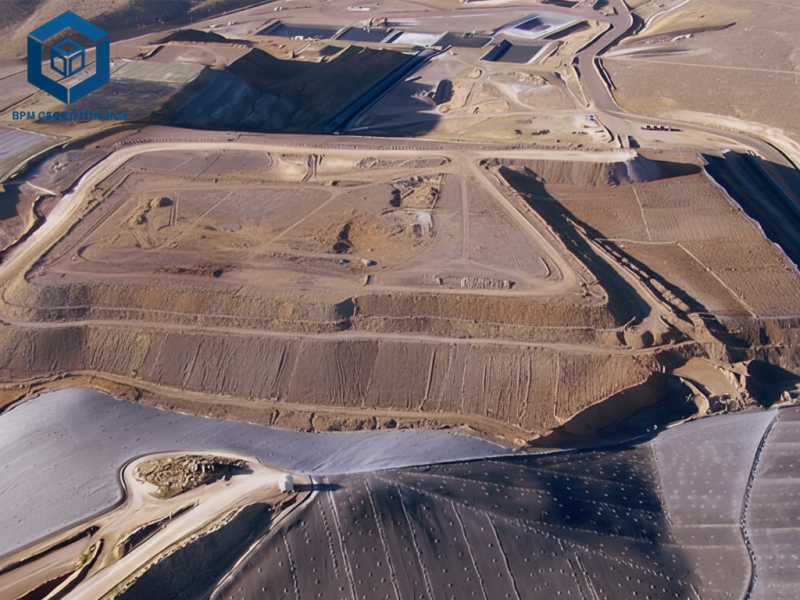
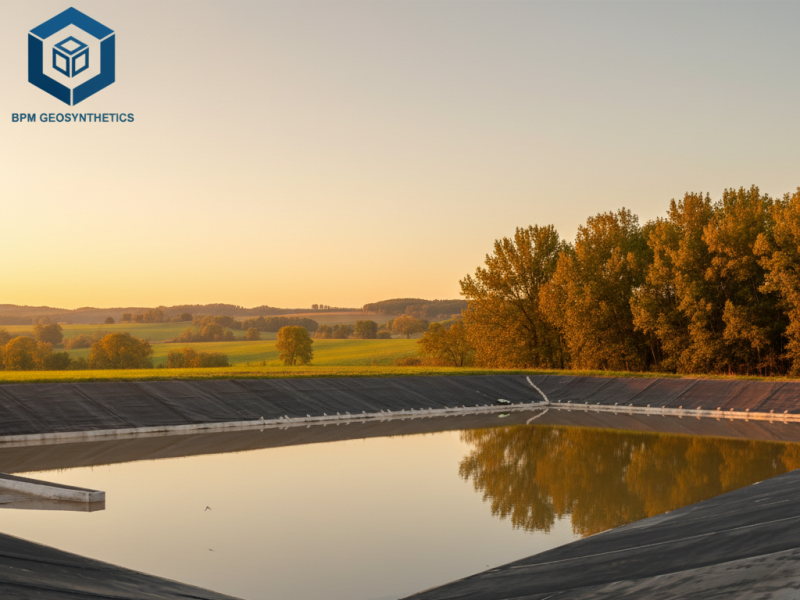
High-Density Polyethylene (HDPE) geomembranes are widely regarded as the workhorse of the lining industry. Renowned for their durability, chemical resistance, and long service life, they are a default choice for many demanding containment applications, from landfill caps and mining heap leach pads to large-scale water reservoirs. Among the various thicknesses available, the 30 mil (0.75 mm) HDPE liner is often selected for projects requiring a robust, heavy-duty solution that can withstand significant stresses and potential environmental challenges.
However, the selection of a geomembrane is a complex engineering decision where every material has its trade-offs.
1. Significant Challenges in Installation and Handling
The installation process for a 30 mil HDPE liner is arguably its most pronounced disadvantage. It is not a DIY-friendly material and demands a level of expertise that significantly impacts project timelines, cost, and complexity.
1.1. Extreme Weight and Bulkiness
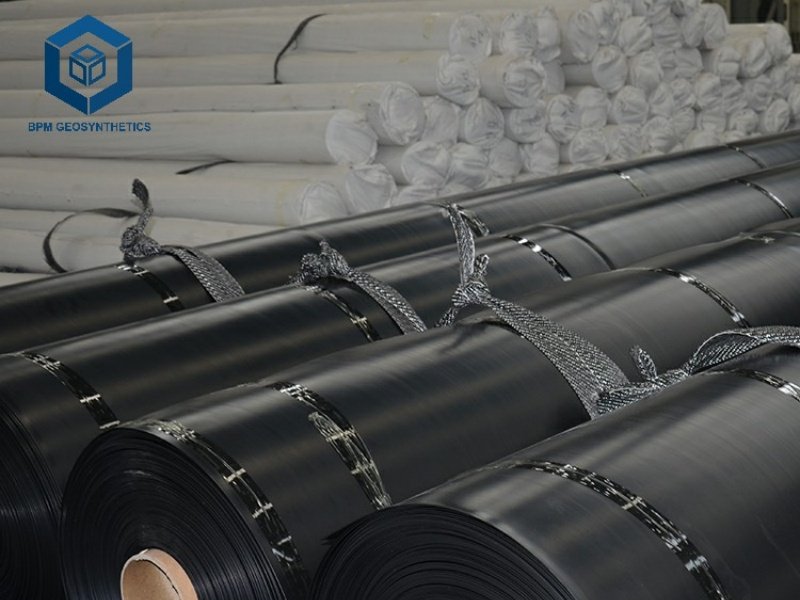
HDPE is a dense material. A 30 mil liner is exceptionally heavy and cumbersome. To put it in perspective, a single roll of 30 mil HDPE can weigh between 1,500 to over 4,500 pounds (680 to 2,040 kg), depending on its width and length. This necessitates the use of heavy machinery, such as articulated loaders or cranes with special lifting attachments, simply to load, unload, and position the rolls around the site. The manual handling of the panels during deployment requires a large, skilled crew, increasing labor costs and potential safety hazards.
1.2. Complex Seaming and Welding Requirements
The integrity of any geomembrane installation lies in its seams. For 30 mil HDPE, this is a critical and demanding process.
- Specialized Equipment: Seaming HDPE requires specialized dual-track hot wedge welders that can melt and fuse the material at high temperatures. These machines are expensive to rent or purchase and require significant skill to operate correctly.
- Stringent Environmental Conditions: Welding HDPE cannot be performed effectively in adverse weather. Wind can cool the seam prematurely and disrupt the welding equipment’s temperature control. Rain, moisture, or even high humidity can prevent a proper bond from forming, leading to faulty seams. Consequently, work often must halt during less-than-ideal weather, causing project delays.
- Critical Quality Assurance: Every inch of every seam must be tested, typically with non-destructive air pressure testing and destructive shear and peel tests. This requires a dedicated quality assurance crew on site, adding to the project’s cost and complexity. A flaw in the seaming process can lead to catastrophic failure, rendering the liner’s thickness irrelevant.
1.3. Conformability and Subgrade Issues
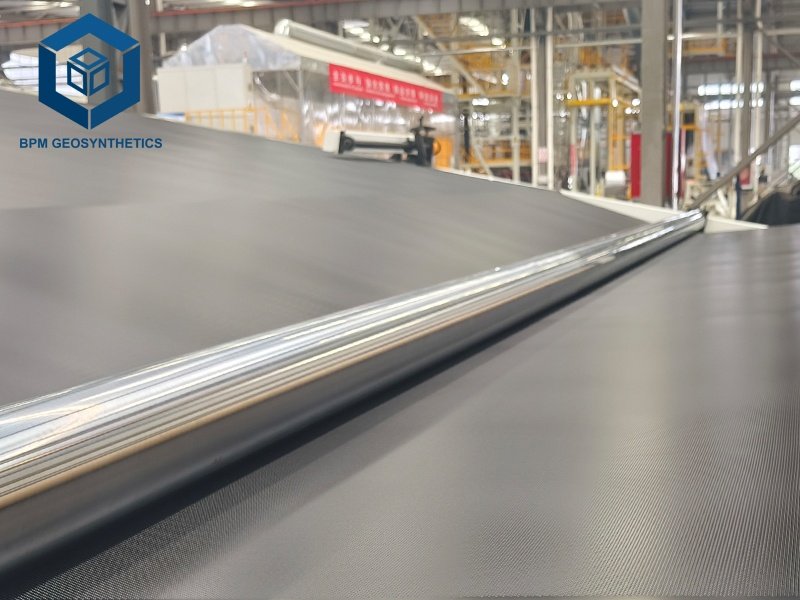
A 30 mil HDPE liner is extremely stiff. While this gives it high tensile strength, it severely limits its ability to conform to irregular subgrade surfaces. If the underlying soil is not perfectly smooth, compacted, and free of sharp protrusions, the liner will bridge over voids instead of settling into them. This can create air pockets and leave the liner unsupported, making it highly susceptible to punctures from overlying loads or hydrostatic pressure and increasing long-term stress concentrations that could lead to premature failure.
2. Susceptibility to Stress Cracking
While HDPE is chemically resistant, it is vulnerable to a mechanical failure mechanism known as stress cracking. This is a slow, brittle failure of the material under sustained tensile stress in the presence of specific environmental conditions. The thick, semi-crystalline structure of 30 mil HDPE can, in certain scenarios, be more susceptible to this phenomenon than thinner, more flexible materials.
Factors that accelerate stress cracking include:
- Point Loads: Rocks or debris left on the subgrade or in the cover soil that create localized high stress points on the liner.
- Poor Seams: Improperly welded seams can act as initiation points for cracks.
- Chemical Exposure: While resistant to a wide range of chemicals, certain surfactants and oxidizing agents can accelerate stress cracking.
- Manufacturing Quality: Not all HDPE resin is created equal. Only resin with a high stress crack resistance rating (determined by tests like the Notched Constant Tensile Load Test) should be used, but this adds cost.
3. Limited Flexibility and Elongation
Compared to flexible polymers like PVC (Polyvinyl Chloride) or RPP (Reinforced Polypropylene), the HDPE liner is a relatively rigid material with a lower elongation-at-break percentage. This means it stretches very little before failing.
In applications where the subgrade is prone to settling, differential settlement, or seismic activity, the inflexibility of 30 mil HDPE becomes a major disadvantage. It cannot stretch to accommodate movement. Instead, it will resist the movement until the tensile strength is exceeded, resulting in a tear or rupture. More flexible liners can often stretch and dissipate these stresses without failing catastrophically.
4. Difficult and Often Unsightly Repairs
Despite best efforts, damage can occur during or after installation. Repairing a 30 mil HDPE liner is a difficult task.
- Extrusion Welding: Most repairs require a skilled technician using an extrusion welder to melt new HDPE material into the damaged area. This is a highly technical process that is difficult to perform correctly in the field, especially under windy or damp conditions.
- Patch Compatibility: The patch must be made from the same type of HDPE resin to ensure compatibility and fusion. Mismatched materials will not bond properly and will create a weak point.
- Aesthetics: Repairs are almost always visible as large, obvious patches, which can be a concern for aesthetic applications like decorative ponds.
5. Higher Initial Cost and Project Budget Impact
The “30 mil” specification directly translates to a higher material cost. You are using significantly more raw polymer per square foot compared to a 20 mil or 30 mil LLDPE (Linear Low-Density Polyethylene) liner. Furthermore, the costs associated with the challenging installation—specialized equipment, larger crews, longer project timelines, and rigorous QA/QC testing—add a substantial premium to the total installed cost. For many projects, this high initial investment may not be justified when compared to other lining systems that offer adequate performance at a lower cost.
6. Environmental and Performance Considerations
6.1. Surface Wrinkling and Gas Entrapment
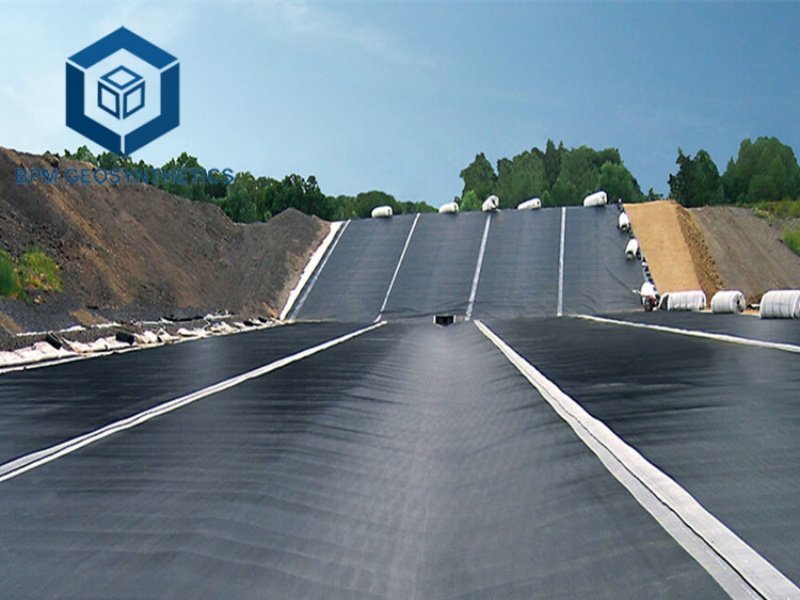
During installation, as the liner heats up in the sun, it expands. When it contracts at night, it often doesn’t return to its original position, leading to the formation of surface wrinkles. These wrinkles can be problematic as they create folds where material can become trapped during cover placement, leading to stress points. Furthermore, in exposed applications, wrinkles can be unsightly. In buried applications, they can create pathways for gases or vapors to become trapped and migrate, potentially complicating drainage or collection systems.
6.2. Not a “One-Size-Fits-All” Solution
The immense physical properties of a 30 mil HDPE liner are overkill for many applications. Using it for a simple decorative water garden or a stormwater retention pond with non-aggressive water chemistry is often unnecessary. The drawbacks in handling, cost, and conformability would be incurred without reaping the benefits of its chemical resistance and durability, which in such cases would never be challenged. A thinner, more flexible material would often be more cost-effective and easier to install for less demanding projects.
7. Conclusion.
The 30 mil HDPE geomembrane is not an inherently “bad” product; it is a highly specialized one. Its disadvantages—notable installation complexity, weight, stiffness, susceptibility to stress cracking, and high cost—make it a poor choice for projects that do not specifically require its unique set of advantages.
These drawbacks underscore the importance of a holistic design and selection process for a containment system. The choice should be driven by a detailed analysis of the project’s chemical, physical, environmental, and budgetary constraints.