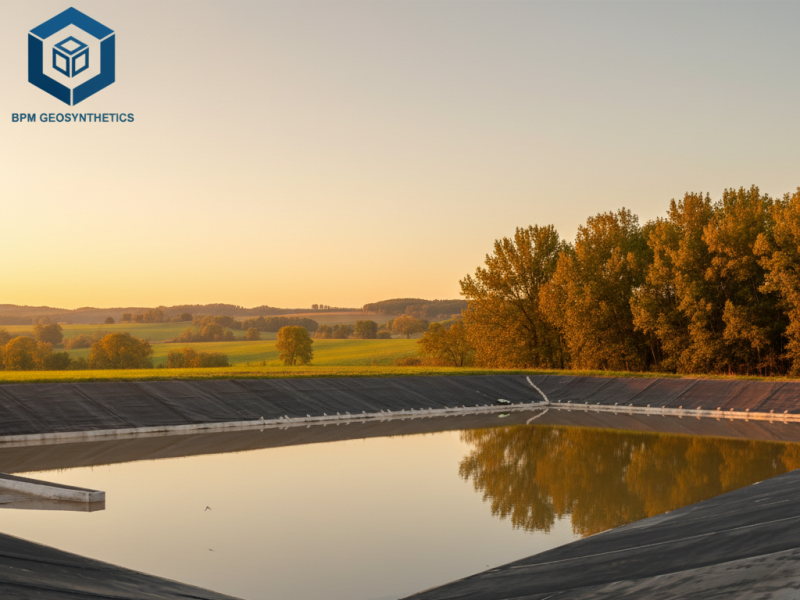
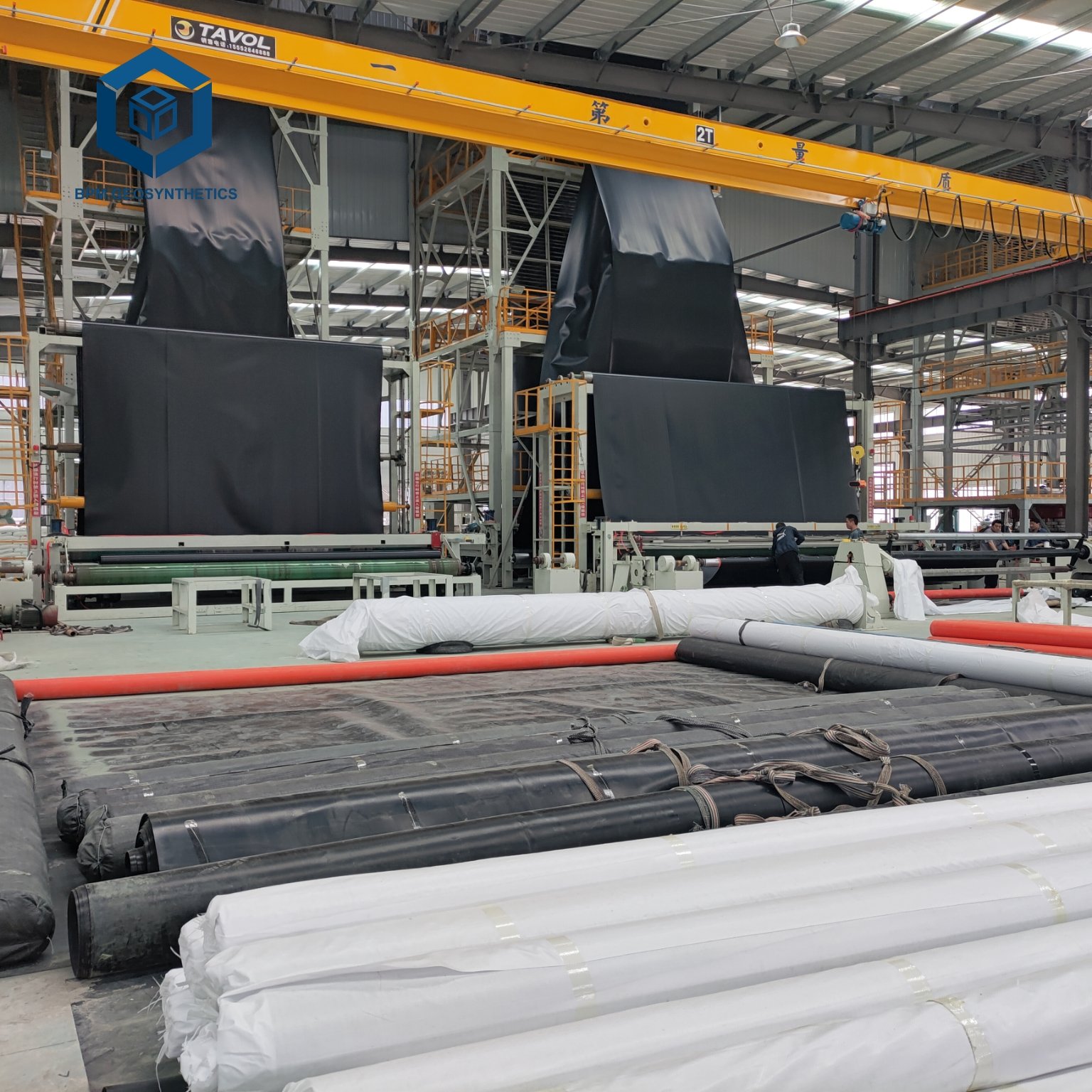
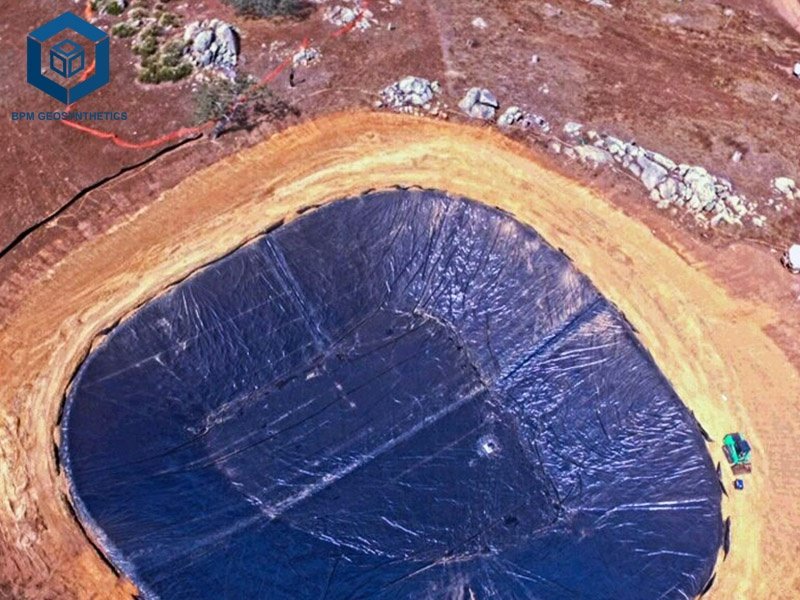
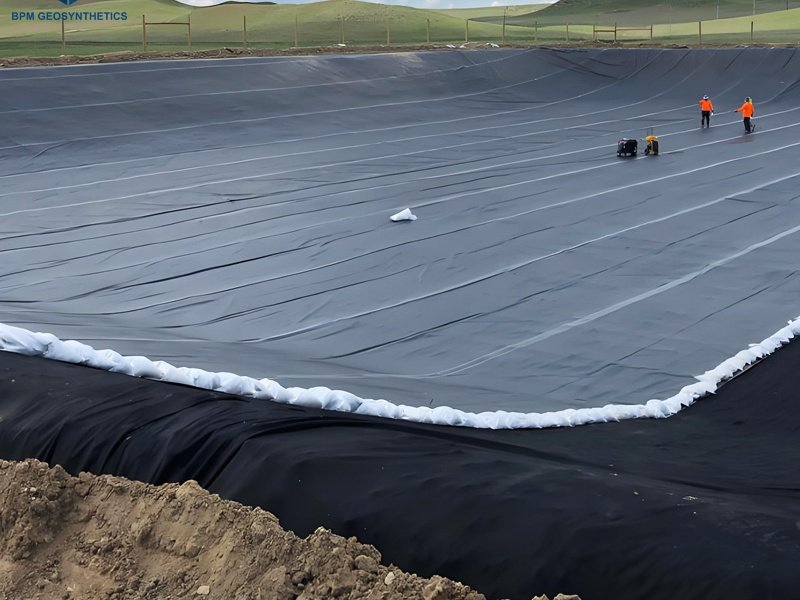
High-Density Polyethylene (HDPE) geomembrane sheets are the backbone of waterproofing and leakage prevention in projects like landfills, water reservoirs, mining tailings, and agricultural irrigation. For contractors, project managers, and procurement teams, understanding HDPE geomembrane sheet prices is critical to budgeting and avoiding cost overruns. This guide breaks down the key factors influencing prices, current market ranges, and how to balance cost with quality—so you can make informed purchasing decisions.
1. Key Factors Affecting HDPE Geomembrane Sheet Price
The price of HDPE geomembrane sheets is not fixed; it varies based on multiple variables. Below are the most impactful factors to consider.
1.1 Thickness and Specifications
Thickness is the primary driver of cost, as it directly affects material usage and performance. HDPE geomembranes typically range from 0.3mm to 2.0mm in thickness, with common options being 0.5mm, 1.0mm, and 1.5mm.
0.3mm–0.5mm sheets are used for light-duty applications such as pond liners. They cost less due to lower material content, usually 1.20–2.30 per square meter. For medium-duty projects like agricultural irrigation canals, 0.8mm–1.2mm sheets are ideal. Prices here rise to 2.50–4.00 per square meter, as they require more HDPE resin and better durability. For heavy-duty scenarios including landfill liners and mining sites, 1.5mm–2.0mm sheets are designed to resist punctures, UV damage, and chemical corrosion, costing 4.20–6.50 per square meter.
Other specifications—such as width (2m–8m) and length (50m–100m per roll)—also affect pricing. Wider rolls reduce installation seams, which lowers labor costs later, but may cost 5–10% more upfront due to specialized production equipment.
1.2 Raw Material Costs (HDPE Resin)
HDPE geomembranes are made from HDPE resin, a petroleum-derived material. Global resin prices fluctuate with oil prices, supply chains, and demand.
In 2024, the average price of HDPE resin ranges from 1,100–1,700 per ton, up 5–8% from 2023 due to geopolitical tensions affecting oil supplies. A 10% increase in resin costs typically leads to a 7–9% increase in geomembrane prices, as resin accounts for 60–70% of total production costs. For example, if resin prices rise from 1,300 to 1,430 per ton (a 10% hike), a 1.0mm HDPE sheet’s price may increase from 3.00 to 3.25 per square meter.
1.3 Production Technology
Two main production methods impact cost: extrusion and blown film.
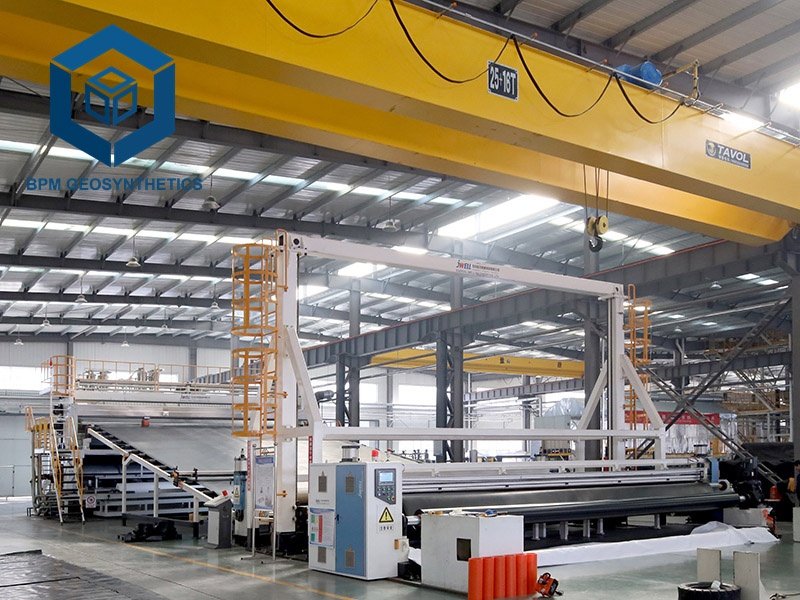
Extrusion technology is the most common method, producing smooth, uniform sheets. It’s cost-effective for large batches, so extrusion-made geomembranes are 10–15% cheaper than blown film alternatives. Blown film technology creates sheets with higher tensile strength, which is better for harsh environments, but requires more energy and time. Blown film HDPE sheets cost 3.00–4.50 per square meter (for 1.0mm thickness) versus 2.50–3.80 for extrusion-made ones.
Additional features like UV stabilization, anti-oxidation coatings, or chemical resistance add 15–25% to the price. These are essential for outdoor or industrial projects but unnecessary for indoor use.
1.4 Purchase Quantity
Bulk purchasing significantly reduces per-unit costs. Suppliers offer tiered discounts based on order volume.
For small orders (1,000–5,000 sq. meters), there are no or minimal discounts, and prices stay at the retail level—for instance, 3.50–4.00 per sq. meter for 1.0mm sheets. Medium orders (5,000–20,000 sq. meters) qualify for 5–10% discounts, so 1.0mm sheets may drop to 3.20–3.60 per sq. meter. Large orders (20,000+ sq. meters) get 10–18% discounts, common for municipal projects like water treatment plants, where 1.0mm sheets could cost 2.80–3.30 per sq. meter.
Small buyers such as local contractors can join group purchases with other businesses to qualify for bulk discounts.
1.5 Supplier Type: Manufacturer vs. Middleman
Who you buy from directly impacts price. Buying directly from manufacturers—such as Chinese, Indian, or Turkish factories—eliminates middleman markups, with prices 15–30% lower than retail. For example, a 1.0mm sheet from a Chinese manufacturer costs 2.50–3.20 per sq. meter, versus 3.50–4.00 from a local distributor.
Middlemen like distributors or agents add 10–20% to the manufacturer’s price to cover storage, transportation, and profit. While they offer faster delivery with local stock, the extra cost can add up for large projects. A useful tip: Verify if a supplier is a manufacturer by asking for production facility photos or ISO 9001 certification to avoid overpaying for middleman services.
2. Current HDPE Geomembrane Sheet Price Range in 2024
To help you budget, below is the average price range for common HDPE geomembrane sheets, based on global market data (Q1 2024).
2.1 Price by Specification
0.5mm HDPE geomembrane sheets are suitable for temporary ponds. Their price ranges from 1.20 to 2.30 per square meter, and a standard roll (50 meters in length and 4 meters in width, totaling 200 square meters) costs between 240 and 460.
For irrigation canals, 1.0mm sheets are commonly used, with a per-square-meter price of 2.50–4.00. Each standard roll of this thickness costs 500–800.
1.5mm sheets are designed for landfills, priced at 4.20–6.50 per square meter. A standard roll of 1.5mm sheets ranges from 840 to 1,300.
Mining sites typically use 2.0mm sheets, which cost 6.80–9.00 per square meter. Each standard roll of 2.0mm sheets costs 1,360–1,800.
Note: Prices exclude shipping, taxes, and installation. For custom sizes like 8m-wide rolls, add 10–15% to the per-square-meter cost.
2.2 Regional Price Differences
Geography affects prices due to labor costs, transportation, and local demand.
Asia, particularly China and India, is the most cost-effective region. Chinese manufacturers offer 1.0mm sheets for 2.50–3.20 per sq. meter, thanks to low labor and production costs. Shipping to Europe or the USA adds 0.30–0.80 per sq. meter, with container fees ranging from 300 to 800 per 20ft container.
In Europe, countries like Germany and Italy have higher prices due to strict environmental regulations and labor costs. 1.0mm sheets cost 3.80–5.00 per sq. meter, but local delivery is faster—3–7 days compared to 3–4 weeks from Asia.
North America, including the USA and Canada, has similar prices to Europe. 1.0mm sheets cost 4.00–5.20 per sq. meter. Many North American suppliers source resin locally, which reduces shipping delays but increases material costs.
2.3 Recent Market Trends
In Q1 2024, HDPE geomembrane prices are stable but expected to rise 3–5% in Q3 due to two factors. First, resin price forecasts indicate oil prices may increase in summer (peak demand for transportation), pushing HDPE resin costs up 4–6%. Second, infrastructure demand from governments worldwide—such as the USA’s $1.2T Infrastructure Bill and China’s water conservancy projects—is boosting demand for HDPE geomembranes, leading to supply tightness.
Buyers are advised to lock in prices 2–3 months before project start dates to avoid cost hikes.
3. How to Balance Cost and Quality When Buying HDPE Geomembrane Sheets
Low prices may seem attractive, but low-quality HDPE sheets can cause leaks, project delays, and costly repairs. Here’s how to save money without compromising on performance.
3.1 Choose the Right Specification Based on Project Needs
Over-specifying—such as using 1.5mm sheets for a small garden pond—wastes money. Conduct a project assessment to select the appropriate specification. For temporary projects (1–2 years), use 0.5mm sheets, which are cheaper and lightweight. For outdoor projects with UV exposure like reservoirs, opt for 1.0mm sheets with UV stabilization; this adds 10% to the cost but prevents premature cracking. For chemical-rich environments such as industrial wastewater ponds, select 1.2mm+ sheets with chemical resistance coatings—this avoids $10,000+ in leakage repairs later.
3.2 Cooperate Directly with Manufacturers
As mentioned earlier, manufacturers offer lower prices than middlemen. To find reliable manufacturers, use platforms like Alibaba, Made-in-China, or Thomasnet to filter suppliers with ISO 14001 (environmental) and GRI-GM13 (geomembrane) certifications. Request free samples (most manufacturers offer 1–2 sq. meters for testing) to check thickness, flexibility, and tensile strength. Negotiate payment terms such as 30% deposit and 70% after delivery to reduce financial risk.
3.3 Negotiate Bulk Purchase Discounts
Even if your order is small (e.g., 8,000 sq. meters), ask for discounts by committing to repeat orders—for example, “We’ll buy 8,000 sq. meters now and 10,000 more next quarter.” You can also combine orders with other materials, such as buying HDPE sheets and geotextiles from the same supplier. Many manufacturers are willing to offer 5–8% discounts for such commitments.
3.4 Verify Product Quality to Avoid Hidden Costs
Low-quality HDPE sheets often have issues like uneven thickness, poor welding compatibility, or high permeability. These lead to installation delays—welding thin or uneven sheets takes 20–30% more time, increasing labor costs—and leakage repairs, where a single leak in a landfill liner can cost 5,000–20,000 to fix.
To avoid this, test samples for key indicators. Permeability should be ≤1.0×10⁻⁹cm/s, a standard critical for water-tight applications like reservoirs. Tensile strength is another key metric—look for values ≥30MPa to ensure durability in high-stress scenarios like roadbeds. For welding compatibility, check that weld strength reaches at least 85% of the base material strength, as weak welds are a common leakage source.
Additionally, verify UV stability if using sheets outdoors. High-quality products achieve UV Resistance Class 8 (5,000 hours of artificial aging resistance), which prevents degradation under sunlight. Always request batch-specific SGS test reports and confirm the supplier has a track record of zero material-related accidents. For critical projects, hire third-party inspectors to conduct on-site leakage tests, aiming for ≤0.1 leakage points per 1,000㎡.
4. Final Tips for Getting the Best HDPE Geomembrane Price
To wrap up, here are three actionable tips to secure competitive prices while ensuring quality:
- Plan ahead: Lock in prices 2–3 months early to avoid Q3 2024 price hikes.
- Bundle services: Ask manufacturers for installation guidance or discounted geotextiles (used with geomembranes) to cut overall project costs.
- Verify certifications: Prioritize suppliers with dual compliance to ASTM D4439-17 and GB/T 17643-2011 standards for global project compatibility.
By understanding price drivers, market trends, and quality benchmarks, you can make cost-effective purchases that protect your project from delays and failures.