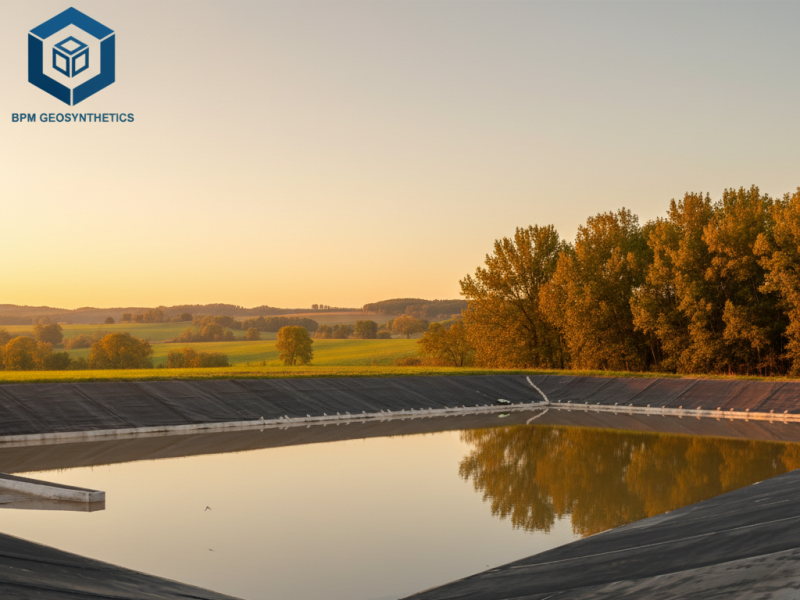
HDPE Liner Cost Per m2 also is High-density polyethylene (HDPE) geomembrane liners have become the default choice for engineers who need long-term fluid containment at predictable cost. In 2025 the factory-gate price of HDPE liner ranges from roughly US $0.90 to US $7.50 per square metre, depending on thickness, resin grade, surface finish and order volume. Yet the material itself is only one component of the final installed cost.
HDPE liner cost per m2 are known for their durability and ability to withstand higher temperatures, extending their service life. They offer a cost-effective solution for containment applications due to their low cost, excellent chemical resistance, and weathering properties.
The smooth HDPE liner is widely used in various industries such as water conservancy, petrochemicals, agriculture, and aquaculture, thanks to its anti-aging and waterproof properties. It meets the requirements set by the GRI-GM13 Specification standard for HDPE Geomembrane Liners, ensuring its quality and performance.
1.What is HDPE Liner Cost Per m2?
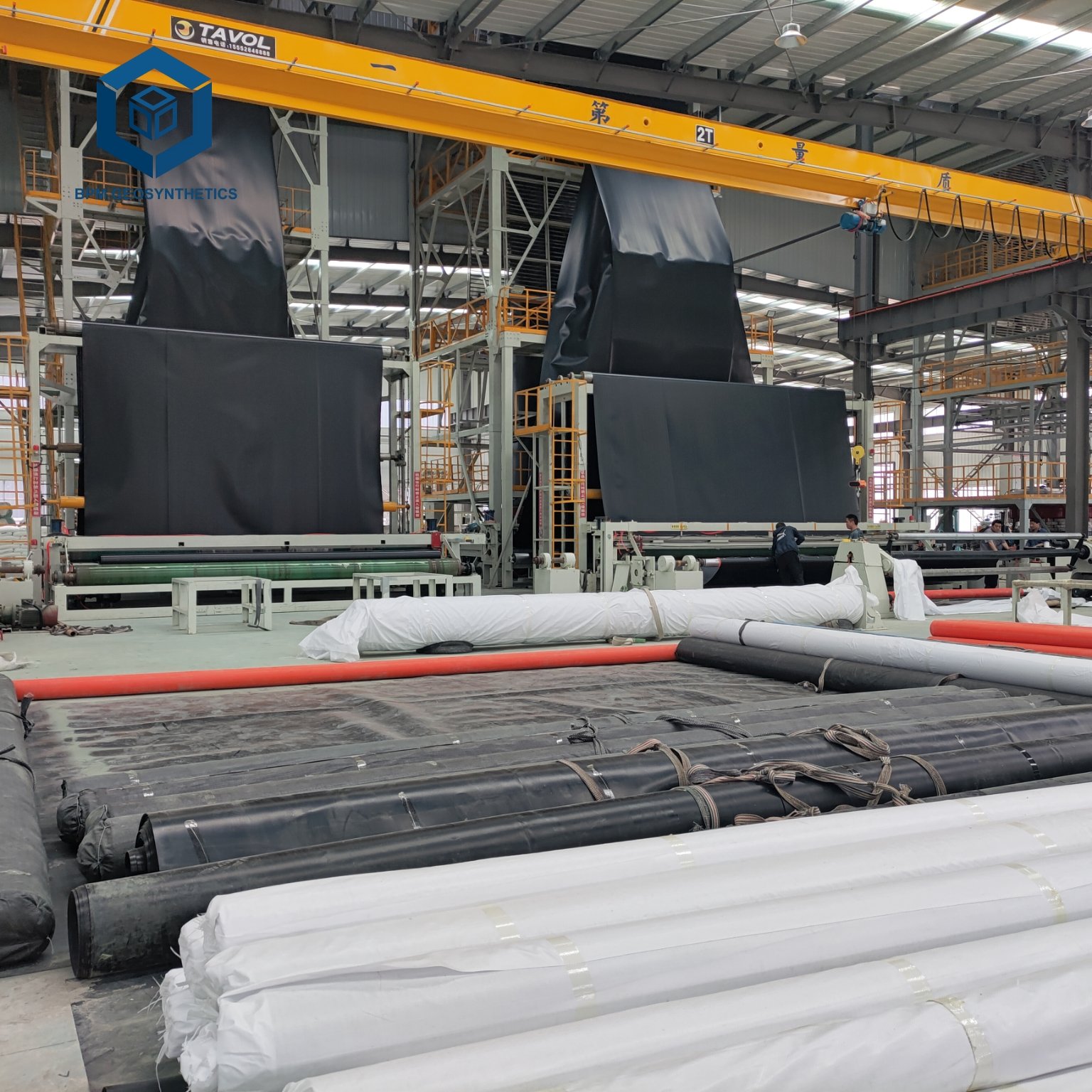
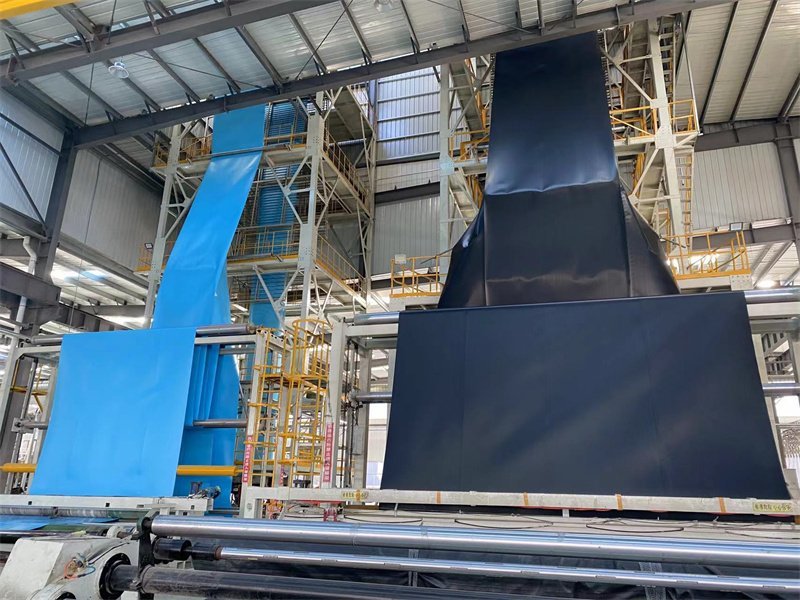
An HDPE liner cost per m2 is a factory-extruded sheet of high-density polyethylene that is ≥97 % virgin resin and ≤2.5 % carbon-black master-batch plus stabilisers. The sheet is typically supplied in rolls 5.8–8 m wide and 50–200 m long, with thicknesses from 0.3 mm (12 mil) to 3.0 mm (120 mil). The material is classified as a geomembrane because its hydraulic conductivity is <1 × 10⁻¹² cm/s, effectively zero leakage if correctly installed and welded.
1.1 Key properties of HDPE Liner Cost Per m2
• Density 0.94–0.96 g/cm³
• Tensile strength at break 30–53 kN/m (ASTM D6693)
• Elongation at break 400–700 %
• Puncture resistance 600–1 200 N
• Chemical resistance pH 2–12 and most hydrocarbons
• Design life 40–60 years when covered, >20 years when exposed
1.2 Advantages over HDPE Liner Cost Per m2
Cost leadership:Chinese-manufactured HDPE is 30–60 % cheaper than North-American or European LLDPE, PVC or EPDM equivalents.
Durability:HDPE’s stress-crack resistance and UV stabilisers cut replacement costs by ~20 % over two decades.
Chemical shield:Inert to acids, alkalis, leachate and brine, making it the only geomembrane accepted in many mining and landfill specifications.
Slope stabilityJTextured finishes increase interface friction by 15–35 % compared with smooth HDPE, eliminating the need for geocomposite reinforcement on side slopes.
Temperature range:Service window –60 °C to +80 °C without embrittlement or softening.
2.How the Price Is Built Up of HDPE Liner Cost Per m2
2.1 Base material cost of HDPE Liner Cost Per m2
Virgin HDPE resin follows crude-oil pricing; after the 2024 oil surge, resin prices rose 10–20 %, pushing finished sheet prices upward. Virgin resin adds 20–30 % to raw-material cost versus recycled resin, but doubles or triples service life.
2.2.Thickness and surface finish (factory price, FOB China)
• 0.5 mm smooth — US $0.90–1.50 /m²
• 1.0 mm smooth — US $1.50–2.20 /m²
• 1.5 mm smooth — US $2.00–2.50 /m²
• 2.0 mm smooth — US $2.50–3.50 /m²
• Textured adds 15–35 % to above figures
2.3.Additives & certification of HDPE Liner Cost Per m2
Carbon black (2.5 %) and UV package add 5–10 %, while third-party QA (ISO 9001, GRI-GM13, CE) adds another 20–30 %. The combined premium is justified by a 15 % reduction in field-failure rate.
2.4.Logistics & import duties
A 40-ft container holds ~20 000 m² of 1.5 mm HDPE. Ocean freight from Qingdao to Los Angeles in Q3 2025 is ~US $2 000, i.e. US $0.10 /m². Import duty into the US is 3.2 %; into Saudi Arabia 5 %.
2.5.Installation-related costs
Field welding, CQA/CQC and ancillary materials (geotextile protection, anchor trench, ballast) typically run US $2–5 /m² for simple ponds and US $5–12 /m² for double-lined landfills. The installed cost therefore usually falls in the US $4–15 /m² envelope, far above the material price.

3.Applications of HDPE Liner Cost Per m2
HDPE liner cost per m2 are versatile, with a 55% market share in geomembrane applications due to their durability and cost-effectiveness. Below are key applications, supported by market data:
3.1.Landfill Liners and Caps –HDPE Liner Cost Per m2
Landfills account for 40% of HDPE liner applications, driven by global waste management regulations. A 1.5–2.0 mm liner with 800–1200 N puncture resistance prevents leachate contamination, ensuring compliance with environmental standards. Example: A 2024 landfill project in the U.S. used a 60 mil HDPE liner, costing $0.70/sq.ft., to meet EPA regulations.
3.2.Mining Operations — HDPE Liner Cost Per m2
Mining applications, including heap leach pads and tailings ponds, represent 25% of HDPE liner usage. A 1.0–2.5 mm liner with 30 kN/m tensile strength contains acidic byproducts, supporting the USD 2 trillion mining industry. Example: A 2025 Australian tailings pond project used a 60 mil textured HDPE liner at $0.80/sq.ft., ensuring zero leakage.
3.3.Water Reservoirs and Canals
HDPE liners line reservoirs, canals, and ponds, comprising 20% of applications. A 0.5–1.5 mm UV-resistant liner retains water for irrigation and potable systems, lasting 20–30 years. Example: A 2023 irrigation canal in India used a 30 mil HDPE liner at $0.35/sq.ft., reducing seepage by 99%.
3.4.Aquaculture
HDPE liners are used in fish and shrimp ponds, ensuring non-toxic, leak-free environments. A 0.35–0.75 mm liner is typical, costing $0.20–$0.50/sq.ft. Example: A 2024 fish farm in Thailand used a 20 mil HDPE liner, costing $0.25/sq.ft., to enhance water retention.
3.5.Secondary Containment
Industrial facilities use HDPE liners for spill containment berms around oil tanks and chemical storage. A 40 mil liner with chemical resistance costs $0.40–$0.80/sq.ft., preventing environmental contamination.
Notes
• Prices include 2.5 % carbon black and GRI-GM13 test report.
• Rolls are 5.8 m × 100 m (580 m²) or 7 m × 140 m (980 m²). Custom widths incur 5 % surcharge.
4.Installation of HDPE Liner Cost Per m2
Proper installation is critical to HDPE liner performance. Below is a step-by-step guide based on industry best practices:
4.1.Site Preparation
Clearing and Grading: Remove debris and rocks, costing $500–$5,000.
Compaction: Achieve 95% standard Proctor density to minimize settlement.
Geotextile Underlay: Use 8–12 oz/yd² non-woven geotextile ($1.08–$5.38/m²) to prevent punctures.
4.2.Liner Deployment
Roll Unfolding: Deploy using spreader bars, ensuring minimal wrinkles.
Alignment: Overlap panels by 4–6 inches for seaming.
Anchoring: Secure with sandbags or trenches to prevent movement.
4.3.Seaming and Welding
Wedge Welding: Achieves 90–95% bond strength for straight seams.
Extrusion Welding: Used for complex geometries or repairs.
Testing: Conduct air pressure or spark testing (ASTM D7240) to ensure seam integrity.
5.Quality Control of HDPE Liner Cost Per m2