1 What is 60 mil HDPE Liner
The 60 mil HDPE liner represents a critical engineering solution for containment applications across multiple industries. also HDPE Geomembrane. The term “mil” refers to a thousandth of an inch, making a 60 mil liner approximately 1.5 millimeters thick. This specific thickness has emerged as a standard requirement for numerous industrial and environmental applications where reliability and durability are paramount. High-Density Polyethylene (HDPE) as a base material provides exceptional chemical resistance and physical strength, making it suitable for challenging environments where lesser materials would fail prematurely.
HDPE geomembranes are manufactured from specially formulated polyethylene resins that create a highly impermeable barrier against liquids and gases. The 60 mil thickness strikes an optimal balance between material cost and performance characteristics, offering sufficient robustness to withstand installation stresses, operational pressures, and long-term environmental exposure. This liner thickness has become particularly important in regulated industries where minimum thickness requirements are mandated by environmental agencies and industry standards. The material’s exceptional durability is evidenced by its typical lifespan of 20-30 years when properly installed and maintained, making it a cost-effective long-term solution for containment challenges.

2 Technical Specifications and Regulatory Standards
The 60 mil thickness specification for HDPE liners is not arbitrary but rather established through extensive testing and regulatory oversight. Multiple regulatory bodies have identified this thickness as the minimum requirement for critical containment applications. According to Pennsylvania’s environmental regulations, HDPE liners used as primary or secondary liners must be “at least 60 mil” thick, while other geosynthetic materials may be as thin as 30 mil. This distinction acknowledges the different performance characteristics of various liner materials and establishes HDPE as requiring greater minimum thickness for equivalent performance in demanding applications.
3 Industry Price Comparison Analysis
Understanding the pricing structure for 60 mil HDPE liners requires consideration of multiple variables including quantity, customization, and supplier value-added services. Market analysis reveals that pricing typically follows a volume discount model, with significant price reductions as order quantities increase. Based on available market data, for mid-range thickness HDPE geomembranes (approximately 0.8mm or 31.5 mil), pricing ranges from $0.72 to $0.84 per square meter for orders between 2,000 and 12,000 square meters. While these figures represent slightly thinner materials than 60 mil liners, they provide a useful baseline for understanding industry pricing structures.
For a more direct comparison to 60 mil (1.5mm) HDPE liners, BPM Geosynthetics offers products at different price tiers based on order volume. Their pricing structure demonstrates the economies of scale inherent in geomembrane manufacturing:
Table: BPM Geosynthetics 1.5mm HDPE Liner Pricing Structure
Order Quantity (square meters) | Price per Square Meter |
2,000 – 7,999 | ¥9.07 (approximately $1.27) |
8,000 – 19,999 | ¥8.85 (approximately $1.24) |
20,000+ | ¥8.64 (approximately $1.21) |
The total cost of ownership for HDPE liners extends beyond the initial purchase price. Factors such as material longevity, warranty coverage, and installation efficiency significantly impact the ultimate value proposition. BPM Geosynthetics offers a 1-year warranty on their products, with an expected lifespan of 10-30 years depending on application conditions. This extended service life, when properly calculated on an annualized basis, often makes quality HDPE liners more economical than cheaper alternatives that may require premature replacement.
Market competition has led to innovation in both product formulation and customer service models. While some suppliers compete primarily on price, others like BPM emphasize technical expertise, customization capabilities, and comprehensive project support. For complex applications such as mining ponds, landfill liners, or industrial containment systems, the latter approach often delivers greater long-term value despite potentially higher initial costs.
4 Applications and Industry Uses
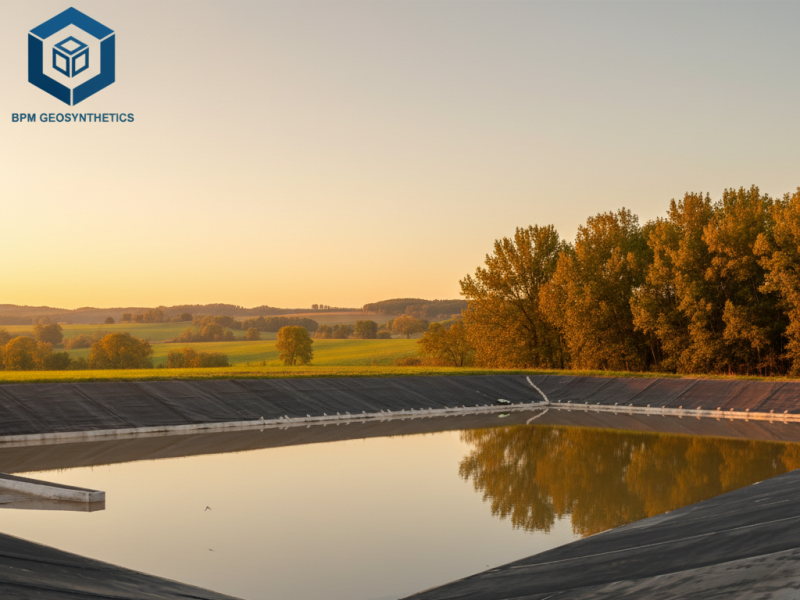
The versatility of 60 mil HDPE liners has led to their adoption across diverse industries with demanding containment requirements. In the environmental protection sector, these liners serve as critical components in landfill construction, leachate containment systems, and wastewater treatment facilities. Regulatory requirements often mandate 60 mil HDPE specifically for primary and secondary liner systems in solid waste disposal facilities. The material’s chemical resistance ensures compatibility with varied leachate compositions, while its thickness provides the necessary durability to withstand installation stresses and long-term service conditions.
Mining and industrial applications represent another significant market for 60 mil HDPE liners. Heap leach pads, tailings ponds, and process solution containment systems utilize these liners to prevent environmental contamination while withstanding exposure to aggressive chemical environments. BPM Geosynthetics specifically markets their products for mining applications, highlighting features such as UV resistance, chemical durability, and custom fabrication to accommodate site-specific requirements. The mining industry’s shift toward more environmentally responsible practices has increased demand for reliable containment solutions that can perform in remote locations with minimal maintenance.
Pipeline rehabilitation represents a specialized but growing application for HDPE lining systems. The process involves installing free-standing thermoplastic pipes inside existing steel pipelines to extend service life and prevent leaks. This “trenchless” rehabilitation approach avoids the substantial costs and disruptions associated with complete pipeline replacement while providing corrosion-resistant barriers that can extend pipeline life by decades. The petroleum and natural gas industries have increasingly adopted HDPE lining for both onshore and offshore applications, with particular growth in South American markets following established practices in the United States and Canada.
Additional applications for 60 mil HDPE liners include:
Agricultural water storage ponds and irrigation canals
Aquaculture containment systems for fish and shrimp farming
Stormwater management infrastructure for municipalities and industrial sites
Secondary containment for above-ground and underground storage tanks
Decorative water features in commercial and residential developments
The material’s adaptability to different environments, combined with its proven performance history, makes 60 mil HDPE liners a preferred choice for engineers and project managers across these diverse applications.
5 Installation Requirements and Best Practices
Proper installation is critical to realizing the full performance potential of 60 mil HDPE liners. The installation process begins with subgrade preparation, which involves removing sharp objects, rocks, and debris that could puncture the liner. The surface must be properly compacted and graded to ensure uniform support without differential settlement that could stress the liner material. For projects subject to regulatory oversight, documentation of subgrade preparation is often required as part of compliance reporting-7.
Seam welding represents the most technically demanding aspect of HDPE liner installation. Thermal fusion methods, including wedge welding and extrusion welding, create molecular bonds between adjacent liner panels that should approach the strength of the base material. Quality control measures during welding typically include non-destructive testing (air pressure testing of dual-track seams) and destructive testing (peel and shear tests on sample seams). Properly executed seams are essential for maintaining the liner’s impermeability, particularly in applications containing hazardous liquids where even minor leaks could have significant environmental consequences.
Installation challenges increase with site complexity, particularly on slopes or irregular surfaces. The Oklahoma administrative code specifies that liners must provide appropriate shear resistance at the interface between upper and lower components to prevent sliding on slopes. This requirement necessitates careful attention to friction characteristics between the HDPE liner and adjacent materials, sometimes requiring textured liner surfaces or specialized installation techniques to maintain stability. For pipeline lining applications, specialized equipment is needed to insert and position the HDPE liner within existing pipes, often involving inversion or pull-through methods that require precise control to avoid damage.
6 BPM Brand Advantages and Value Proposition
BPM Geosynthetics has established itself as a significant player in the HDPE liner market through a combination of product quality, technical expertise, and customer-focused services. The company’s product offerings demonstrate comprehensive certification with standards including ISO, CE, BV, and TUV. These certifications provide independent verification of product quality and manufacturing consistency, offering assurance to customers that materials will perform as specified. In regulated industries where liner failure could result in substantial liability, such third-party validation represents significant value beyond basic price considerations.
The company’s technical support capabilities distinguish it from many competitors. BPM offers a range of value-added services including online technical support, on-site installation assistance, on-site training, and on-site inspection services. This comprehensive approach helps ensure proper installation and long-term performance, particularly for complex projects or customers with limited experience in geomembrane applications. By reducing installation risks and optimizing system design, these services can deliver substantial value that outweighs modest price differences between suppliers.
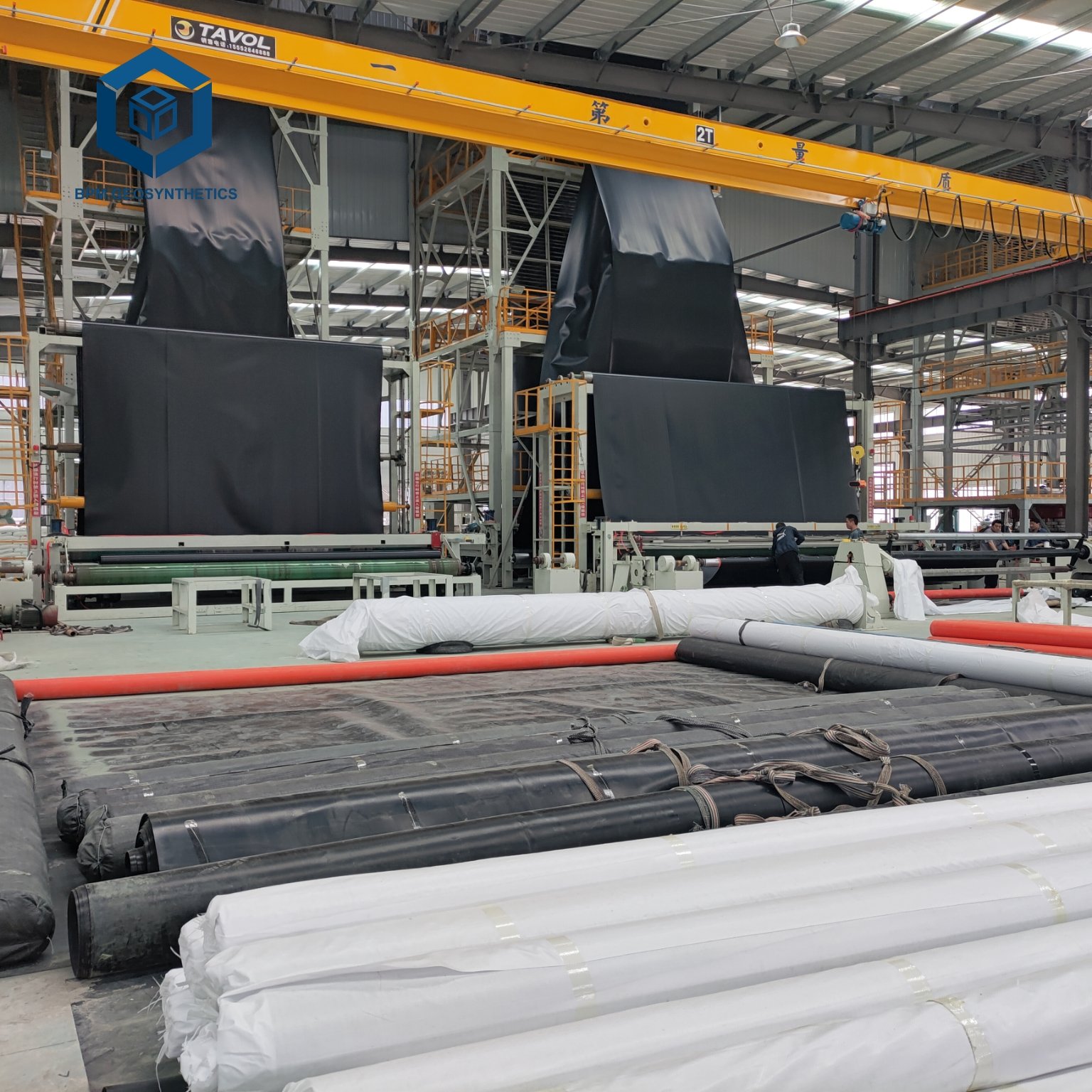
BPM’s manufacturing flexibility represents another competitive advantage. The company offers products in thicknesses ranging from 0.2mm to 3.0mm (approximately 8 to 120 mil) and widths from 2 to 12 meters. This broad product range allows for optimal material selection based on specific project requirements rather than forcing compromises based on limited availability. Customization options extend to surface textures (smooth, single textured, or double textured) and colors (black, white, blue, or green), providing aesthetic and functional options for different applications.
The company’s emphasis on project solution capability rather than mere product supply reflects an understanding of customer needs in complex containment applications. Many liner failures result from improper design or installation rather than material defects, making comprehensive technical support increasingly valuable. BPM’s approach aligns with industry best practices emphasizing integrated solutions, as evidenced by technical literature highlighting the importance of proper material selection and installation methods for critical applications.
7 Conclusion
The 60 mil HDPE liner market continues to evolve in response to regulatory developments, technological advancements, and changing industry needs. Regulatory trends increasingly emphasize environmental protection and long-term containment reliability, favoring robust solutions like 60 mil HDPE over thinner alternatives. As evidenced by consistent minimum thickness requirements across multiple jurisdictions, regulatory bodies have converged on 60 mil as the appropriate standard for HDPE in critical applications. This regulatory consensus provides market stability while driving innovation in product formulation and installation methodologies.
Technological advancements are enhancing both product performance and installation efficiency. Improvements in resin formulation continue to increase chemical resistance and service life, while developments in texturing technologies enhance interface friction for slope stability. Installation methodologies have also progressed, with automated welding equipment improving seam consistency and new deployment techniques reducing labor requirements for large-scale projects. These advancements collectively enhance the value proposition of 60 mil HDPE liners, justifying their selection over alternative containment approaches.
The future market for 60 mil HDPE liners appears robust, driven by several key factors. Infrastructure renewal requirements in developed economies will sustain demand for pipeline rehabilitation applications, while environmental regulations in emerging economies will create new markets for containment systems. Climate change adaptation measures, including enhanced stormwater management and water conservation infrastructure, represent additional growth opportunities. Suppliers who combine product quality with comprehensive technical support, like BPM Geosynthetics, are well-positioned to capitalize on these trends by delivering solutions rather than just products.
As the industry matures, differentiation will increasingly center on value-added services, technical expertise, and project integration capabilities rather than price alone. Customers facing complex containment challenges with significant environmental and regulatory implications will continue to prioritize reliability and performance over minimal initial cost. In this context, 60 mil HDPE liners represent not just a product specification but a comprehensive containment solution with proven performance across diverse applications and environments.