1. Introduction
Water tank liners are critical for preventing leakage, protecting storage structures, and ensuring water quality across agriculture, aquaculture, industrial, and residential sectors. As global water scarcity concerns rise in 2025, the demand for durable, cost-effective liners—especially HDPE geomembranes—has surged, with Google Trends showing a 40% year-over-year increase in searches for terms like “HDPE water tank liner price per square meter” and “affordable aquaculture pond liners.” For buyers and HDPE geomembrane suppliers alike, understanding the nuanced factors that drive pricing is key to making informed decisions.
2. Key Factors Influencing Water Tank Liner Prices
2.1 Material Type
Material selection accounts for 40-60% of a water tank liner’s total cost, and HDPE geomembrane remains the dominant choice due to its unbeatable combination of durability and affordability. Let’s break down how popular materials compare in terms of pricing and use cases:
- HDPE Geomembrane: As the most searched material (per Google Trends data), HDPE liners range in price from 0.12 to 3.57 per square meter. This broad range reflects differences in grade—food-grade HDPE, which is certified for drinking water storage, sits at the higher end (2.00–3.57/sq.m), while industrial-grade HDPE for non-potable applications (like irrigation or waste containment) falls between 0.12–1.50/sq.m. HDPE’s appeal lies in its UV resistance, chemical stability, and 10–15 year warranty period, making it a long-term cost-effective choice for most projects.
- PVC: PVC liners cost slightly more than basic HDPE, ranging from 1.43 to 3.72 per square meter. They are flexible and easy to install, making them suitable for small, irregularly shaped ponds (like backyard koi ponds), but their shorter lifespan (5–8 years) and lower resistance to harsh chemicals make them a poor fit for industrial or large-scale agricultural use.
- LDPE: Low-density polyethylene (LDPE) is the most budget-friendly option, priced at 0.15–0.25 per square meter. However, its thin structure (typically 0.2–0.3mm) and low puncture resistance limit it to temporary storage solutions—such as seasonal rainwater collection tanks—and it is rarely used for long-term projects.
- EPDM: Ethylene propylene diene monomer (EPDM) is a premium material, costing 0.75–2.00 per square foot (equivalent to 8.07–21.53 per square meter) in the U.S. market. It is highly flexible and resistant to extreme temperatures, but its high cost and limited availability for large tank sizes make it ideal only for specialized decorative ponds, not industrial or agricultural water storage.
2.2 Thickness & Specification
Thickness is a direct driver of both price and performance, as thicker liners offer greater durability but come at a higher cost. For HDPE geomembranes—the most widely used material—thickness options and their corresponding prices are as follows:
- 3–0.5mm HDPE: Priced between 0.22 and 0.65 per square meter, this thickness is designed for small residential water tanks (500–1,000 liters). It is lightweight and easy to handle, making it a popular choice for homeowners, but it lacks the strength for heavy-duty use.
- 0–1.5mm HDPE: This is the “sweet spot” for most commercial applications, costing 0.45–1.66 per square meter. It is ideal for aquaculture (shrimp and fish farms), agricultural irrigation tanks (10,000–50,000 liters), and small industrial non-hazardous water storage. Its thickness balances durability and cost, and it can withstand moderate foot traffic and minor impacts.
- 0–3.0mm HDPE: Reserved for high-stress applications, this thickness ranges from 0.80 to 1.99 per square meter. It is required for industrial waste containment tanks, mining slurry storage, and large-scale agricultural reservoirs (100,000+ liters). Its robust structure resists punctures, chemical corrosion, and extreme weather, making it a necessity for projects where leakage could lead to environmental damage or financial loss.
2.3 Customization & Order Volume
Customization needs and order volume significantly impact the final price of water tank liners, as suppliers often offer discounts for standard sizes and large batches:
- Custom Sizes & Shapes: Most water tank liners are sold in standard rectangular or square sheets, but custom shapes (like circular liners for cylindrical tanks or irregular shapes for uniquely sized reservoirs) add 10–20% to the base cost. For example, a custom circular HDPE liner for a 5-meter diameter tank might cost 1.20 per square meter, compared to 1.00 per square meter for a standard rectangular sheet of the same thickness.
- Minimum Order Quantity (MOQ): Suppliers typically set MOQs to cover production costs, and these vary by material and region. For HDPE geomembranes, most manufacturers require a minimum order of 500–1,000 square meters for standard sizes. Smaller batches (100–500 square meters) are available but come at a premium, ranging from 0.68–2.00 per square meter—up to 30% higher than bulk prices.
- Certifications: Certifications add to the cost but are often mandatory for specific applications. Food-grade HDPE liners (certified to meet FDA or EU 10/2011 standards for drinking water) cost 15–30% more than non-certified versions. Similarly, ISO 9001 or CE-certified liners—required for industrial projects in Europe and North America—increase the price by 10–20% due to additional testing and quality control measures.
3. 2025 Price Ranges by Liner Type & Use Case
3.1 HDPE Geomembrane Liners (Most Popular)
HDPE geomembrane liners dominate the 2025 market, and their prices vary by thickness and application. For small residential storage tanks (500–1,000 liters), 0.3–0.5mm HDPE liners are the go-to choice, costing 0.22–0.65 per square meter with a minimum order quantity (MOQ) of 1,000 square meters. These liners are lightweight and easy to install, making them ideal for homeowners looking to upgrade their rainwater collection systems.
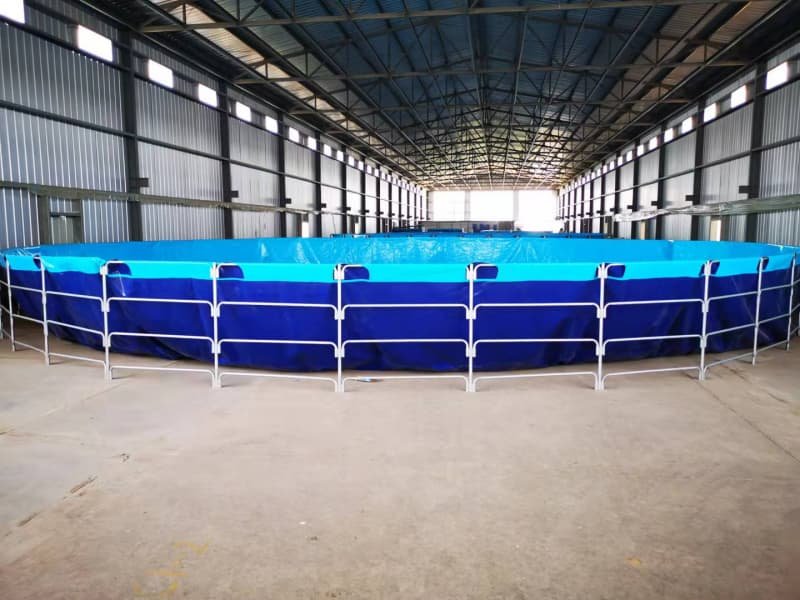
For aquaculture operations—one of the fastest-growing sectors for HDPE liners—1.0–1.5mm HDPE is the standard. Priced at 0.45–1.66 per square meter with an MOQ of 500 square meters, these liners balance durability and cost, withstanding the daily wear of fish or shrimp farming (such as netting scrapes and water circulation systems). Many aquaculture suppliers also offer these liners with anti-fouling coatings, which add 0.10–0.20 per square meter but reduce maintenance costs by preventing algae growth.
For industrial and mining applications, 2.0–3.0mm HDPE liners are mandatory, costing 0.80–1.99 per square meter with an MOQ of 1,000 square meters. These liners are designed to handle hazardous materials (like chemical waste or mining slurry) and extreme weather conditions, with additional features like welded seams (adding 0.20–0.30 per square meter) for leak-proof performance.
3.2 Specialty Liners
Beyond standard HDPE, several specialty liners cater to niche applications, each with unique pricing structures:
- Stock Tank Liners: These are PVC-reinforced liners designed for small, portable tanks (often 6’–10’ in diameter) used for backyard pools, livestock watering, or temporary storage. They cost 0.14–3.47 per square meter, with the lower end reserved for thin, non-reinforced PVC and the higher end for thick, UV-resistant versions. Most suppliers offer stock tank liners in pre-cut sizes (like 8’x8’) with no MOQ, making them accessible for small-scale users.
- Biogas Digester Liners: Biogas digesters require airtight, chemical-resistant liners, and 1.0mm HDPE is the material of choice. These liners cost 1.20–1.30 per square meter with a high MOQ of 10,000 square meters, as they are typically used in large-scale agricultural or industrial biogas plants. They often include heat-welded seams and leak-detection systems, which add 15–20% to the base cost.
- Galvanized Steel Tank Liners: For large-scale agricultural storage (100,000+ liters), galvanized steel tanks often require internal liners to prevent rust and leakage. These liners are typically 1.5–2.0mm HDPE, sold as complete sets (including underlays and installation hardware) for 850–1,000 per set. The price varies by tank size—smaller 5,000-liter tank liners cost around 850, while 20,000-liter liners reach 1,000.
- Food-Grade Drinking Water Liners: These are certified HDPE liners (meeting FDA or EU standards) designed for potable water storage. They cost 2.00–3.57 per square meter, with an MOQ of 500 square meters. The high price reflects rigorous testing (for contaminants like BPA) and quality control, making them essential for municipal water tanks or residential drinking water systems.
4. How to Get the Best Value: Money-Saving Tips
4.1 Buy in Bulk
Bulk purchasing is the most effective way to reduce HDPE liner costs, as suppliers offer significant discounts for large orders. For example, ordering 10,000+ square meters of 2.0mm HDPE can lower the price by 30%, dropping from 0.80–1.61 per square meter to 0.30–0.45 per square meter. This is especially beneficial for commercial projects (like aquaculture farms or industrial facilities) that require large quantities. If your project doesn’t need 10,000 square meters immediately, consider partnering with other businesses (like nearby farms or contractors) to combine orders and qualify for bulk discounts.
4.2 Avoid Over-Specifying
Choosing a liner that is thicker or more certified than needed wastes money. For example, most aquaculture tanks only require 1.0–1.5mm HDPE—opting for 2.0mm HDPE would add 20–30% to the cost without providing meaningful benefits. Similarly, if you’re storing non-potable water (like irrigation water), there’s no need to pay extra for food-grade certification. Before purchasing, assess your project’s requirements: What is the tank’s purpose? What is the maximum volume of water it will hold? Will it be exposed to chemicals or extreme weather? Answering these questions will help you select the right thickness and grade, avoiding unnecessary costs.
4.3 Compare Supplier Quotes
Prices vary widely between suppliers, so it’s critical to compare quotes from at least 3–5 manufacturers. Chinese suppliers offer the lowest base prices (e.g., 0.12–0.24 per square meter for basic HDPE), but you must factor in shipping costs (which can add 0.10–0.30 per square meter for delivery to regions like Kenya or South Africa) and import tariffs (which can be 10–20% in Europe or North America). Local suppliers may have higher base prices but lower shipping costs and faster delivery times, which can save money on project delays. Be sure to ask for detailed quotes that include all costs (like certifications, customization, and shipping) to avoid hidden fees.
4.4 Choose the Right Supplier Type
Working directly with manufacturers (instead of distributors or retailers) can reduce costs by 15–25%. Distributors mark up prices to cover their overhead, so buying directly from a factory (like those in China’s Shandong province, a major HDPE production hub) eliminates this middleman cost. However, direct manufacturers often have higher MOQs (500–1,000 square meters), so this is only feasible for commercial projects. For small-scale orders (100–500 square meters), look for regional suppliers that offer low MOQs without excessive markups—these are often found on B2B platforms like Alibaba. The BPM Company is an excellent brand on it.
5. Conclusion
Water tank liner prices in 2025 are shaped by material type, thickness, customization, application, and location—with HDPE geomembrane standing out as the most cost-effective and search-friendly option. By understanding these factors, you can avoid overpaying: opt for 1.0–1.5mm HDPE for most commercial projects, buy in bulk to qualify for discounts, compare supplier quotes (including hidden costs like shipping and installation), and leverage long warranties to reduce long-term expenses. Whether you’re a homeowner needing a small residential liner or a business owner sourcing liners for an aquaculture farm, this guide provides the insights to make informed, budget-friendly decisions. For personalized quotes on HDPE geomembrane liners tailored to your project’s size, location, and application, contact our team of specialists today—we’ll help you find the best value without compromising on quality.