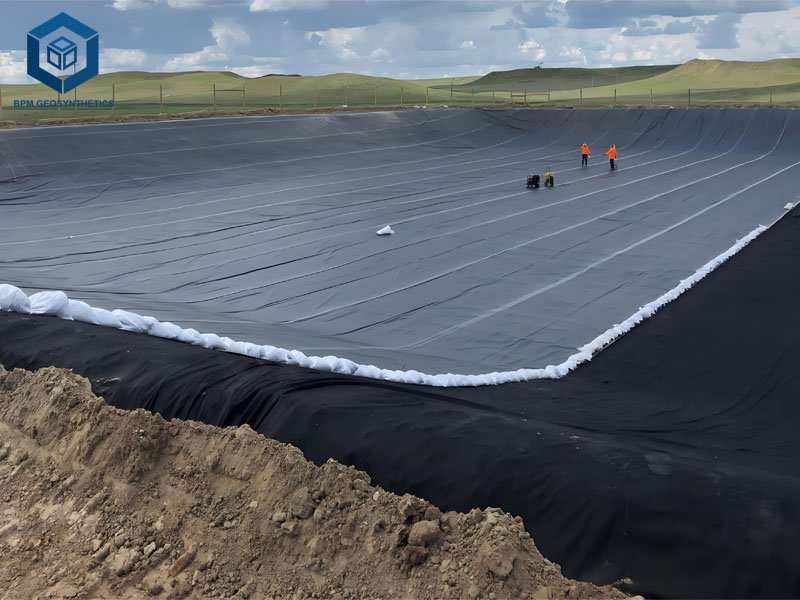
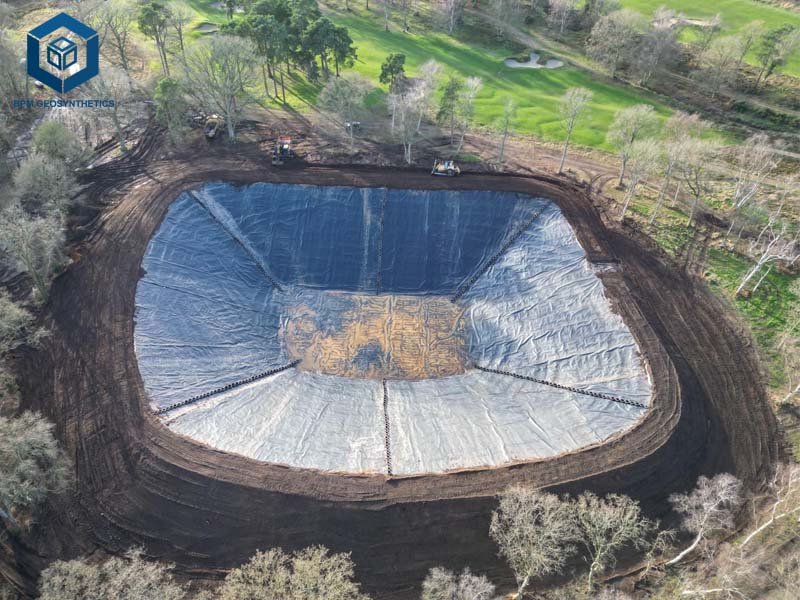
In the expansive arena of water management and landscaping, pond liner sheets—synthetic impermeable membranes—form the bedrock of constructing durable, leak-resistant ponds that cater to aesthetic, agricultural, and aquaculture needs. These versatile barriers prevent water loss, inhibit soil contamination, and support diverse ecosystems, from serene garden features to productive fish farms. As of October 2025, the global pond liners market is valued at USD 3.7 billion, with projections estimating growth to USD 5.8 billion by 2035 at a compound annual growth rate (CAGR) of 4.6%, spurred by urbanization, sustainable water practices, and the aquaculture sector’s expansion. This trajectory highlights the imperative for landscapers, farmers, and pond builders to decipher pricing nuances for strategic planning and cost optimization.
Broadly, pond liner sheet prices in 2025 oscillate between $0.35 and $5.00 per square foot ($3.77 to $53.82 per square meter) for materials, potentially ascending to $0.50 to $6.50 per square foot with installation, dictated by material variants, gauge specifications, and site complexities. High-density polyethylene (HDPE) sheets, capturing roughly 70% of the market for their resilience and affordability, typically reside in the $0.50–$3.00 per square foot range. Derived from manufacturer insights, industry reports, and 2025 benchmarks, this guide proffers a thorough interrogation of pond liner sheet pricing, infused with engineering parameters, case illustrations, and advisory directives. Upon completion, readers will harness the expertise to forecast budgets, align with standards such as ASTM D7179 and NSF/ANSI 61, and augment pond longevity through informed procurements.
1. What Are Pond Liner Sheets?
Pond liner sheets are geosynthetic geomembranes crafted from polymeric compounds, precision-engineered to erect watertight confines that avert percolation, uphold water levels, and safeguard against substratum leachates in pond constructions. Optimized for multifaceted deployments, they eclipse antiquated clay or concrete linings in hydraulic impermeability—frequently below 1 × 10⁻¹⁷ cm/s—and adaptability, thereby facilitating adherence to ecological mandates from entities like the U.S. Environmental Protection Agency (EPA) and the Food and Agriculture Organization (FAO). Divergent from rigid preforms by their pliancy and scalability, these sheets engender hygienic, enduring aquatic realms, diminishing evaporation by up to 90% and curtailing maintenance exigencies.
Key Materials and Manufacturing Processes
The fortitude of pond liner sheets emanates from their polymeric constitution, forged via blown-film extrusion, calendering, or scrim reinforcement to procure homogeneous strata and fortified traits. Predominant paradigms include:
- High-Density Polyethylene (HDPE): Ubiquitous in 70% of installations, HDPE manifests a density of 0.94–0.97 g/cm³ and is extruded to deliver tensile yields of 15–40 kN/m (ASTM D6693 Type IV), with elongation exceeding 600%. Its chemical endurance across pH 1–14 barricades agrochemicals and effluents, bolstered by 2–3% carbon black for UV mitigation, retaining 90% potency after 1,600 kJ/m² exposure (ASTM D7238).
- Ethylene Propylene Diene Monomer (EPDM): Vulcanized elastomer, EPDM imparts paramount ductility (modulus 200–400 MPa) and ozone resilience (>500 pphm/168 hours), calendered to puncture resistances of 400 N (ASTM D4833). Devoid of plasticizers, it spans thermal extremes from -40°C to 120°C, preeminent for ornamental exposures.
- Polyvinyl Chloride (PVC): Plastisol-sourced and calendered, PVC achieves shore hardness of 80–90A and burst strengths of 1,800–2,500 kPa, notwithstanding oxidative thresholds of 50–100 minutes at 150°C (ASTM D5885). Economical, yet reliant on fish-safe iterations to preclude toxic exudates.
- Reinforced Polyethylene (RPE): Scrim-infused, RPE escalates tear resistance 2–4 times HDPE benchmarks (>200 N/mm), apt for capacious agrarian vaults with thermal spans from -50°C to 130°C.
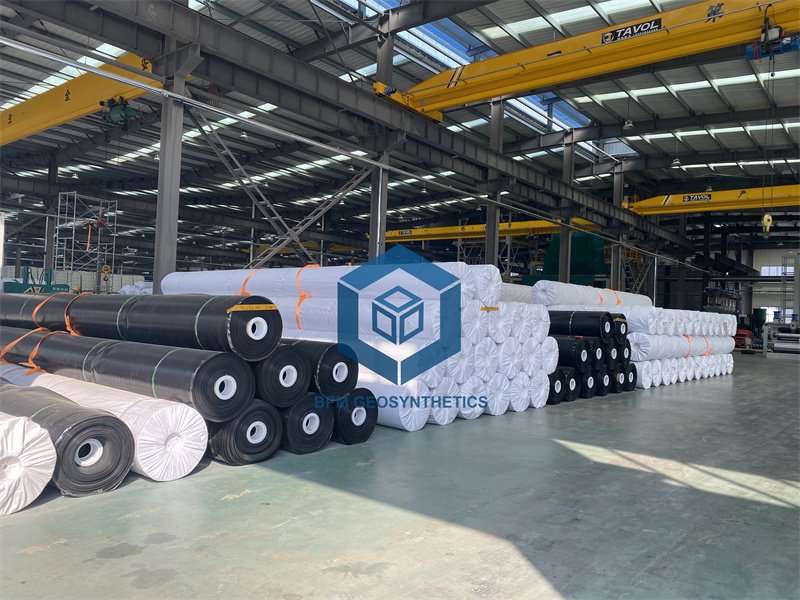
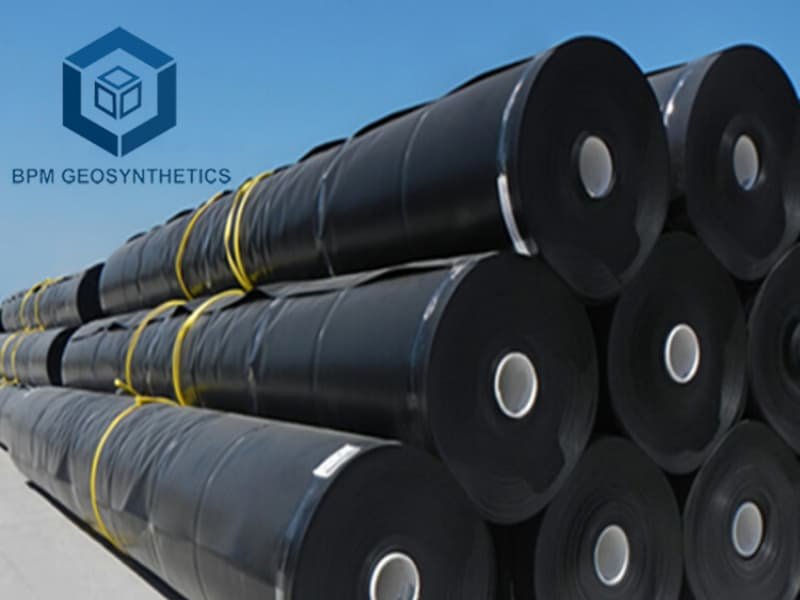
Fabrication embeds antioxidants for sustained integrity, with roll archetypes of 4–8 m widths by 100–200 m lengths to attenuate field splices.
Common Applications and Specifications
Pond liner sheets’ versatility suffuses sundry contexts, each attuned to stringent quanta:
- Decorative Garden Ponds: 0.5–1.0 mm EPDM delimits seepage by 99.9%, with seam shear >35 N/mm (ASTM D5321) and friction angles 20–30° over underlays. A layered 45 mil EPDM atop geotextile yields impermeability <5 × 10⁻¹² m/s, as in a 500 m² UK koi enclave.
- Agricultural Reservoirs: Textured HDPE (1.0–2.0 mm) reinforces inclines under 200 kPa, asperities 0.5–1.0 mm amplifying shear (ASTM D5321). In 2025 Californian irrigation, 60 mil HDPE endured saline fluxes sans erosion.
- Fish Aquaculture Ponds: PVC (0.75–1.5 mm) conforms to NSF/ANSI 61 (<0.1 mg/L extractables), hydraulic heads to 110 kPa sans seepage (ASTM D5887).
- Erosion-Susceptible Basins: RPE amalgams self-seal perforations, conductivity <10⁻¹⁰ cm/s at 1 m overlay, per USDA precepts.
- Transient Holding Ponds: 0.5 mm HDPE for quarantine, brittleness <-70°C (ASTM D746).
Durations forecast 20–50 years submerged for HDPE, 10–30 for exposed PVC; GRI-GM17 and ISO 9001 validations substantiate these, forestalling disruptions quintupling remediation outlays.
These primordial tenets explicate fiscal divergences: stalwart HDPE, with its protracted endurance, routinely offsets premiums via abated refurbishments, steering astute pond delineations.
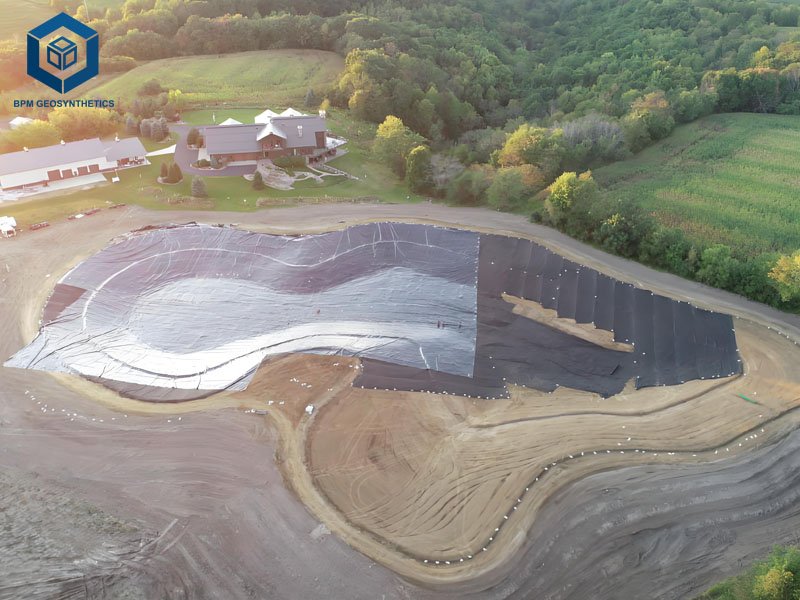
2. What Is Pond Liner Sheet Price?
Pond liner sheet pricing in 2025 vacillates with resin volatilities—HDPE monomers yoked to ethylene, anticipated to climb 7–10% amid supply strictures—and burgeoning assimilation in ornamental and agrarian spheres. Fundamental materiel disbursements average $0.40–$2.50 per square foot, encompassing ventures may vault to $0.70–$7.00, per sector canons. This scrutiny, reinforced by 2025 observables and geotechnical metrics, furnishes meticulous fiscal delineations.
2.1 Pond Liner Sheet Price – Material Type
Materiel archetype governs 45–65% of fiscal fluctuation, countervailing mechanical excellence against pecuniary moderation.
2.1.1 High-Density Polyethylene (HDPE)
$0.50–$3.00 per square foot ($5.38–$32.29 per square meter), HDPE’s rigidity (modulus >800 MPa) reigns in agrarian vaults, a 1.0 mm lamina proffering 15–35 kN/m tensile and <1 × 10⁻¹² cm/s conductivity. For a 50,000 sq ft reservoir, aggregates $25,000–$150,000; its 99.9% retention (GRI-GM18) ratifies allocation.
2.1.2 Ethylene Propylene Diene Monomer (EPDM)
$0.75–$2.00 per square foot ($8.07–$21.53 per square meter), EPDM’s pliancy (elongation >600%) excels in decorative enclaves, conductivity <5 × 10⁻¹³ cm/s, seam peel >25 N/mm (ASTM D6392). A 20,000 sq ft koi pond: $15,000–$40,000, 15% superior weld fortitude over HDPE.
2.1.3 Polyvinyl Chloride (PVC)
$0.35–$1.50 per square foot ($3.77–$16.15 per square meter), PVC’s malleability (bend radius <5x gauge) suits ancillary fish sumps, 20–30 year cloaked tenures; burst 1,800 kPa. For 30,000 sq ft aquaculture: $10,500–$45,000, innocuous <1 mg/L volatiles per NSF-61.
2.1.4 Reinforced Polyethylene (RPE)
$0.40–$0.90 per square foot ($4.31–$9.69 per square meter), RPE’s reinforcement (2–4x HDPE tear >200 N/mm) befits vast erosion basins, thermal ambit -50°C to 130°C. A 40,000 sq ft agrarian pond: $16,000–$36,000, 40% thermal flux abatement.
HDPE commandeers 70% of deployments for its equipoise.
2.2 Pond Liner Sheet Price – Thickness
Calibrational escalation, 6–12% per 0.1 mm uptick, amplifies volumetric outlays while buttressing resilience.
- Thin (0.5–1.0 mm / 20–40 mil): $0.35–$1.10 per square foot ($3.77–$11.84 per square meter). Congruous for petite garden pads, burst 1,200–1,600 kPa; 10,000 sq ft: $3,500–$11,000.
- Medium (1.0–2.0 mm / 40–80 mil): $0.70–$2.50 per square foot ($7.53–$26.91 per square meter). Ubiquitous in fish farms, tensile 25–40 kN/m; 60,000 sq ft: $42,000–$150,000 (FAO compliant).
- Thick (2.0–3.0 mm / 80–120 mil): $1.50–$5.00 per square foot ($16.15–$53.82 per square meter). For seismic agrarian, puncture >550 N; 100,000 sq ft: $150,000–$500,000, extending 25 years.
Augmented gauges exact scrupulous extrusion, inflating assurance by 12%.
2.3 Pond Liner Sheet Price – Project Size and Scale
Scalar economies attenuate unit fiscal by 20–35% in voluminous commissions, amortizing fixtures.
- Small (<10,000 sq ft): $1.00–$4.00 per square foot, encumbered by thresholds; homestead koi: $10,000–$40,000.
- Medium (10,000–100,000 sq ft): $0.50–$2.50 per square foot; commercial reservoirs: $50,000–$250,000.
- Large (>100,000 sq ft): $0.35–$1.50 per square foot; industrial aquaculture: $35,000–$150,000, tailored 9 m breadths truncating junctions 20%.
A 2025 Australian 150,000 sq ft irrigation realized $0.60/sq ft via tiered rebates.
2.4 Pond Liner Sheet Price – Installation Method and Labor
Deployment comprises 25–50% of aggregates, per pond metrics. Modalities encompass:
- Extrusion Welding: $0.40–$1.20 per square foot for HDPE, 450–550°C; adept teams progress 100 m/day, appending $20,000–$60,000 to 50,000 sq ft.
- Adhesive Fusion: $0.25–$0.70 per square foot for EPDM/PVC; swift yet shear-fragile (15–25 N/mm).
- Mechanical Fixation: $0.20–$0.60 per square foot; bed grading to ±40 mm tolerance inflates 25% on slopes >1:3.
U.S. stipends: $60–$120/hour, overlaps per ASTM D4437 (100–300 mm).
2.5 Pond Liner Sheet Price – Raw Material Quality
Primal resins premium 20–40% over recyclates, proffering 40–70 year spans versus 10–25.
- Virgin HDPE: $0.70–$3.20 per square foot, <1.5% stabilizers for oxidation (>200 min/150°C); NSF/ANSI 61 potable.
- Recycled Blends: $0.40–$1.50 per square foot, 85% post-use; supplementary roles.
- Augmented Variants: $0.10–$0.50 uplift for antistatic layers, elevating detection to 98%.
GRI-GM17 adherence averts breaches costing 5–10x materiel.
2.6 Pond Liner Sheet Price – Transportation and Logistics
Freight accretes $0.05–$0.25 per square foot, rolls to 5 tons via haulers. Domestic: $0.05–$0.10; interregional: $0.15–$0.25, 11% fuel surcharges. Textured EPDM demands cushioned transit, +10%.
2.7 Pond Liner Sheet Price – Maintenance and Lifetime Costs
Annual inspections: $0.01–$0.05 per square foot. HDPE’s 50-year norm amortizes $0.02/sq ft/year, contra PVC’s $0.04. Infraction ameliorations: $5,000–$50,000/incident, accentuating provenance.
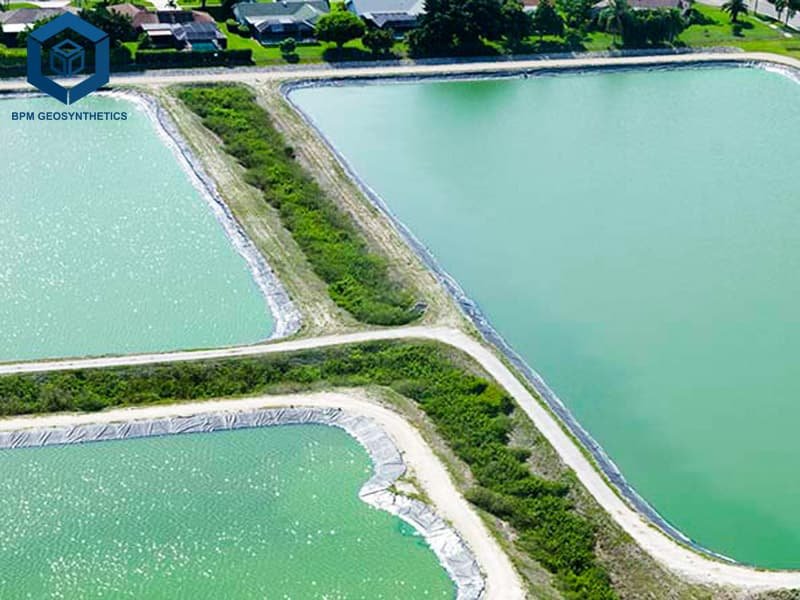
3. How to Choose the Right Pond Liner Sheet
Astute selection synchronizes metrics with pond mandates, obviating 15–30% overruns.
3.1 Assess Project Requirements
Calibrate to milieu: 0.75 mm PVC for <50 kPa decorative; 2.0 mm HDPE for agrarian (seep flux). Substratum assays per ASTM D5084 orientate.
3.2 Prioritize Quality and Certifications
Exigency GRI-validated virgins; shun dubious origins, erring 20% more. Destructive seam assays imperative, favoring NSF-61 for aquatics.
3.3 Evaluate Installation Needs
Elect fusibles for gradients; apportion 20% surfeit for manual on rugged terrains.
3.4 Consider Long-Term Costs
Tenure reckoners evince 1.5 mm HDPE economizes $0.30/sq ft over 40 years versus attenuate.
3.5 Compare Suppliers
Elicit tenders from 3–5; appraise indemnities (15–30 years), latencies (4–8 weeks).
4. Industry Trends Affecting Pond Liner Sheet Price
2025 vectors encompass recyclate infusions abating 15–25% while satisfying ESG edicts, and RPE composites appending $0.30–$0.80/sq ft for auto-repair. Augmented breadths (to 10 m) abate labor 25%, IoT-embedded variants premium 15–20% but attenuate surveillance 40%. Asia-Pacific surfeit depresses tariffs 7–10%, HDPE segment at $1.4B, CAGR 6.8%. Bio-polymers ascend, +25% fiscal but green rebates, with modular designs easing upkeep by 30%.
5. Conclusion
Pond liner sheet prices in 2026, spanning $0.35–$5.00 per square foot, embody a sophisticated fusion of exigency and materiel evolution. By favoring HDPE for tenacious applications—tensiles to 40 kN/m, conductivities <10⁻¹⁷ cm/s—custodians attain containment supremacy sans profligacy. Empiric calibrations, from gauge arbitrations to provenance scrutiny, not solely conform to ASTM/GRI but buttress endurance.
For bespoke tenders, engage accredited fabricators. As the sector vaults to $5.8B by 2035, prescient orchestration heralds thrift and sustainability. Procure astutely for perdurable legacies.
Any questions or inquiries, please contact BPM Geosynthetics.