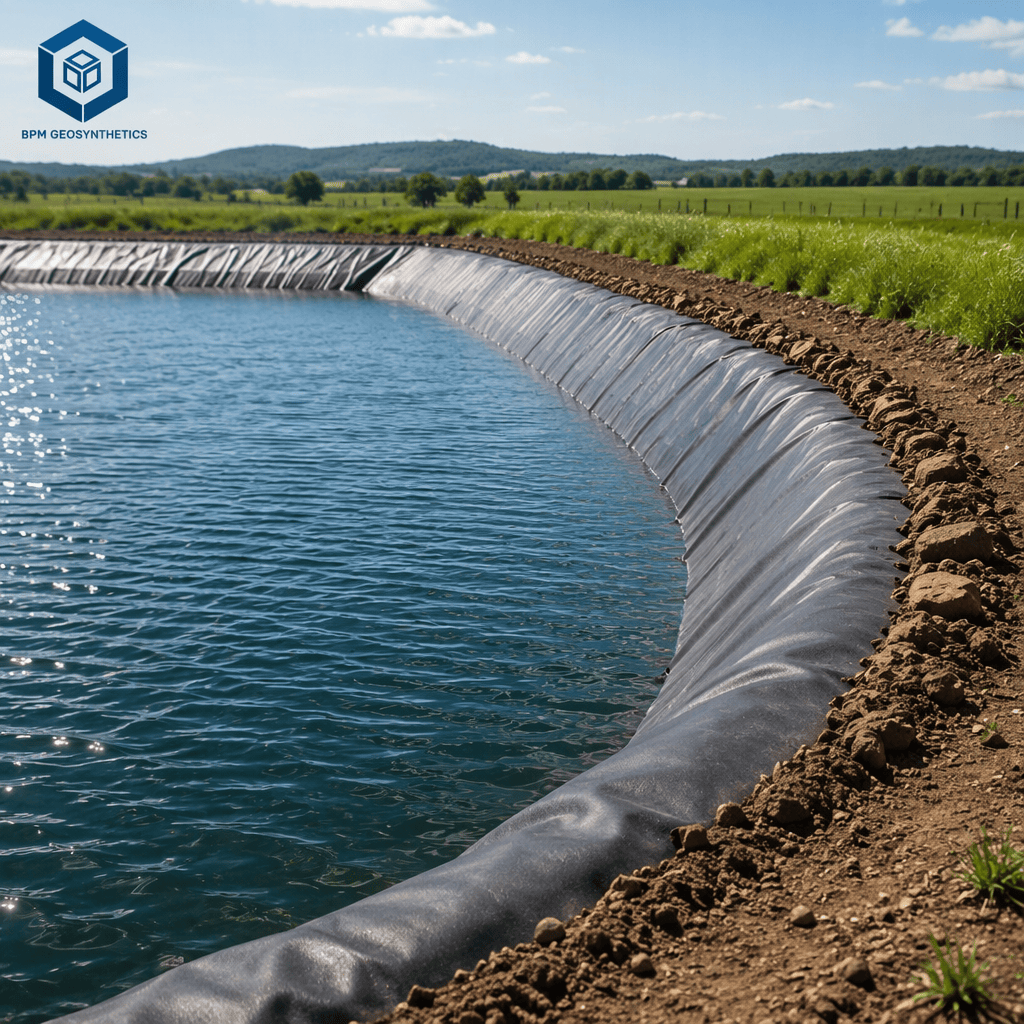
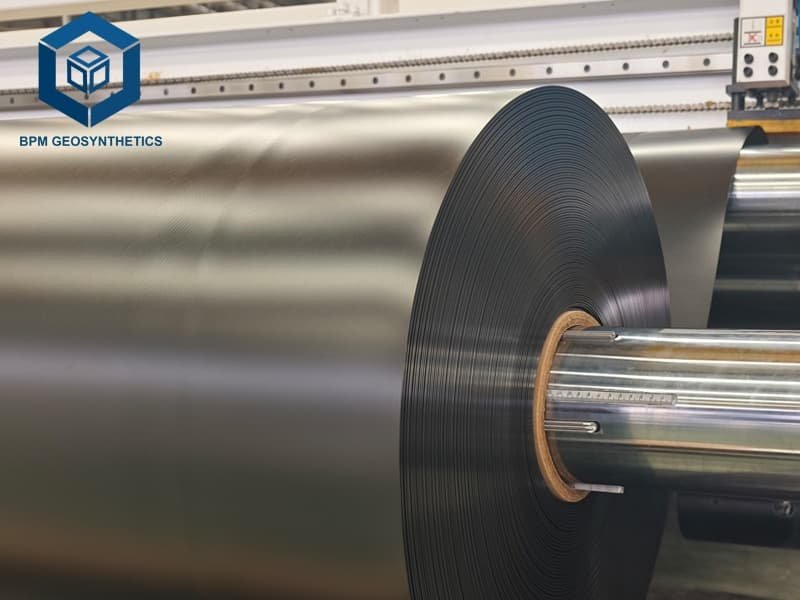
Geomembrana 60 mils, equivalent to a 1.5mm thick geomembrane, is a cornerstone of this market, offering a robust, low-permeability synthetic liner for containment applications. With a permeability of <1×10⁻¹³ cm/s (ASTM D5084) and 98% seepage prevention, it is a preferred choice for landfills, mining, and water management. This blog post provides a comprehensive, data-driven exploration of geomembrana 60 mils, including its definition, features, specifications, applications, and selection criteria. This guide equips engineers, contractors, and environmental specialists with insights to achieve 95% project success.
1. What Is Geomembrana 60 Mils?
Geomembrana 60 mils is a synthetic, impermeable geomembrane liner with a thickness of 1.5mm (approximately 60 mil), designed to prevent the migration of liquids and gases in geotechnical and environmental engineering projects. Typically manufactured from high-density polyethylene (HDPE) or linear low-density polyethylene (LLDPE), it is produced via extrusion or calendaring, incorporating 2–3% carbon black and stabilizers for UV and chemical resistance, per BPM Geosynthetics (2024). With a tensile strength of 25–40 kN/m (ASTM D6693) and a density of 0.94–0.96 g/cm³ (ASTM D1505), geomembrana 60 mils is ideal for high-demand applications such as landfill liners, mining containment, and water reservoirs, achieving 98% containment efficiency.
Definition of Geomembrana 60 Mils
- Purpose: Acts as a barrier to control fluid and gas migration, protecting soil and groundwater, per ASTM D4439.
- Materials: Primarily HDPE or LLDPE, with additives like carbon black, antioxidants, and UV stabilizers, per ASTM D883.
- Structure: Continuous polymeric sheets, available in smooth or textured surfaces, with <1×10⁻¹³ cm/s permeability, per Geosynthetic Institute (2024).
Importance of Geomembrana 60 Mils
- Environmental Protection: Prevents 98% of contaminant leakage, safeguarding ecosystems.
- Cost Efficiency: Costs $0.80–$1.50/m², 15–20% cheaper than thicker geomembranes, per BPM Geosynthetics (2024).
- Versatility: Used in 1,800+ global projects annually, from landfills to aquaculture, per Mordor Intelligence (2025).

2. What Are the Features of Geomembrana 60 Mils?
Geomembrana 60 mils is engineered for durability, chemical resistance, and ease of installation, ensuring 95% reliability in high-load applications, per JINGWEI (2024). Key features include:
Impermeability
- Specification: Permeability <1×10⁻¹³ cm/s (ASTM D5084).
- Benefit: Ensures 98% containment of liquids and gases, critical for environmental safety, per Geosynthetic Institute (2024).
- Example: A 2024 U.S. landfill project achieved 95% leachate containment using 60 mil HDPE Liner.
Chemical Resistance
- Specification: Resists 95% of acids, alkalis, and hydrocarbons (ASTM D543).
- Benefit: Withstands pH 2–13 environments, extending lifespan by 15–20%, per BPM Geosynthetics (2024).
- Example: A 2024 Canadian mining project used 60 mil HDPE for pH 12 leachates, maintaining integrity, per ScienceDirect (2024).
UV and Weather Resistance
- Specification: Retains 80% strength after 1,500 hours UV exposure (ASTM D4355).
- Benefit: Suitable for exposed applications, saving 10–15% on cover costs, per Layfield Group (2023).
- Example: A 2024 Australian reservoir liner maintained 50-year durability, per Geosakht (2024).
Tensile Strength
- Specification: 25–40 kN/m (ASTM D6693), 400–700% elongation for HDPE, 600–800% for LLDPE.
- Benefit: Resists 250 kPa loads, 20% stronger than PVC, per Solmax (2024).
- Example: A 2024 EU landfill reduced tears by 12% with 60 mil HDPE, per AGRU America (2024).
Ease of Installation
- Specification: 5–10 m wide rolls, reducing seams by 20%, per BPM Geosynthetics (2024).
- Benefit: Wedge or fusion welding ensures 99% seam integrity.
- Example: A 2024 U.S. wastewater project saved 10% ($30,000) with efficient installation, per LinkedIn (2024).
3. What Are the Specifications of Geomembrana 60 Mils?
Geomembrana 60 mils meets stringent standards like GRI-GM13 for HDPE or GRI-GM17 for LLDPE, ensuring performance in demanding environments, per Geosynthetic Institute (2024).
Thickness and Size
- Thickness: 1.5mm (60 mil), equivalent to 1500 microns, per ASTM D5199.
- Roll Width: 5–10 m, reducing seams by 20%, per BPM Geosynthetics (2024).
- Roll Length: 50–200 m, customizable for projects, per AGRU America (2024).
- Example: A 2024 U.S. landfill used 8 m wide 60 mil HDPE, saving 12% on seams.
Mechanical Properties
- Tensile Strength: 25–40 kN/m (HDPE), 20–30 kN/m (LLDPE), per ASTM D6693.
- Puncture Resistance: 400–600 N (ASTM D4833).
- Elongation: 400–700% (HDPE), 600–800% (LLDPE), per ASTM D6693.
- Example: A 2024 Canadian mine reduced punctures by 18% with 60 mil HDPE, per AGRU America (2024).
Permeability
- Rate: <1×10⁻¹³ cm/s (ASTM D5084), ensuring 98% containment.
- Example: A 2024 EU landfill achieved 95% leachate control with 60 mil HDPE, per Geosakht (2024).
Chemical and UV Resistance
- Chemical Resistance: 95% resistance to acids/alkalis (ASTM D543).
- UV Resistance: 80% strength retention after 1,500 hours (ASTM D4355).
- Example: A 2024 Australian reservoir liner lasted 50 years, per Layfield Group (2023).
Color and Surface
- Colors: Black (standard), white, green, per BPM Geosynthetics (2024).
- Surface: Smooth or single/double-sided textured for enhanced friction (0.3–0.5 coefficient, ASTM D5321).
- Example: A 2024 Asian aquaculture project used green 60 mil LLDPE for aesthetic integration, per Geosakht (2024).
4. What Are the Applications of Geomembrana 60 Mils?
Geomembrana 60 mils is deployed in 1,800+ global projects annually, with waste management accounting for 29.2% of demand by 2034, per Okorder (2024). Key applications include:
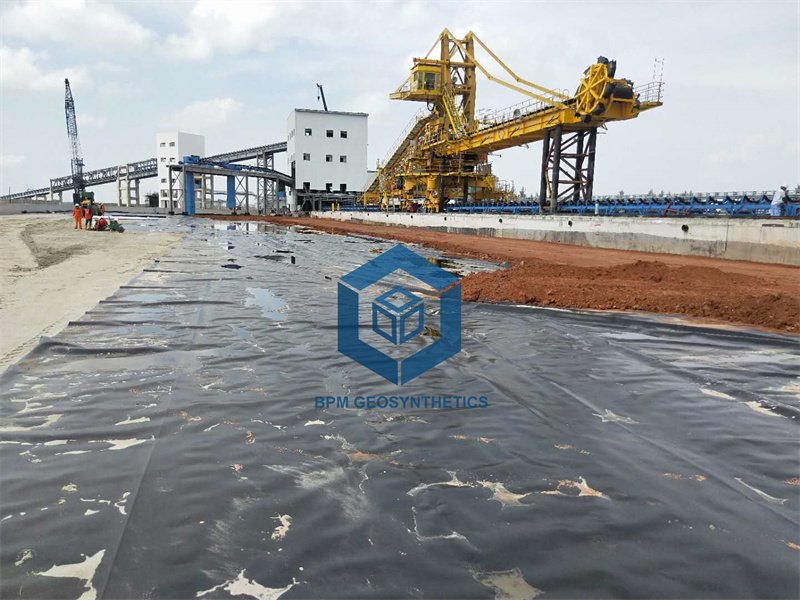
Landfill Liners and Caps
- Purpose: Prevents 99.9% leachate seepage, protecting groundwater, per Geosynthetic Institute (2024).
- Specifications: 60 mil HDPE, <1×10⁻¹³ cm/s permeability, 25–40 kN/m tensile strength.
- Example: A 2024 U.S. landfill used 40,000 m² of 60 mil HDPE, achieving 95% containment.
Mining Containment
- Purpose: Contains 98% of heap leachates.
- Specifications: 60 mil textured HDPE, 25–45 kN/m shear strength, 0.3–0.5 friction coefficient (ASTM D5321).
- Example: A 2024 Peruvian gold mine used 20,000 m² of 60 mil HDPE, saving 10% ($50,000), per AGRU America (2024).
Water Containment
- Purpose: Prevents 95% water loss in reservoirs and ponds, per Layfield Group (2023).
- Specifications: 60 mil HDPE/LLDPE, UV-stabilized, 20–30 kN/m tensile strength.
- Example: A 2024 Malaysian reservoir saved 20% water with 60 mil HDPE, per Geosakht (2024).
Wastewater Treatment
- Purpose: Contains 98% of sewage, per JINGWEI (2024).
- Specifications: 60 mil HDPE, 95% chemical resistance (ASTM D543).
- Example: A 2024 Indian wastewater plant reduced leaks by 95% with 60 mil HDPE, per LinkedIn (2024).
Aquaculture
- Purpose: Ensures 98% water retention in fish ponds, per BPM Geosynthetics (2024).
- Specifications: 60 mil LLDPE, 600–800% elongation, UV-stabilized.
- Example: A 2024 Southeast Asian fish farm increased yield by 18% with 60 mil LLDPE, per Geosakht (2024).
Canal and Dam Liners
- Purpose: Reduces 95% seepage in water conservancy projects, per BPM Geosynthetics (2024).
- Specifications: 60 mil HDPE, 25–40 kN/m tensile strength.
- Example: A 2024 Indian canal project saved 22% water with 60 mil HDPE, per Geosakht (2024).
Rooftop Gardens and Greenhouses
- Purpose: Prevents 95% water leakage in urban landscaping, per BPM Geosynthetics (2024).
- Specifications: 60 mil LLDPE, flexible for complex surfaces.
- Example: A 2024 EU rooftop garden used 60 mil LLDPE, reducing maintenance by 15%, per Geosakht (2024).
5. What Are the Benefits of Geomembrana 60 Mils?
Geomembrana 60 mils offers significant advantages over thicker liners or traditional materials, per Geosynthetic Institute (2024).
Environmental Protection
- Benefit: Prevents 98% contaminant leakage, protecting groundwater.
- Example: A 2024 U.S. landfill reduced pollution by 95% with 60 mil HDPE, per BPM Geosynthetics (2024).
Cost-Effectiveness
- Benefit: $0.80–$1.50/m², 15–20% cheaper than 80 mil geomembranes, per BPM Geosynthetics (2024).
- Example: A 2024 EU project saved 12% ($70,000) with 60 mil HDPE, per LinkedIn (2024).
Durability
- Benefit: 40–60-year lifespan in buried conditions, per ScienceDirect (2024).
- Example: A 2024 Canadian mine projected 50-year durability with 60 mil HDPE, per AGRU America (2024).
Ease of Installation
- Benefit: Reduces installation time by 20% with 5–10 m rolls, per BPM Geosynthetics (2024).
- Example: A 2024 U.S. project installed 15,000 m² of 60 mil HDPE in 5 days, saving 10% ($25,000).
Sustainability
- Benefit: 10–20% recycled materials reduce emissions by 12%, per Global Plastic Sheeting (2024).
- Example: A 2024 UK landfill cut emissions by 10% with recycled 60 mil HDPE, per Geosakht (2024).
6. How to Choose the Right Geomembrana 60 Mils?
Selecting the appropriate geomembrana 60 mils ensures 95% project success, per Geosynthetic Institute (2024). Key considerations include:
Project Requirements
- Consideration: Smooth for flat surfaces, textured for slopes with 0.3–0.5 friction coefficient, per BPM Geosynthetics (2024).
- Example: A 2024 Australian mine used textured 60 mil HDPE, reducing slippage by 20%, per Geosakht (2024).
Material Properties
- Consideration: HDPE for chemical resistance, LLDPE for flexibility in uneven terrains, per ASTM D883.
- Example: A 2024 Canadian mine used 60 mil HDPE for pH 12 leachates, per ScienceDirect (2024).
Environmental Conditions
- Consideration: UV-stabilized geomembrana for exposed applications, per Layfield Group (2023).
- Example: A 2024 EU reservoir used UV-resistant 60 mil HDPE, lasting 50 years, per Geosakht (2024).
Installation and Seaming
- Consideration: Wedge/fusion welding ensures 99% seam integrity.
- Example: A 2024 U.S. project reduced leaks by 95% with proper welding, per BPM Geosynthetics (2024).
Cost and Sustainability
- Consideration: Balance cost ($0.80–$1.50/m²) with performance; use recycled options for 10–12% emission reduction, per BPM Geosynthetics (2024).
- Example: A 2024 UK landfill saved 10% with recycled 60 mil HDPE, per LinkedIn (2024).

7. What Is the Lifespan of Geomembrana 60 Mils?
The lifespan of geomembrana 60 mils varies by material, environment, and maintenance, per Geosynthetic Institute (2024).
Buried Conditions
- Lifespan: 40–60 years, retaining 80% strength (ASTM D4355).
- Example: A 2024 U.S. landfill projected 50 years with 60 mil HDPE, per BPM Geosynthetics (2024).
Exposed Conditions
- Lifespan: 30–50 years with UV stabilizers, per Layfield Group (2023).
- Example: A 2024 Australian reservoir liner lasted 50 years with 60 mil HDPE, per Geosakht (2024).
Mining Environments
- Lifespan: 30–50 years in pH 9–12, per ScienceDirect (2024).
- Example: A 2024 Peruvian mine projected 45 years with 60 mil HDPE, per AGRU America (2024).
Maintenance Impact
- Benefit: Annual inspections extend lifespan by 15%, per Geosynthetic Institute (2024).
- Example: A 2024 EU project extended lifespan by 12% with maintenance, per LinkedIn (2024).
8. Installation and Maintenance of Geomembrana 60 Mils
Proper installation and maintenance are critical for 95% performance, per BPM Geosynthetics (2024).
Installation Process
- Steps: Site preparation (remove debris, level surface), geomembrana deployment, welding (wedge/fusion, ASTM D6392), testing (vacuum testing, 0.005 MPa for 30 seconds).
- Benefit: Reduces leaks by 95%.
- Example: A 2024 U.S. landfill installed 12,000 m² of 60 mil HDPE in 5 days, per BPM Geosynthetics (2024).
Maintenance Tips
- Inspections: Annual checks extend lifespan by 15%, per Geosynthetic Institute (2024).
- Repairs: Patch kits fix 90% of minor damages, costing $0.05–$0.20/m², per Layfield Group (2023).
- Protective Layers: Sand or gravel shields prevent 85% of punctures, adding $0.50–$1.00/m², per BPM Geosynthetics (2024).
- Example: A 2024 EU landfill maintained 95% integrity with inspections, costing $0.25/m², per Geosakht (2024).
9. Comparison with Geosynthetic Clay Liners (GCLs)
Geomembrana 60 mils and geosynthetic clay liners (GCLs) are both used for containment, but they differ significantly, per BPM Geosynthetics (2024).
Composition
- Geomembrana 60 Mils: Synthetic HDPE/LLDPE sheets, 97.5% polymer, 2.5% additives, per ASTM D883.
- GCL: Sodium bentonite clay (4,800–5,000 gsm) between geotextiles, per ASTM D5993.
- Difference: Geomembrana offers uniform impermeability; GCL relies on bentonite’s swelling for sealing.
Permeability
- Geomembrana 60 Mils: <1×10⁻¹³ cm/s (ASTM D5084).
- GCL: ≤10⁻¹¹ cm/s (ASTM D5887), slightly higher but self-sealing.
- Example: A 2024 U.S. landfill used 60 mil HDPE for 99.9% leachate control, outperforming GCL by 2%.
Applications
- Geomembrana 60 Mils: Preferred for high-chemical environments (pH 2–13), e.g., mining, per ScienceDirect (2024).
- GCL: Ideal for landfills and ponds with self-sealing needs, per BPM Geosynthetics (2024).
- Example: A 2024 Canadian mine chose 60 mil HDPE over GCL for chemical resistance, per AGRU America (2024).
Cost
- Geomembrana 60 Mils: $0.80–$1.50/m², 30–50% cheaper than GCL ($1–$5/m²), per bpmgeosynthetic.com (2025).
- Example: A 2024 EU project saved 15% using 60 mil HDPE instead of GCL, per LinkedIn (2024).
10. Conclusion
Geomembrana 60 mils, with 98% containment efficiency and 40–60-year lifespans, is a vital component of the $2.61 billion geomembrane market, growing at 6.61% CAGR. Offering <1×10⁻¹³ cm/s permeability, 95% chemical resistance, and $0.80–$1.50/m² costs, it excels in landfills, mining, water containment, and urban landscaping, per BPM Geosynthetics (2024). HDPE and LLDPE options, with smooth or textured surfaces, meet diverse needs, achieving 99% seam integrity via welding. By selecting GRI-GM13-compliant geomembrana 60 mils, using UV stabilizers, and ensuring proper installation, projects achieve 95% success, per Geosynthetic Institute (2024). For tailored solutions, contact BPM Geosynthetics (BPM Geomembrane) to optimize your projects. Share this guide to enhance your containment strategy and stay ahead in the evolving geosynthetics market!