1. Introduction
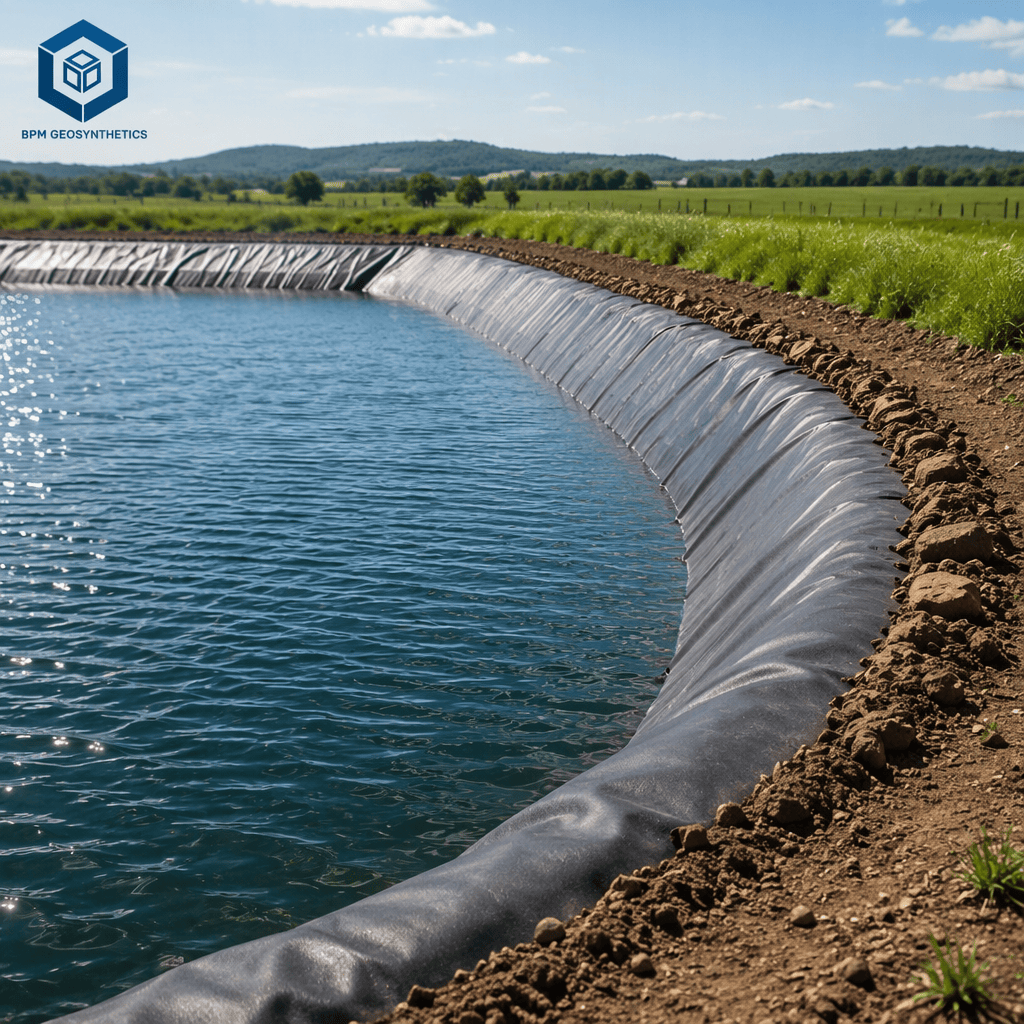
In the world of civil engineering, environmental protection, and water management, the choice of an impervious geomembrane is not merely a technical detail—it is the backbone of project longevity and safety. Whether you are constructing a landfill, a mining leach pad, a agricultural pond, or a complex industrial containment system, the geomembrane serves as the critical barrier preventing contaminants from leaching into the soil and groundwater.
With a saturated market offering various materials, thicknesses, and textures, selecting the right liner can be overwhelming. After analyzing industry standards, durability metrics, and real-world application feedback, we have curated a list of the seven best impervious geomembranes currently available. This review focuses on performance, chemical resistance, tensile strength, and installation efficiency to help you make an informed procurement decision.
2. Why Material Selection Matters for Impervious Barriers.
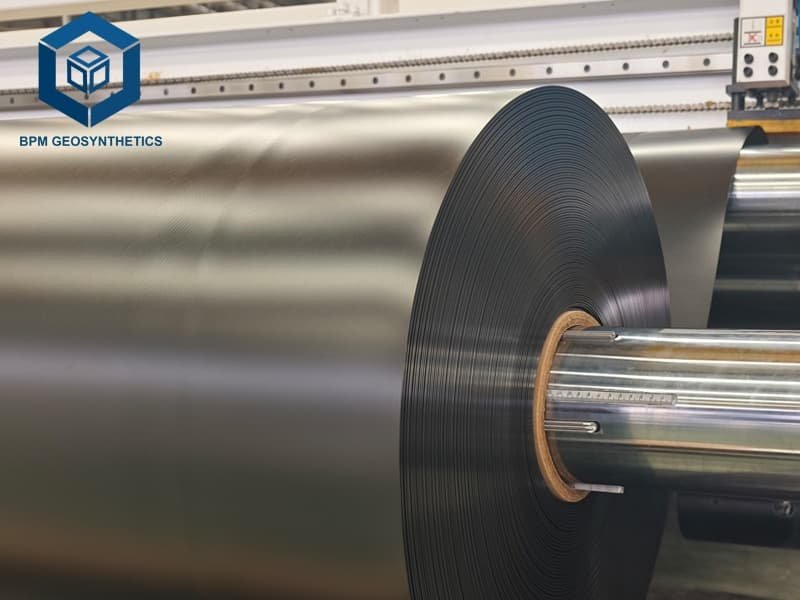
Before diving into the specific products, it is essential to understand what makes a geomembrane truly “impervious.” True impermeability is a combination of low hydraulic conductivity, resistance to ultraviolet (UV) degradation, and flexibility under stress. A failure in any of these areas can lead to costly leaks, environmental fines, and structural collapse. Modern engineering typically relies on polyethylene-based membranes due to their molecular stability, but variations in manufacturing standards—such as the difference between High-Density Polyethylene (HDPE), Linear Low-Density Polyethylene (LLDPE), and Polyvinyl Chloride (PVC)—dictate where and how these liners should be used.
3. The Evaluation Criteria
To ensure this review aligns with rigorous engineering procurement standards, we evaluated each geomembrane based on five key performance indicators:
3.1 Permeability
The hydraulic conductivity rating (typically measured in cm/s) to ensure true imperviousness.
3.2 Tensile Strength
The ability to resist punctures and tears during installation and operational stress.
3.3 Chemical Resistance
Durability against acidic mine drainage, hydrocarbon spills, or agricultural waste.
3.4 UV Resistance
Longevity in exposed applications versus covered applications.
3.5 Installation Adaptability
Ease of seaming, flexibility on slopes, and availability of sheets.
4. The 7 Best Impervious Geomembranes
The following products represent the most reliable solutions currently available, selected based on the criteria above.
4.1 GSE HD Smooth Geomembrane
GSE is arguably the most recognized name in the geomembrane industry, and their HD Smooth liner remains the gold standard for high-density polyethylene applications. This product is specifically designed for projects where maximum chemical resistance and extreme durability are required. It features exceptional dimensional stability, meaning it does not expand or contract significantly with temperature changes. For base lining in landfills or large mining operations, this geomembrane provides a robust barrier against aggressive leachates. Its smooth surface allows for efficient scanning using dual-track fusion welders, resulting in seams that are often stronger than the parent material. If your project requires a reliable, chemically inert barrier for covered applications, this is the top contender.
4.2 Solmax Premium Textured HDPE Geomembrane
When constructing steep slopes or uneven subgrades, textured geomembranes are non-negotiable. Solmax’s Premium Textured HDPE offers superior frictional characteristics that prevent sliding in high-angle applications. This is critical for landfill caps and reservoir liners where soil cover is placed directly on top of the liner. Beyond the texture, Solmax utilizes advanced resin technology that ensures the material retains flexibility even in sub-zero temperatures. The texturing does not compromise the tensile strength; rather, it enhances the composite structure when combined with geotextiles. For projects prioritizing slope stability and long-term containment integrity, this product delivers industry-leading performance.
4.3 AGRU 2.0 mm LLDPE Geomembrane
For applications requiring superior flexibility and conformability, LLDPE is often the material of choice, and AGRU’s 2.0 mm variant is exceptional. Unlike traditional HDPE, which can be rigid and difficult to install in intricate geometries, AGRU’s LLDPE geomembrane offers excellent elongation properties. It can stretch to accommodate differential settlement in the subgrade without tearing. This makes it an ideal solution for tunnel waterproofing, small farm ponds, and secondary containment structures where ground movement is expected. Additionally, AGRU utilizes high-purity resins that result in excellent resistance to environmental stress cracking, ensuring the “impervious” claim holds true over decades of use.
4.4 Firestone EPDM Geomembrane (Rubber Liner)
Moving away from polyethylene, the Firestone EPDM (Ethylene Propylene Diene Monomer) geomembrane offers a unique solution for applications demanding extreme flexibility and resistance to freezing and thawing cycles. Often referred to as “rubber liner,” this product is highly favored in the aquaculture and decorative water feature industries. It is distinct from HDPE because it does not require heat welding; instead, it uses adhesives and tapes, making it easier for specific project types. Its primary advantage is its ability to remain pliable in cold weather, reducing the risk of brittle failure. While it may not have the same absolute chemical resistance as HDPE against hydrocarbons, it is unmatched in applications where mechanical movement and biological safety (non-toxic to fish) are priorities.
4.5 Atarfil Double-Sided Textured Polypropylene (PP)
For high-temperature environments or aggressive chemical exposures that degrade traditional polyethylene, Polypropylene (PP) geomembranes are the superior choice. Atarfil’s Double-Sided Textured PP liner is a niche product that excels where thermal stability is critical. PP has a higher melting point than HDPE, making it suitable for exposed applications in desert climates or for covering industrial waste with exothermic reactions. The double-sided texture maximizes friction angles, allowing for steeper construction. Furthermore, PP exhibits excellent resistance to oxidation over time. If your site conditions involve high thermal stress or specific chemical effluents that are incompatible with polyethylene, this geomembrane is the best investment.
4.6 PLASTECH Heavy Duty Reinforced Polyethylene (RPE)
For temporary construction sites, dewatering ponds, or emergency containment where speed is of the essence, PLASTECH’s Reinforced Polyethylene (RPE) offers a high-strength, lightweight alternative. This is not a traditional homogeneous geomembrane; it is a woven scrim reinforced between layers of polyethylene. This construction gives it incredible puncture and tear resistance relative to its weight. It is often the go-to solution for construction site sediment control and frac tank liners. While it may not be specified for 50-year landfill caps, its impervious nature and high tensile strength make it the best option for short-to-medium-term projects requiring rapid deployment and removal.
4.7 NAUE Carpi Sealing Membrane (Bentonite Composite)
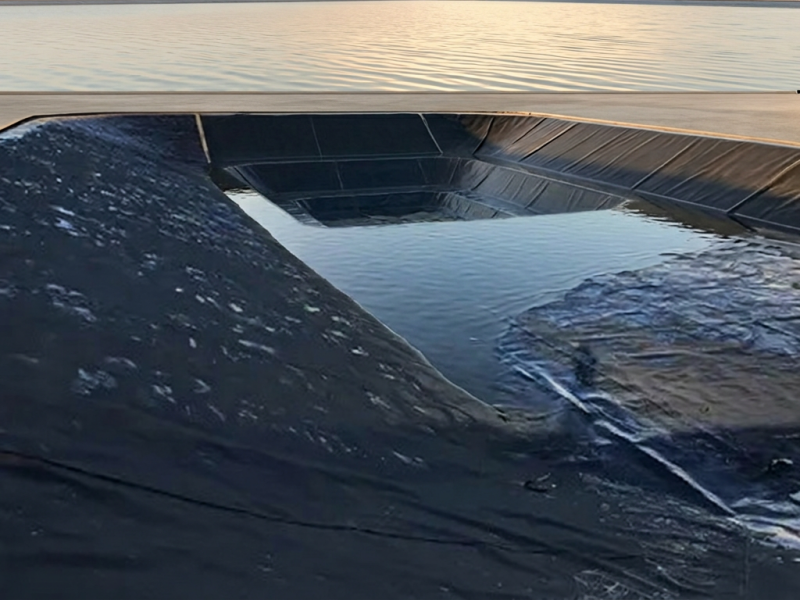
In certain engineering scenarios, a synthetic geomembrane alone is insufficient for sealing penetrations or complex foundation details. NAUE’s Carpi line utilizes a Geosynthetic Clay Liner (GCL) structure, combining a carrier geotextile with sodium bentonite and a covering geomembrane. This composite offers a self-healing property; if the geomembrane layer is punctured, the bentonite hydrates and swells to seal the gap. This is particularly useful for applications involving sharp subgrades or where welding is impractical. It serves as the ultimate impervious barrier for decorative ponds, landfill base liners requiring redundancy, and irrigation canals.
5. Key Selection Guide: Matching Geomembrane to Application
To simplify the selection process, consider the following structural breakdown based on project type.
5.1 For Mining & Industrial Waste
5.1.1 Primary Choice
GSE HD Smooth or Solmax Textured HDPE.
5.1.2 Rationale
These environments require the highest chemical resistance for acidic or alkaline leachates. Textured options are necessary for lining heap leach pads where slopes exceed 3:1.
5.2 For Potable Water & Aquaculture
5.2.1 Primary Choice
AGRU LLDPE or Firestone EPDM.
5.2.2 Rationale
Water quality safety is paramount. LLDPE offers flexibility without plasticizers that could leach, while EPDM is inert and safe for aquatic life. Both materials provide the conformability needed for uneven subgrades.
5.3 For High-Temperature or UV Exposed Areas
5.3.1 Primary Choice
Atarfil Polypropylene (PP).
5.3.2 Rationale
Standard HDPE can become susceptible to thermal expansion issues and stress cracking in extreme heat. PP maintains its structural integrity and stiffness under prolonged high-temperature exposure.
5.4 For Construction Sites & Temporary Barriers
5.4.1 Primary Choice
PLASTECH Reinforced Polyethylene (RPE).
5.4.2 Rationale
The lightweight nature reduces shipping costs and labor time. It provides robust impermeability for the duration of the construction phase without the capital expense of a permanent 60-mil HDPE liner.
5.5 For Composite Lining Systems & Redundancy
5.5.1 Primary Choice
NAUE Carpi (GCL Composite).
5.5.2 Rationale
When a single geomembrane is not enough, this composite adds a self-sealing layer. It is ideal for applications where puncture risk is high or regulatory requirements demand a double-barrier system.
6. Installation Best Practices for Maximizing Impermeability
Selecting the right product is only half the battle. To ensure the geomembrane functions as an impervious barrier, strict installation protocols must be followed.
6.1 Subgrade Preparation
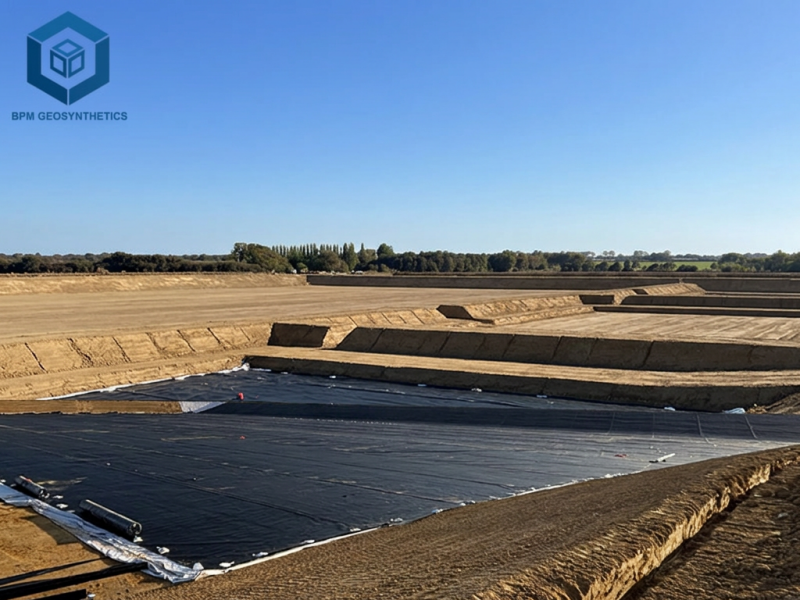
All rocks, roots, and debris must be removed. A smooth or compacted subgrade, often covered with a geotextile cushion layer, prevents punctures from beneath.
6.2 Seam Integrity
For HDPE and LLDPE, dual-track fusion welding is the standard. All seams should be tested via vacuum box, air pressure, or spark testing to ensure zero leakage.
6.3 Anchorage
Perimeter trenches must be engineered to withstand wind uplift and hydraulic pressures. Textured geomembranes significantly reduce the required anchor trench depth on slopes.
6.4 Quality Control
A third-party Construction Quality Assurance (CQA) inspector is non-negotiable for large-scale projects to verify that the installation meets the design specifications.
7. Conclusion
The definition of the “best” impervious geomembrane is entirely dependent on the specific hydraulic, chemical, and mechanical demands of your site. For aggressive chemical containment and structural longevity, GSE HD Smooth and Solmax Textured HDPE remain the industry standards. If your project prioritizes flexibility and settlement accommodation, AGRU LLDPE is the superior selection. For specialized applications involving high heat, aquatic safety, or self-sealing redundancy, products like Atarfil PP, Firestone EPDM, and NAUE Carpi offer targeted solutions that standard polyethylene cannot provide.
When making your purchasing decision, consider not only the unit cost per square meter but also the total installed cost—including welding speed, repair frequency, and warranty coverage. By aligning the specific strengths of these seven geomembranes with your project’s engineering requirements, you ensure the construction of a reliable, environmentally safe, and durable containment system that will perform for decades.