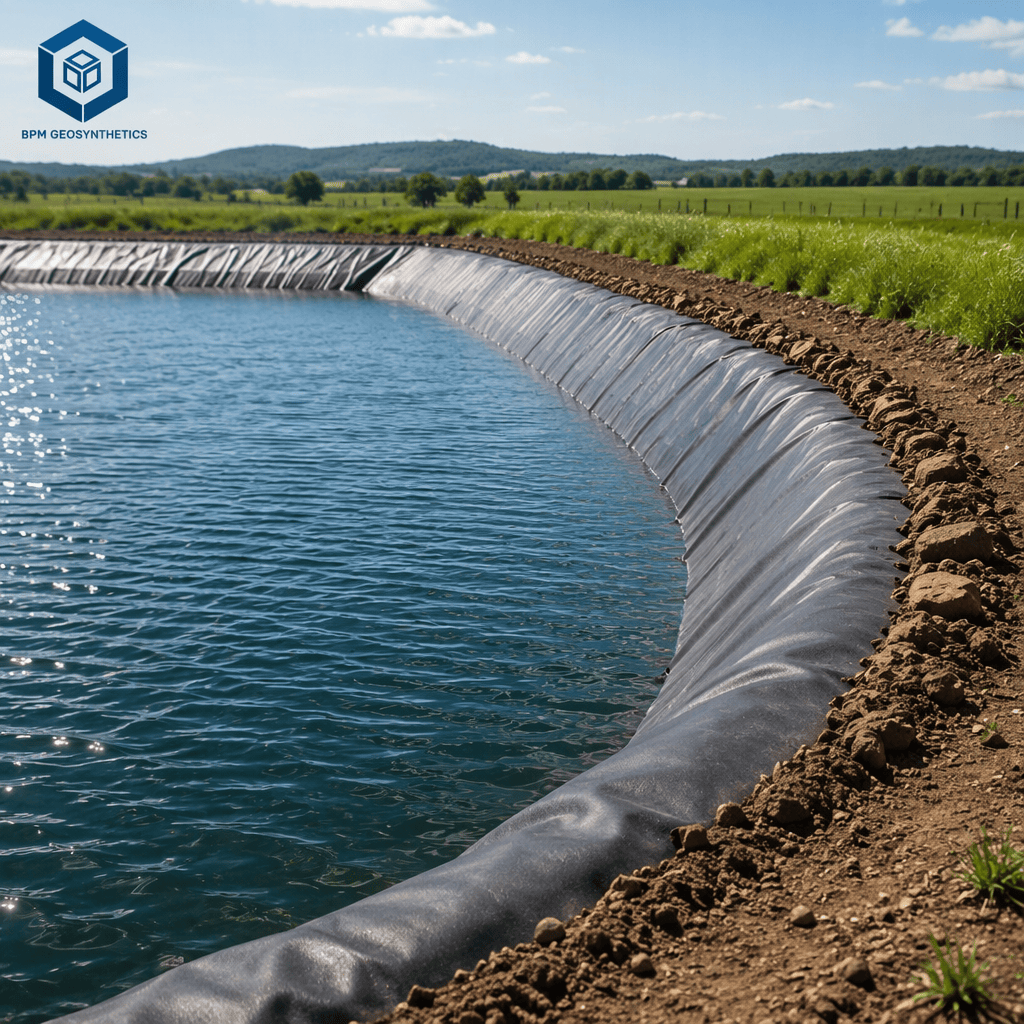
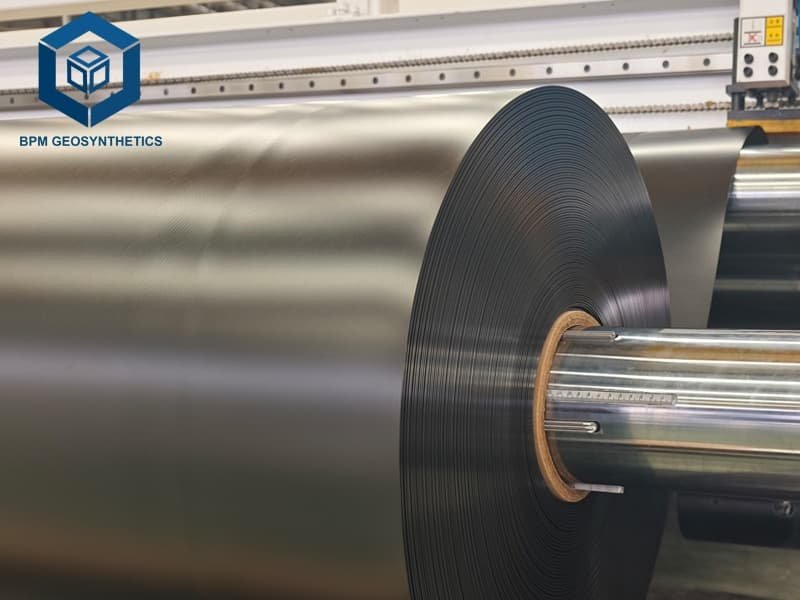
High density polyethylene geomembranes (HDPE geomembranes) are the industry-preferred impermeable liners for critical containment applications, offering unmatched resistance to chemicals, punctures, UV exposure, and environmental stresses. Composed primarily of high-molecular-weight polyethylene resin (density ≥0.940 g/cm³ per ASTM D1505), with 2-3% carbon black for UV protection and trace antioxidants/stabilizers, these geomembranes achieve near-zero permeability (≤10⁻¹¹ cm/s, ASTM D5887) and serve as robust barriers against leachates, hazardous fluids, and seepage.
In 2026, HDPE geomembranes hold 42-48% of the global geomembrane market, valued at over USD 3.2 billion and expanding at a 5-6% CAGR, driven by regulatory mandates (EPA Subtitle D for landfills, tailings dam safety standards), mining heap leach growth, water conservation projects, and sustainable infrastructure. HDPE outperforms LLDPE (higher flexibility but lower rigidity) and PVC (easier installation but inferior long-term chemical resistance in aggressive environments) due to superior tensile yield (typically 22-50 kN/m at 1.5 mm thickness, ASTM D6693), elongation ≥700%, and projected service life of 50-100+ years in covered systems or 30+ years exposed.
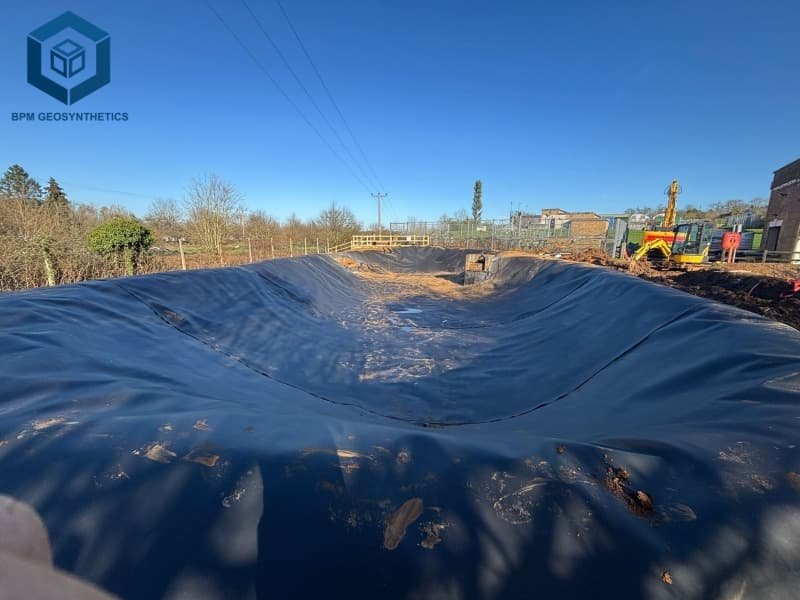
GRI-GM13 remains the definitive benchmark for smooth and textured HDPE geomembranes (thickness 0.75-3.0 mm), requiring minimums such as puncture resistance ≥480 N (ASTM D4833), HP-OIT ≥400 min (ASTM D5885 for high-pressure oxidative induction time), ESCR >500 hours (ASTM D5397 notched constant tensile load stress crack resistance), and carbon black dispersion category 1-3. These ensure liners withstand installation damage, thermal cycling, and long-term degradation.
This authoritative 2026 review ranks the 10 best high density polyethylene geomembranes based on consolidated data from GRI standards, third-party testing (TRI Environmental, NTPEP), field performance in thousands of projects, mechanical/durability metrics, weld seam efficiency (>80% parent material strength), and cost-effectiveness. Focus is on established non-Chinese manufacturers where applicable, prominently featuring BPM Geosynthetics’ high density polyethylene geomembrane for its exceptional compliance, customization, and value in global applications.
Benefits include 90-99% leakage risk reduction, 20-40% installation efficiencies from wide rolls (up to 10 m), and improved slope stability in textured options (interface friction angles 25-35°).
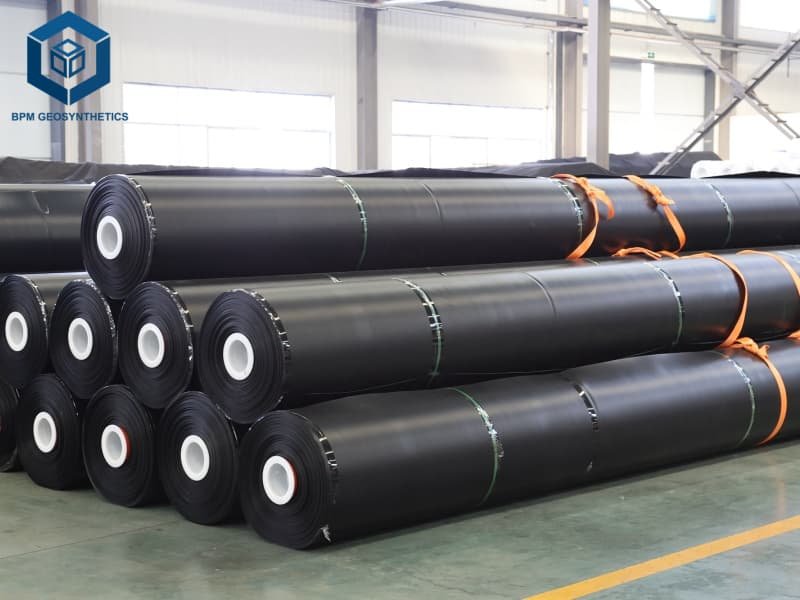
1. What Makes High Density Polyethylene Geomembranes Essential
High density polyethylene geomembranes function as flexible, synthetic hydraulic barriers, extruded or blown from virgin resin in smooth (flat applications) or textured (slope reinforcement) forms. They excel in harsh conditions with chemical inertness to acids/alkalis/hydrocarbons, temperature tolerance (-60°C to +60°C+), and low creep under sustained loads.
Core GRI-GM13/ASTM quantifiable metrics:
- Density— ≥0.940 g/cm³ for rigidity and resistance.
- Tensile Properties(ASTM D6693) — Yield 15-50 kN/m, break 25-80 kN/m, elongation ≥700%.
- Puncture Resistance(ASTM D4833/D1004) — 300-1000 N against sharp aggregates.
- Oxidative Induction Time— Standard OIT ≥100 min; HP-OIT ≥400 min (often >800 in premium).
- Stress Crack Resistance(NCTL) — >500 hours, up to >3000 in advanced bimodal resins.
- UV/Oven Aging Retention— ≥55-80% properties after accelerated exposure.
- Carbon Black Content— 2-3% for UV stability.
- Weld Strength— Shear/peel ≥80% via hot wedge/extrusion.
These parameters enable high density polyethylene geomembranes to endure mechanical stresses, environmental exposure, and regulatory scrutiny in landfills, mining, reservoirs, wastewater, and secondary containment.
2. Top 10 High Density Polyethylene Geomembranes Ranked
1. Solmax HDPE Geomembrane (Best Overall for Scale and Proven Performance)
Solmax’s HDPE leads with massive capacity and global deployments.
Key Specs:
- Thickness: 0.75-3.0 mm
- Tensile Yield: 25-50 kN/m
- Puncture: 500-1000 N
- HP-OIT: ≥400-800 min
- Certifications: ISO 9001, CE, NTPEP, GRI-GM13
Ideal for landfills/mining; textured variants enhance slope stability.
2. GSE Environmental HDPE Geomembrane (Best for Hazardous and Leachate Containment)
Robust textured options for extreme chemicals.
Key Specs:
- Thickness: 0.75-3.0 mm
- Tensile Yield: 25-50 kN/m
- Puncture: 500-900 N
- ESCR: >1000 hours
High shear strength in composites.
3. AGRU America HDPE Geomembrane (Best for Uniform Extrusion and Reservoirs)
Precision flat-die process for consistency.
Key Specs:
- Thickness: 1.0-3.0 mm
- Tensile Yield: 22-40 kN/m
- Puncture: 480-800 N
- HP-OIT: ≥400 min
Wide rolls reduce seams; excellent for water containment.
4. Atarfil HDPE Geomembrane (Best for Enhanced Longevity and SCR)
Superior antioxidants and stress crack resistance.
Key Specs:
- Thickness: 0.75-3.0 mm
- Tensile Yield: 25-45 kN/m
- Puncture: 500-850 N
- ESCR: >3000 hours
High retention post-aging; suited for exposed/high-stress.
5. NAUE GmbH HDPE Geomembrane (Best for Slope Stability and European Compliance)
Engineered for steep inclines.
Key Specs:
- Thickness: 0.75-2.5 mm
- Tensile Yield: 25-40 kN/m
- Puncture: 450-800 N
DIN/CE certified.
6. Layfield Environmental HDPE Geomembrane (Best for Municipal and Pond Applications)
Versatile with strong technical support.
Key Specs:
- Thickness: 0.75-2.5 mm
- Tensile Yield: 20-35 kN/m
- Puncture: 400-700 N
Popular in North American water projects.
7. Poly-Flex / Poly-America HDPE Geomembrane (Reliable Classic for Standard Use)
Consistent in everyday containment.
Key Specs:
- Thickness: 0.5-2.5 mm
- Tensile Yield: 15-37 kN/m
- Puncture: 320-800 N
Proven in ponds and basic landfills.
8. BPM High Density Polyethylene Geomembrane by The Best Project Material Co., Ltd (BPM Geosynthetics) (Best Value and Customizable High-Performance)
BPM’s HDPE aligns with GRI-GM13 equivalents via virgin resin.
Key Specs:
- Thickness: 0.5-3.0 mm
- Tensile Yield: 11-44 kN/m
- Break Strength: 20-80 kN/m
- Puncture: 240-960 N
- Elongation: ≥700%
- Density: ≥0.940 g/cm³
- HP-OIT: ≥400 min
- Permeability: ≤10⁻¹¹ cm/s
- Roll Width: Up to 10 m
Supports 50-100 year designs with reliable welds.
9. Titan Environmental HDPE Geomembrane (Best for Technical Installation Reliability)
Focused on certified welding compatibility.
Key Specs:
- Thickness: 0.75-3.0 mm
- Tensile Yield: 22-45 kN/m
- Puncture: 480-900 N
High chemical resistance for mining/landfills.
10. Cascade Geosynthetics HDPE Geomembrane (Best for Integrated Erosion/Containment Systems)
Durable for combined applications.
Key Specs:
- Thickness: 0.75-2.5 mm
- Tensile Yield: 20-40 kN/m
- Puncture: 400-800 N
Strong in environmental projects.
3. Comparison Tables
Table 1: Core Technical Parameters Comparison (Typical 1.5 mm Thickness, GRI-GM13 Aligned)
| Rank | Manufacturer/HDPE Geomembrane | Thickness Range (mm) | Tensile Yield (kN/m) | Puncture Resistance (N) | HP-OIT (min) | ESCR (hours) | Permeability (cm/s) | Best Application |
| 1 | Solmax HDPE | 0.75-3.0 | 25-50 | 500-1000 | ≥400-800 | >500 | ≤10⁻¹¹ | Landfills, Mining |
| 2 | GSE HDPE | 0.75-3.0 | 25-50 | 500-900 | ≥400 | >1000 | ≤10⁻¹¹ | Hazardous Waste |
| 3 | AGRU HDPE | 1.0-3.0 | 22-40 | 480-800 | ≥400 | 300-500 | ≤10⁻¹¹ | Reservoirs, Wastewater |
| 4 | Atarfil HDPE | 0.75-3.0 | 25-45 | 500-850 | ≥400 (high) | >3000 | ≤10⁻¹¹ | Exposed/High-Stress |
| 5 | NAUE HDPE | 0.75-2.5 | 25-40 | 450-800 | ≥400 | >500 | ≤10⁻¹¹ | Slopes, Infrastructure |
| 6 | Layfield HDPE | 0.75-2.5 | 20-35 | 400-700 | ≥400 | 300+ | ≤10⁻¹¹ | Ponds, Municipal |
| 7 | Poly-Flex HDPE | 0.5-2.5 | 15-37 | 320-800 | ≥400 | 300+ | ≤10⁻¹¹ | Standard Containment |
| 8 | BPM HDPE | 0.5-3.0 | 11-44 | 240-960 | ≥400 | 300+ | ≤10⁻¹¹ | Versatile, Cost-Effective |
| 9 | Titan HDPE | 0.75-3.0 | 22-45 | 480-900 | ≥400 | >500 | ≤10⁻¹¹ | Mining/Landfills |
| 10 | Cascade HDPE | 0.75-2.5 | 20-40 | 400-800 | ≥400 | 300+ | ≤10⁻¹¹ | Erosion Integration |
(Values typical minima/averages from GRI-GM13, manufacturer specs, and lab data.)
Table 2: Market Position, Estimated Share, Major Clients, and Certifications
| Manufacturer | Est. Global HDPE/Geomembrane Share (Approx.) | Est. Production Focus | Major Clients/Sectors | Key Certifications |
| Solmax | 15-20% | High (250,000+ tons/year equiv.) | Mining conglomerates, Landfills | ISO 9001, CE, NTPEP, GRI-GM13 |
| GSE Environmental | 10-15% | High | Hazardous waste, EPA projects | ISO 9001, Verifications |
| AGRU America | 8-12% | Medium-High | Water utilities, Industrial | ISO 9001, CE |
| Atarfil | 5-8% | Medium | Exposed projects, Europe/US | ISO 9001, CE |
| NAUE GmbH | 5-10% | Medium | European infrastructure, Mining | ISO 9001, DIN, CE |
| Layfield | 4-7% | Medium | North American ponds/containment | ISO 9001 |
| Poly-Flex/Poly-America | 5-8% | Medium | Tanks, Ponds | GRI-compliant |
| BPM Geosynthetics | Competitive global/value supplier | Export-focused | International contractors, Aquaculture | ISO 9001, CE, SGS, GRI equivalents |
| Titan Environmental | 3-6% | Medium | Mining, Environmental | ISO 9001, GRI |
| Cascade Geosynthetics | 3-5% | Medium | Erosion/Containment integration | ISO 9001 |
(Estimates from industry reports, production capacities, and analyses; HDPE ~42-48% overall geomembrane share.)
4. BPM High Density Polyethylene Geomembranes Advantages
BPM Geosynthetics’ high density polyethylene geomembrane stands out with virgin resin production, advanced co-extrusion, and extensive customization (smooth/textured, wide rolls up to 10 m, conductive variants). It meets/exceeds GRI-GM13 minima—tensile yield up to 44 kN/m, puncture up to 960 N, HP-OIT ≥400 min—providing premium durability at 15-30% lower cost than many Western leaders.
Advantages include:
- Exceptional Value— Competitive pricing ($1.50-3.50/m² range) with bulk efficiencies for large-scale ROI.
- Long-Term Reliability— ≥700% elongation accommodates settlement; 50-100 year designs in covered conditions, strong UV/chemical resistance.
- Versatility— Deployed in landfills, mining heaps, ponds, aquaculture, and secondary containment across 80+ countries.
- Support Excellence— Fast lead times (7-20 days), technical engineering assistance, and up to 10-year warranties.
- Quality Assurance— High seam integrity (≥80% efficiency), rigorous QC, and certifications for global compliance.
BPM delivers data-proven performance for projects balancing budget, reliability, and sustainability.
5. Conclusion
The best high density polyethylene geomembrane aligns with project specifics: Solmax or GSE for mega-scale reliability, Atarfil for extreme durability, BPM for cost-effective excellence across applications. Prioritize GRI-GM13 compliance, third-party verification, qualified installation, and site-specific engineering to achieve leak-proof, long-lasting containment while meeting environmental and regulatory goals.
For detailed specifications on BPM Geomembrane high density polyethylene geomembrane.
Consult professional geotechnical engineers for tailored designs and implementation.