1. Introduction
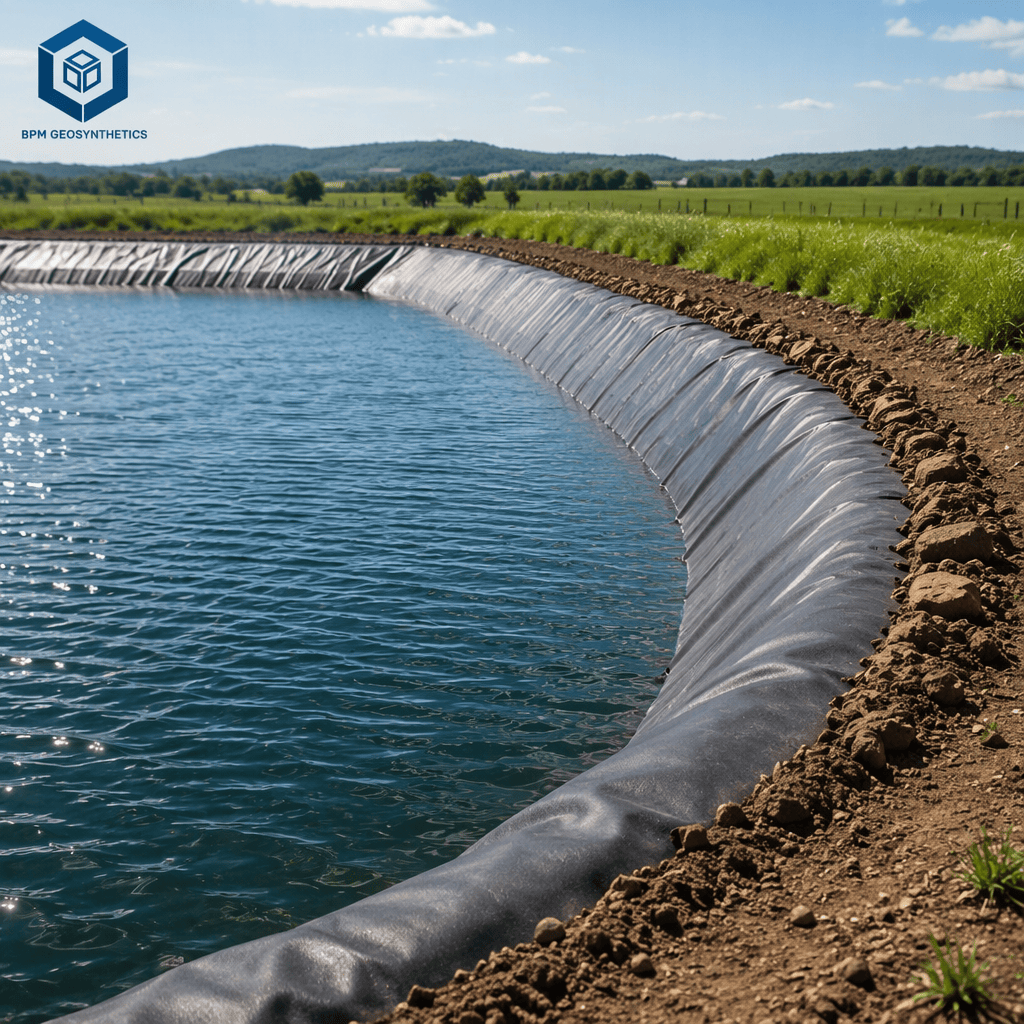
If you are building or maintaining a pond, one of the most critical decisions is choosing the right lining material. HDPE (High-Density Polyethylene) geomembrane has become the global standard for pond lining due to its exceptional durability, chemical resistance, and cost-effectiveness.
This ultimate guide will walk you through everything you need to know about HDPE lining for ponds. Whether you need a liner for a fish farm, agricultural irrigation pond, tailings pond, or decorative garden pond, you will find practical, actionable information here.
By the end of this guide, you will understand why HDPE outperforms other materials, how to select the correct thickness, and how to install and maintain your liner for decades of service.
2. What Is HDPE Pond Liner?
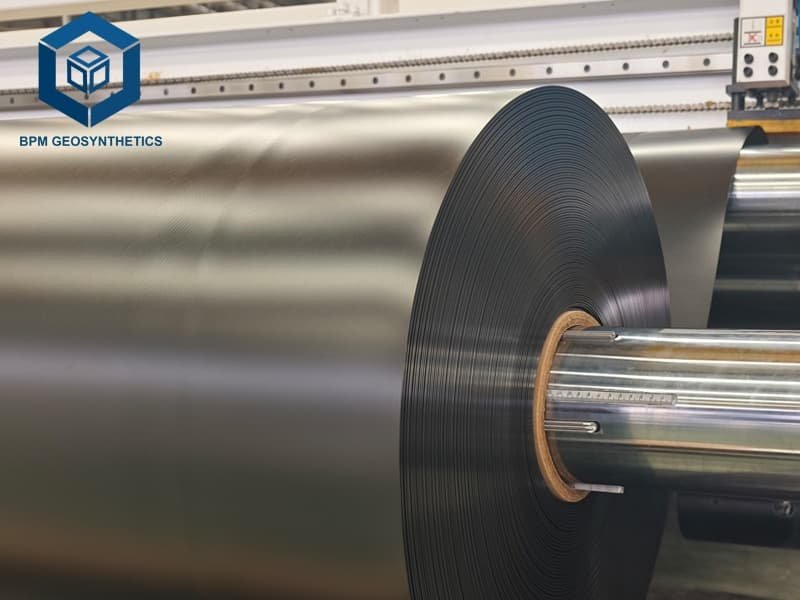
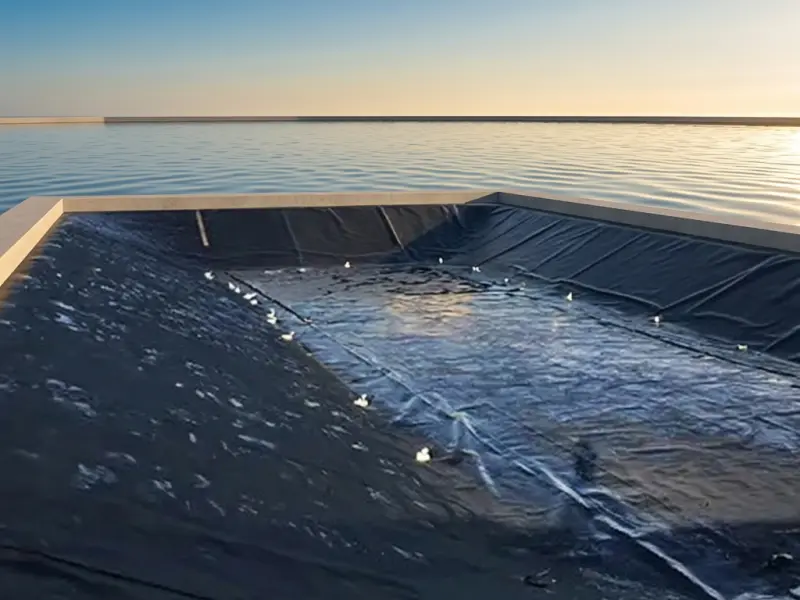
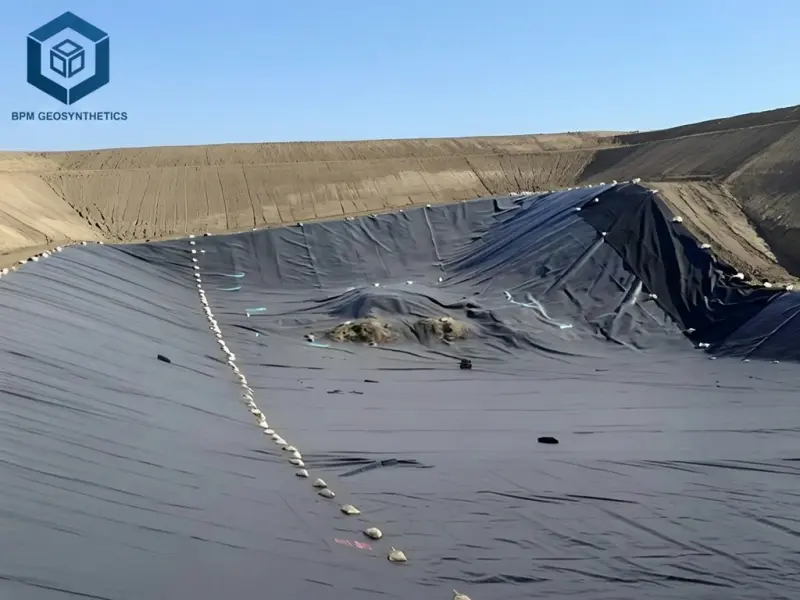
HDPE pond liner is a flexible, black geomembrane made from high-density polyethylene resin. It is manufactured through a process of extrusion or calendering, resulting in a smooth or textured sheet that is impermeable to water.
Key characteristics include:
High tensile strength and elongation
Excellent resistance to UV radiation and extreme temperatures
Chemical and microbial resistance
Low permeability (virtually zero water loss)
Long service life (50+ years when properly installed)
HDPE liners are available in rolls of various widths and thicknesses, typically ranging from 0.5mm to 3.0mm. For most pond applications, 0.75mm, 1.0mm, 1.5mm, and 2.0mm are the most common choices.
3. Why Choose HDPE Over Other Pond Liners?
Many pond owners ask: “Why not PVC, EPDM, or bentonite clay?” Below is a practical comparison based on real-world performance.
3.1 HDPE vs. PVC (Polyvinyl Chloride)
Durability: HDPE lasts 2-3 times longer than PVC, which becomes brittle over time.
UV resistance: HDPE contains carbon black for UV stabilization; PVC degrades quickly under sunlight unless buried or covered.
Chemical resistance: HDPE resists acids, alkalis, and hydrocarbons; PVC can swell or leach plasticizers.
3.2 HDPE vs. EPDM (Rubber)
Cost: HDPE is significantly more affordable for large ponds.
Puncture resistance: HDPE has higher puncture strength when installed with proper underlayment.
Seaming: HDPE can be thermally welded (strong, permanent seams); EPDM requires adhesives or tapes that may fail over time.
3.3 HDPE vs. Bentonite Clay
Reliability: Clay liners can crack when dry or erode; HDPE provides consistent impermeability.
Installation: HDPE is easier to inspect and repair; clay requires specific soil conditions and thick layers.
For most pond applications – especially where water retention is critical – HDPE offers the best balance of performance, price, and longevity.
4. Common Applications Of HDPE Pond Liners
HDPE liners are used in a wide range of pond environments. Each application may require different thicknesses and installation techniques.
4.1 Fish Farming & Aquaculture Ponds
Shrimp, fish, and crab farms need clean, stable water conditions. HDPE prevents contamination from surrounding soil and reduces water exchange frequency. Thickness recommended: 0.5mm – 0.75mm for small ponds; 1.0mm for larger commercial operations.
4.2 Agricultural Irrigation Ponds
Farmers store water for crop irrigation. HDPE liners stop seepage, saving water and energy. Thickness recommended: 0.75mm – 1.0mm.
4.3 Tailings Ponds & Mining Applications
Mining operations use tailings ponds to store waste slurry. HDPE resists acidic or chemical-laden water and heavy mechanical stress. Thickness recommended: 1.5mm – 2.0mm (often textured for slope stability).
4.4 Decorative & Garden Ponds
Small garden ponds benefit from HDPE’s flexibility to conform to irregular shapes. Thickness recommended: 0.5mm – 0.75mm.
4.5 Fire Protection Reservoirs
Industries and rural properties store firefighting water. HDPE ensures long-term water availability without leakage. Thickness recommended: 1.0mm – 1.5mm.
4.6 Landfill Leachate Ponds
Although not a “pond” in the traditional sense, leachate storage ponds require HDPE liners with high chemical resistance. Thickness recommended: 1.5mm – 2.5mm.
5. How To Choose The Correct HDPE Thickness
Selecting the right thickness is crucial for both performance and budget. Here is a simple rule of thumb based on application and ground conditions.
5.1 0.5mm (20 mil)
Best for: Temporary ponds, garden ponds, light-duty aquaculture.
Advantages: Lowest cost, easy to handle.
Limitations: Less puncture resistance; requires careful subgrade preparation.
5.2 0.75mm (30 mil)
Best for: Small to medium irrigation ponds, fish spawning ponds.
Advantages: Good balance of cost and durability.
Limitations: Not recommended for rocky subgrades.
5.3 1.0mm (40 mil)
Best for: Most agricultural ponds, livestock watering holes, and medium-sized aquaculture.
Advantages: Reliable puncture resistance, widely available.
Limitations: Heavier to handle than thinner liners.
5.4 1.5mm (60 mil)
Best for: Tailings ponds, landfill applications, steep slopes.
Advantages: Excellent mechanical strength, can be textured for slope stability.
Limitations: Higher material cost.
5.5 2.0mm (80 mil) and above
Best for: High-risk chemical containment, heavy traffic areas, deep ponds.
Advantages: Maximum protection and lifespan.
Limitations: Requires professional installation equipment.
Practical tip: If your pond bottom has sharp rocks or roots, add a geotextile underlayment (non-woven fabric) and choose at least 1.0mm thickness.
6. Step-By-Step Installation Guide For HDPE Pond Liner
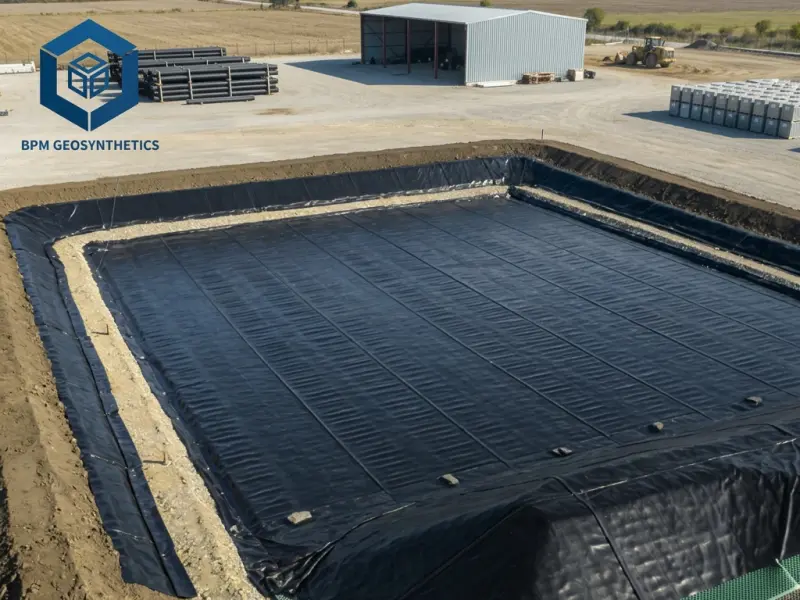
Proper installation directly affects the liner’s performance. Follow these steps for a long-lasting result.
6.1 Site Preparation
Clear all vegetation, roots, and debris from the pond area.
Remove sharp stones and fill holes with compacted fine soil or sand.
Compact the subgrade to prevent future settlement.
For rocky soil, lay a 200gsm – 300gsm non-woven geotextile as a cushion layer.
6.2 Liner Deployment
Unroll the HDPE liner on a dry, non-windy day.
Allow the liner to relax in the sun for 30-60 minutes (reduces wrinkles).
Position the liner with enough overlap (10-15 cm) for seaming.
6.3 Seaming (Welding)
Thermal fusion welding is the standard method for HDPE.
Use a double-track welding machine for large ponds, or an extrusion welder for patches and corners.
Test seam strength with a peel test or air channel test (non-destructive).
6.4 Anchoring & Backfilling
Dig an anchor trench around the pond perimeter (30cm deep x 30cm wide).
Place the liner edge into the trench and backfill with compacted soil or concrete.
For steep slopes, use concrete anchors or mechanical fasteners.
6.5 Quality Control Checklist
No visible punctures or tears.
Seams are uniform and leak-free.
Liner lies smooth against the subgrade (no air pockets).
The anchor trench is properly sealed.
7. Maintenance & Repair Tips
One of the biggest advantages of HDPE is low maintenance. However, periodic checks will extend its life.
7.1 Routine Inspection (Every 6 Months)
Walk around the pond edge and check for exposed liner edges.
Look for animal damage (rodents, livestock trampling).
Check water level – a sudden drop may indicate a leak.
7.2 Cleaning
Remove floating debris and aquatic weeds to prevent root penetration.
For algae growth, use a soft brush; avoid sharp tools.
7.3 Repairing Small Punctures or Tears
Clean the damaged area with a solvent wipe.
Cut a patch of HDPE (same thickness) at least 5cm larger than the damage.
Weld or glue the patch using an extrusion welder or HDPE patch kit.
For emergency temporary repair, use underwater HDPE tape (available from liner suppliers).
7.4 Major Damage
If a large tear occurs (e.g., from machinery), drain the pond section and apply a full seam weld with a new panel. Contact a professional installer for liners over 1.5mm thick.
8. Common Mistakes To Avoid
Even experienced pond builders sometimes make these errors. Avoiding them will save you time and money.
Skipping geotextile underlayment on rocky soil – This leads to punctures within months.
Using the wrong thickness – Too thin for the application, or too thick (unnecessarily expensive).
Poor seam welding – Cold welds or incomplete fusion cause invisible leaks.
Not anchoring edges properly – Wind or water level changes can lift the liner.
Walking directly on the liner with sharp boots – Always wear soft-soled shoes or place protective boards.
Ignoring UV exposure during storage – Store HDPE rolls under cover until installation.
9. Cost Considerations & ROI
HDPE pond liners are an investment. While the upfront material cost may seem high, the long-term savings are significant.
9.1 Typical Cost Factors
Thickness (0.5mm to 2.0mm)
Total pond area (including slopes)
Geotextile underlayment (if needed)
Shipping and customs (for international buyers)
Professional installation vs. DIY
9.2 Example Cost Estimate (For a 500m² pond)
1.0mm HDPE liner: ~$0.80 – $1.20 per m² (factory direct)
200gsm geotextile: ~$0.30 – $0.50 per m²
Welding consumables: ~$100 – $200
Total DIY material cost: ~$650 – $950
Professional installation may add $1.00 – $2.00 per m² but guarantees seam quality.
9.3 Return On Investment
Reduced water loss (up to 95% less compared to unlined ponds)
Lower pumping costs
Improved fish survival rates (no soil contaminants)
Avoided dredging and re-lining every few years
Most pond owners recoup their liner investment within 1-3 growing seasons.
10. Frequently Asked Questions (FAQ)
10.1 How long does an HDPE pond liner last?
With proper installation and no physical damage, HDPE liners have a design life of 50+ years. Many field installations from the 1980s are still functional.
10.2 Is HDPE safe for fish and shrimp?
Yes. HDPE is inert and does not leach chemicals into the water. It is approved for aquaculture use worldwide. However, always rinse new liners with water before introducing sensitive species.
10.3 Can I install HDPE liner myself?
For small ponds (under 200m²) and thin liners (0.5mm – 0.75mm), DIY installation is possible. For larger ponds or thicker liners, hire professionals with welding equipment.
10.4 What is the difference between smooth and textured HDPE?
Smooth: Lower cost, easier to clean, suitable for flat or gently sloped bottoms.
Textured: Higher friction angle, prevents sliding on steep slopes (≥ 1:2 gradient).
10.5 How do I order HDPE liner from overseas suppliers?
Always request:
Technical data sheet (ASTM or GRI standards)
Sample swatch (for thickness and flexibility)
Factory audit report (ISO 9001 preferred)
Lead time and shipping terms (FOB, CIF)
11. Conclusion
HDPE pond lining is a proven, reliable solution for anyone needing long-term water containment. From small garden ponds to large mining tailings facilities, HDPE offers unmatched chemical resistance, mechanical strength, and value for money.
Remember these key takeaways:
Match thickness to your specific application.
Prepare the subgrade carefully – use geotextile if necessary.
Weld seams properly (thermal welding is best).
Inspect and clean the liner every six months.
Avoid common mistakes like skipping anchors or using sharp tools on the liner.
If you are planning a new pond or rehabilitating an old one, consider HDPE as your first choice. Contact a reputable supplier with factory-direct pricing and technical support. A well-installed HDPE liner will save you water, money, and headaches for decades to come.