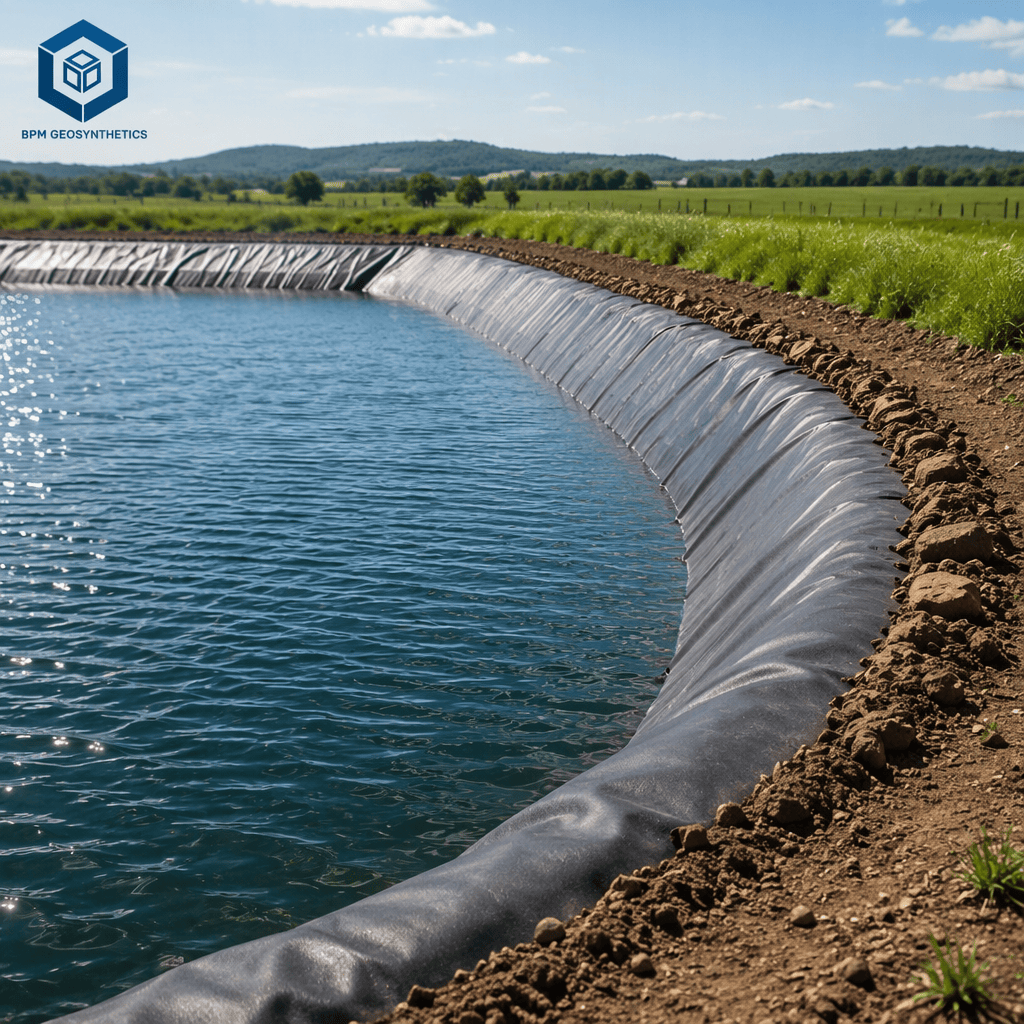
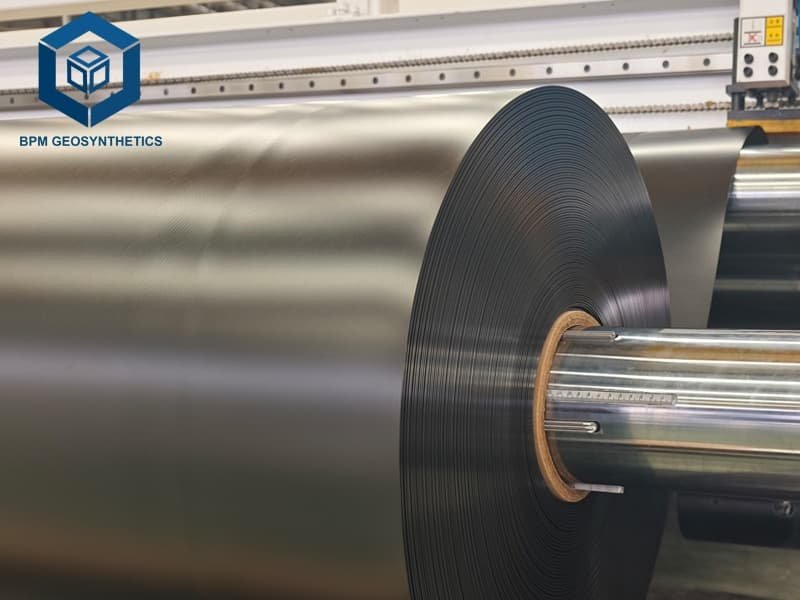
1.Introduction LLDPE geomembrane
LLDPE geomembrane is manufactured from first quality single source, compoundedvirgin polyethylene resins. BPM LLDPE contains no additives, fillers, extenders or plasticizers which can migrate to the surface causing premature aging. This liner contains approximately 97.5% polymer and 2.5% carbon black, anti-oxidants and heat stabilizers.
BPM LLDPE geomembrana liner surpasses the requirements set by the GRI-GM17 standard. LLDPE liners are available in thicknesses ranging from 20 to 120 mils and offer both textured and conductive options. LLDPE geomembrane is custom fabricated to size and specifications, this liner can be procured in various colors to suit specific project needs.
This liner has remarkable flexibility, a characteristic that simplifies installation by reducing the need for cutting and minimizing the risk of punctures during the process. This liner can be both extrusion and wedge welded for larger applications including water, wastewater , waste containment uses that require greater flexibility and elongation performance.
2. What Are The Benefits of LLDPE Geomembrane?
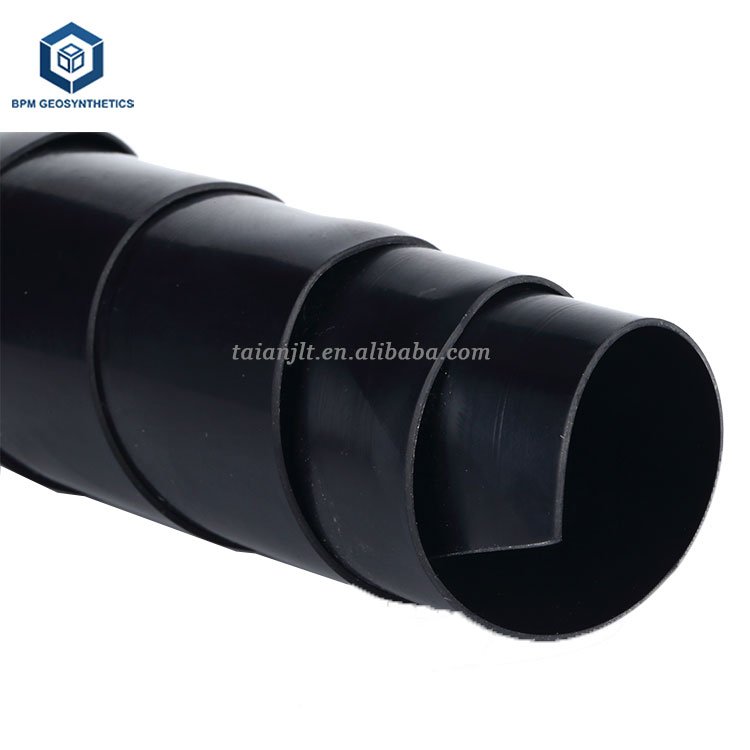
LLDPE geomembrane offers a multitude of benefits that make it an excellent choice a reliable and versatile choice for a wide range of applications, providing effective containment and lining solutions.
2.1 LLDPE geomembrane-Lowest permeability
This liner provides an effective barrier against the passage of liquids and gases. This property ensures reliable containment and prevents leakage.
2.2 LLDPE geomembrane-Superior flexibility
This liner offers supper flexibility to conform to irregular surfaces and withstand movements, settlements, and differential settlement without compromising its integrity.
2.3 LLDPE geomembrane- Outstanding stress crack capacity
This liner can resist the growth and propagation of cracks under stress. This feature contributes to its long-term performance and durability in demanding environments.
2.4 LLDPE geomembrane-Excellent UV and chemical resistance
This liner can withstand prolonged exposure to sunlight without degrading or losing its effectiveness. Additionally, it is resistant to a wide range of chemicals, ensuring its durability in chemically aggressive environments.
2.5 High puncture resistance
This liner provides a strong barrier against puncture hazards, such as sharp objects, ensuring the long-term integrity of the geomembrane.
2.6 LLDPE geomembrane-Meets or exceeds all aspects of the GRI-GM17 industry standard
It ensures that LLPDE liner meets strict quality and performance requirements, providing confidence in its performance.
2.7 LLDPE geomembrane-Good weldability
This liner allows for efficient and reliable seam connections during installation. This ensures the integrity of the liner system and minimizes the risk of leakage.
2.8 LLDPE geomembrane-Easy To Install
This liner is easy to install due to its flexibility, manageable weight, and weldability. Its installation process is straightforward, saving time and effort during the project.
2.9LLDPE geomembrane-OEM/ODM availability
This liner is available with OEM/ODM options, allowing for customization based on specific project requirements. This ensures that the geomembrane can be tailored to meet the desired specifications.
2.10 LLDPE geomembrane-Best factory price
BPM LLDPE geomembrane providing a cost-effective solution for containment and lining applications without compromising quality and performance.
3. What Is LLDPE Geomembbrane Used For?
LLDPE geomembrane is widely used in various applications where reliable containment and protection against liquid or gas permeation are required.
3.1 Exposed or Effluent Ponds
This liner is used to line ponds that store effluent or wastewater, providing a reliable barrier to prevent leakage and protect the surrounding environment.
3.2 Storm Water Collection Ponds
This liner is employed in the construction of stormwater collection ponds to ensure proper containment of runoff water, preventing infiltration into the ground.
3.3 Waste Containment
It is used in waste facilities, including containment ponds, tanks, and basins, to prevent the seepage of contaminants into the surrounding soil and groundwater.
3.4 Irrigation Ponds, Canals, Water Reservoirs, and Ditches
This liner is utilized to line irrigation ponds, canals, water reservoirs, and ditches, ensuring efficient water storage, preventing seepage, and maximizing water availability for agricultural or industrial purposes.
3.5 Landfill Cells, Covers, and Caps
This liner is a crucial component in landfill engineering, where it is used to line landfill cells, covers, and caps to prevent the migration of leachate and gas, protecting the environment from contamination.
3.6 Wastewater Lagoons and Treatment Plants
This liner is employed in the construction of wastewater lagoons and treatment plants to provide reliable containment and prevent seepage of wastewater into the surrounding soil and water bodies.
3.7 Industrial Containmen
It is used in various industrial applications to contain and control liquids, chemicals, or hazardous materials, ensuring environmental protection and safety.
3.8 Golf Course and Decorative Ponds
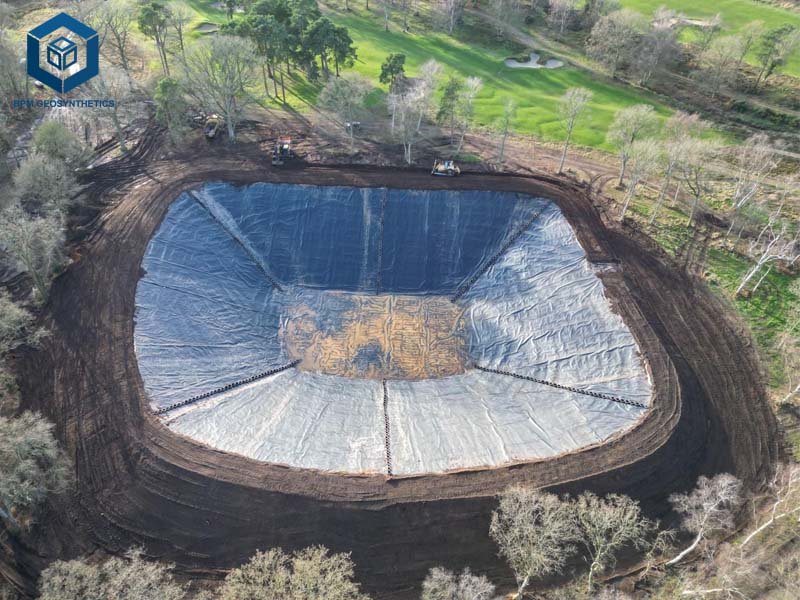
This liner is used in the construction of golf course ponds and decorative water features to provide waterproofing and prevent water loss.
3.9 Liquid Storage Tanks
This liner can be used as a liner for liquid storage tanks, providing a reliable barrier against leakage and maintaining the integrity of the stored liquids.
3.10 Environmental Containment
This liner is utilized in environmental containment projects, such as capping and lining contaminated sites or creating barriers to prevent the migration of pollutants into the surrounding environment.
4. What Is The Difference Between HDPE and LLDPE Geomembrane?
The key difference between HDPE (High-Density Polyethylene) and LLDPE (Linear Low-Density Polyethylene) geomembrane lies in their molecular structure and resulting physical properties.
4.1 Flexibility
LLDPE geomembrane is more flexible than HDPE geomembrane. LLDPE can withstand folding and compound bending without sustaining damage or compromising its integrity. On the other hand, HDPE is stiffer and less flexible, making it more prone to damage if folded or bent beyond its yield point.
4.2 Yield Point
LLDPE geomembrane has a higher elongation capacity and stress crack resistance compared to HDPE. This means LLDPE can stretch further without breaking or cracking, allowing it to adapt to irregular surfaces and withstand movements and settlements more effectively.
4.3 Cost and Price
HDPE geomembrane tends to have a lower cost compared to LLDPE geomembrane. The price difference is primarily due to the manufacturing process and the difference in material properties.
4.4 Applications
HDPE geomembrane is commonly used in applications where stiffness and rigidity are preferred or required, such as landfill caps, landfill cells, and industrial containment. LLDPE geomembrane, with its superior flexibility, is often used in applications that require adaptability to irregular surfaces, differential settlement management, and excellent puncture resistance, such as exposed or effluent ponds, wastewater containment, and irrigation ponds.
5. Conclusion
As the leading manufacturer and supplier of geomembranes, BPM Geomembrane offers customized LLDPE geomembranes ranging from 20 to 120 mils in thickness, available in both smooth and textured variations. The BPM LLDPE liner is ideal for applications prioritizing superior flexibility and elongation in pond liner, containment, or wastewater applications.