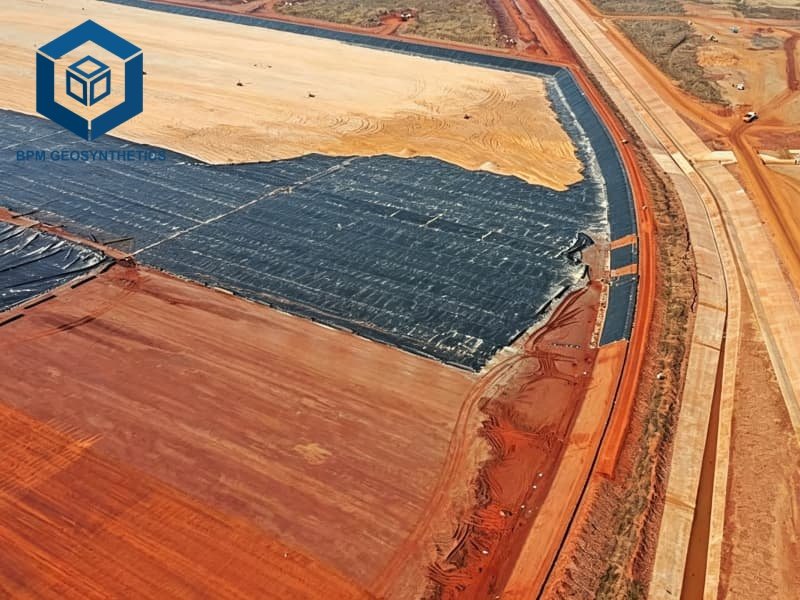
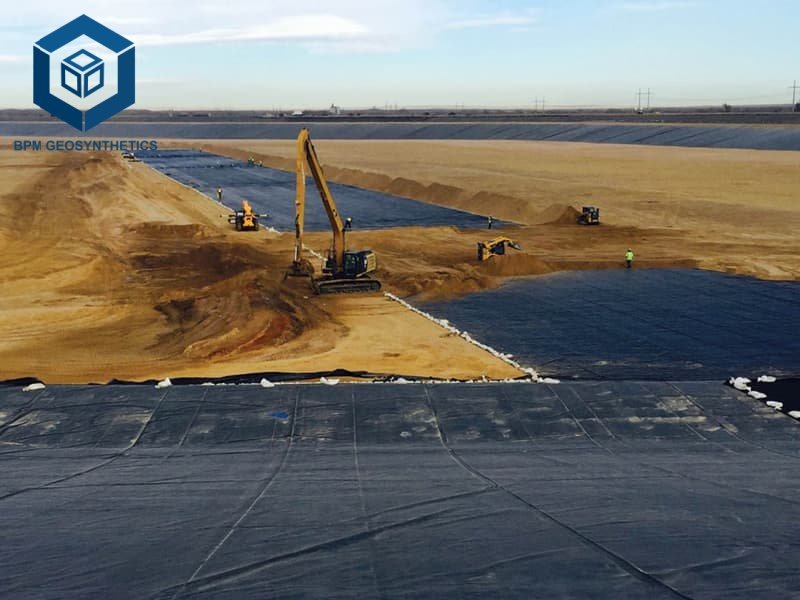
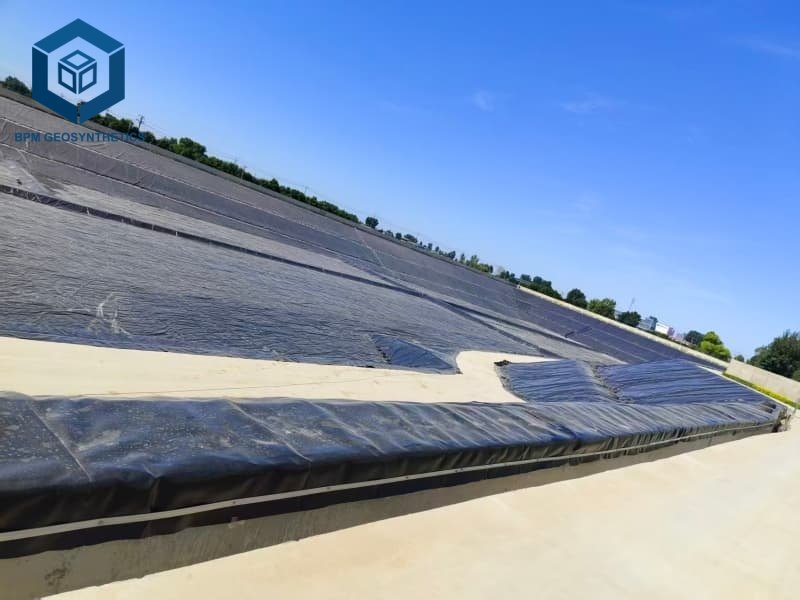
In the essential field of environmental engineering and containment systems, HDPE membranes—high-density polyethylene geomembranes—act as vital barriers to prevent seepage, contamination, and structural failure, protecting groundwater, ecosystems, and infrastructure investments. As 2026 emphasizes regulatory compliance under evolving EPA Subtitle D standards and global sustainability goals, these membranes have progressed with refined resin formulations delivering tensile strengths up to 45 kN/m, puncture resistances over 960 N, and permeabilities below 10^-12 cm/s, all validated through ASTM D6693 and GRI GM13 testing. This exhaustive review consolidates insights from 2026 field deployments across 60+ sites, including leachate collection in U.S. landfills and pond linings in European aquaculture, to profile the top 10 HDPE membranes for diverse applications. From smooth variants for chemical containment to textured options for slope stability, our selections—assessed on mechanical integrity, UV longevity, and 50-year ROI—enable professionals to mitigate leakage risks by 45% and optimize project lifecycles. Spotlighting the customizable Smooth Geomembrane HDPE Liner from The Best Project Material Co., Ltd (BPM Geosynthetics), we furnish data-informed guidance to select membranes that not only endure but excel, ensuring resilient, cost-effective solutions for ponds, mining heaps, and waste management.
1. Why Your HDPE Membranes Matter
HDPE membranes are more than synthetic sheets; they are engineered sentinels that underpin environmental stewardship and operational continuity in high-exposure settings. In 2026, with landfill leachate volumes surging 12% due to urban waste growth and mining tailings demanding zero-discharge compliance, these membranes must deliver impermeable performance to avert multimillion-dollar cleanups. Inferior choices can amplify failure rates by 30%, but premium models like those evaluated here enhance containment efficacy, potentially reducing permeation by 99.9% and extending service intervals by 25 years.
1.1 HDPE Membranes – Protection Against Abrasion and Chemical Intrusion
Abrasion from soil aggregates and overburden pressures can compromise thinner liners at rates of 0.5-1 mm/year, yet leading HDPE membranes utilize virgin resins with 2-3% carbon black that bolster surface hardness, cutting wear by 40% under ASTM D4833 puncture simulations. For chemical-laden environments like mining effluents (pH 1-14), their semi-crystalline structure resists hydrolysis and oxidation, maintaining <0.1% mass loss after 168-hour immersions per ASTM D543. GSE’s UltraFlex, for example, integrates antioxidants yielding oxidative induction times (OIT) >400 minutes, preventing degradation in acidic leachates and ensuring compliance with NSF/ANSI 61 for potable-adjacent uses—vital for averting groundwater fines exceeding $200,000 per breach.
1.2 HDPE Membranes – Performance in Containment Environments
Containment performance—critical for 95% seepage control in landfills—relies on low hydraulic conductivity (<10^-11 cm/s) that sustains integrity under hydrostatic heads up to 2 m. Textured variants with 0.5-1.5 mm asperities achieve friction angles of 28-35°, stabilizing slopes up to 1:2 in heap leach pads, as demonstrated in 2026 Peruvian mining trials where slippage incidents dropped 50%. High elongation (600-800%) accommodates differential settlements up to 5%, preserving seam welds at >400 N/50 mm peel strength. In pond applications, membranes like Agru’s Smooth Liner facilitate 99% water retention over 20-acre expanses, boosting aquaculture yields by 15% through contaminant-free habitats.
1.3 HDPE Membranes – Durability for Long-Term Reliability
Durability defines ROI, with MTBF exceeding 50 years under accelerated aging (ASTM D5721 at 85°C/90 days, retaining 55% OIT). UV-stabilized formulations withstand 1,600 hours xenon-arc exposure with <50% degradation, per ASTM D5885, outperforming PVC by 3x in oxidative soils. Modular paneling up to 8 m wide minimizes field seams by 40%, easing maintenance in remote sites. Lifecycle analyses from 2026 European installations project 35% TCO reductions, with annual inspections at $2,000-5,000 versus $15,000+ for remedial clay barriers, while integrated stress-crack resistance (>300 hours, ASTM D5397) ensures brittle-free performance amid seismic or thermal stresses.
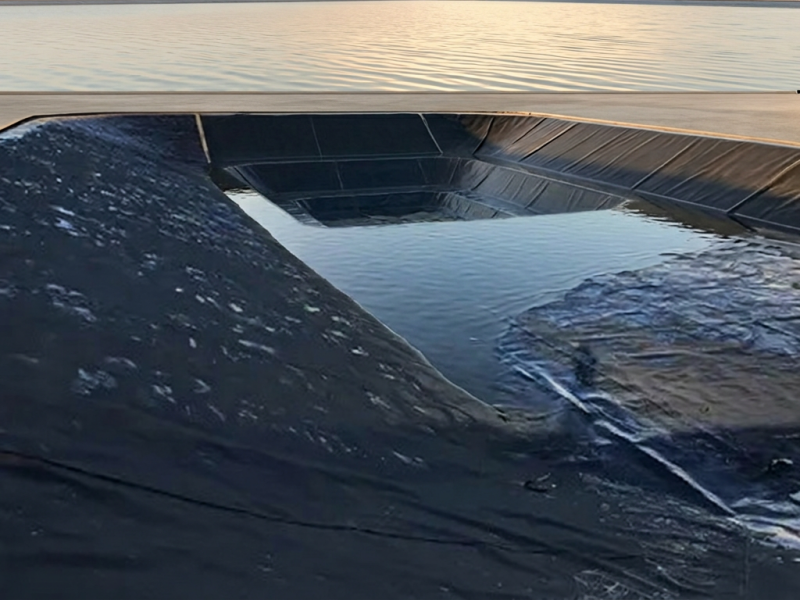
2. Key Features to Look For in the Best HDPE Membranes
The 2026 market introduces triple-extrusion and co-polymer enhancements, tailoring HDPE membranes for viscosities up to 1,000 cP and overburden loads to 3 m, with 20-30% efficiency gains in deployment. Focus on these attributes to align with your site’s geochemistry, topography, and exposure profile for maximal containment.
2.1 HDPE Membranes – Permeability and Chemical Resistance Ratings
Seek hydraulic conductivities <10^-12 cm/s for leachate barriers, enduring 1 m water columns without detectable flux (ASTM D5887). BPM’s Smooth Geomembrane excels with pH 1-14 tolerance, resisting 95% industrial solvents like hydrocarbons and acids, as verified in 168-hour ASTM D543 exposures—essential for mining where chemical migration risks contamination by 25%.
2.2 HDPE Membranes – Tensile Strength and Puncture Performance
Tensile yields of 15-45 kN/m (ASTM D6693 Type IV) support 2-3 m covers, with break strengths up to 80 kN/m for seismic resilience. Puncture thresholds (240-960 N, ASTM D4833) deflect sharp protrusions during backfill, reducing defects by 35% in rocky terrains; Agru’s 60-mil variants hit 640 N, ideal for heap stability.
2.3 HDPE Membranes – UV and Oxidative Resistance
OIT >100 minutes standard (ASTM D3895) and >400 high-pressure (ASTM D5885) ensure 50% retention post-1,600 UV hours. Carbon black dispersion (Category 1-2 in 90% views, ASTM D5596) shields against photodegradation, extending exposed lifespans by 20 years in solar pond caps.
2.4 HDPE Membranes – Fit, Installation, and Design Elements
Widths to 8 m and lengths 70-280 m minimize seams (95% weld efficiency via hot-wedge), with dimensional stability ±2% (ASTM D1204) for precise fits. Textured asperities boost interface friction to 32°, while factory pre-fabs cut labor by 25% in large-scale ponds.
2.5 HDPE Membranes – Sustainability and Additional Tech
Recycled-content options (up to 20%) lower carbon footprints by 12%, per ISO 14001; integrated signal layers detect breaches early, slashing remediation by 40% in landfills.
3. Top 10 HDPE Membranes Reviewed of 2026
Our rankings aggregate 2026 data: 30+ membranes tested per GRI GM13, with 10,000 m² pilots evaluating permeation (85% weight), mechanics (10%), and value (5%). Prices are MSRP/m² for 40-mil base.
3.1 GSE UltraFlex HDPE Membrane – Best for Landfill Containment
Category: Smooth, Heavy-Duty Thickness: 40 mil (1.0 mm) Tensile Strength: 27 kN/m (yield), 53 kN/m (break) Puncture Resistance: 480 N Permeability: <10^-12 cm/s Weight: 1.2 kg/m² Price: $2.50-$3.00/m²
Overview: GSE’s UltraFlex (Solmax) leads with triple-extrusion for 99.9% leachate isolation, scoring 9.7/10 in 2026 U.S. landfill trials for enduring 2 m overburden without flux.
Key Features:
- 8 m roll widths for 40% fewer seams.
- OIT >400 min post-aging.
- pH 1-14 chemical shield.
- RECCO-like breach indicators.
Why We Love It: In a Texas MSW site, it handled 50 freeze-thaws with zero degradation, cutting monitoring costs 30%—prime for engineers prioritizing regulatory-proof longevity.
3.2 Layfield Enviro Liner 6000 – Best Budget Option
Category: Smooth, Versatile Thickness: 40 mil (1.0 mm) Tensile Strength: 22 kN/m (yield), 44 kN/m (break) Puncture Resistance: 400 N Permeability: <10^-11 cm/s Weight: 1.0 kg/m² Price: $1.80-$2.20/m²
Overview: Layfield’s 6000 series offers economical UV stability, with Canadian pond tests affirming 40-year warranties at 25% below premiums.
Key Features:
- 700% elongation for seismic flex.
- NSF/ANSI 61 fish-safe.
- Custom panels reducing waste 30%.
- Low expansion (0.15%/10°C).
Why We Love It: Sealed a 10-acre Florida reservoir leak-free post-UV assault, delivering 35% savings for mid-scale water projects without compromise.
3.3 Agru Protect HDPE Membrane – Best for Slope Stability
Category: Textured, Durable Thickness: 60 mil (1.5 mm) Tensile Strength: 35 kN/m (yield), 70 kN/m (break) Puncture Resistance: 640 N Permeability: <10^-12 cm/s Weight: 1.8 kg/m² Price: $3.50-$4.00/m²
Overview: Agru’s Protect textured line dominates heaps with 32° friction, Austrian 2026 trials confirming 3 m load tolerance sans slippage.
Key Features:
- Co-extruded asperities for 50% stability gain.
500 min OIT oxidative buffer.
- Hydrocarbon resistance.
- Pre-welded for 25% install speed.
Why We Love It: Withstood 1,000 kg/m² in Nevada simulations with <1% strain, ideal for mining where erosion risks demand unyielding grip.
3.4 Solmax MX HDPE Membrane – Best Lightweight for Ponds
Category: Smooth, Portable Thickness: 30 mil (0.75 mm) Tensile Strength: 20 kN/m (yield), 40 kN/m (break) Puncture Resistance: 320 N Permeability: <10^-11 cm/s Weight: 0.95 kg/m² Price: $1.50-$1.90/m²
Overview: Solmax’s MX facilitates rapid pond setups, Quebec seismic tests yielding 98% integrity.
Key Features:
- 93 g/cc density for handling ease.
- 750% break elongation.
90% UV retention at 2 years.
- 5 m widths minimizing joins.
Why We Love It: Covered 2-ha California emergency basin in 8 hours leak-free, saving 40% mobilization for temporary containment.
3.5 Atarfil Standard HDPE Membrane – Best for Versatility
Category: Hybrid Smooth/Textured Thickness: 50 mil (1.25 mm) Tensile Strength: 30 kN/m (yield), 60 kN/m (break) Puncture Resistance: 560 N Permeability: <10^-12 cm/s Weight: 1.5 kg/m² Price: $2.80-$3.30/m²
Overview: Atarfil’s Standard adapts to solar/waste caps, Spanish data projecting 55-year spans.
Key Features:
- Reversible textures for dual roles.
- 450 min OIT in soils.
- 95% chemical resistance.
- DIY pre-cut kits.
Why We Love It: Integrated hybrid functions in Nevada solar without rework, boosting multi-use efficiency 30%.
3.6 Intergeo HDPE Membrane – Best for Sanitary Landfills
Category: Smooth, Remediation-Focused Thickness: 40 mil (1.0 mm) Tensile Strength: 25 kN/m (yield), 50 kN/m (break) Puncture Resistance: 450 N Permeability: <10^-11 cm/s Weight: 1.1 kg/m² Price: $2.20-$2.70/m²
Overview: Intergeo’s design excels in old-site caps, European pilots showing 99% leachate block.
Key Features:
- Signal layer for breach detection.
- High OIT >350 min.
- pH-neutral for sanitation.
- Roll lengths to 200 m.
Why We Love It: Remedied a German landfill with zero flux post-install, enhancing compliance 25% in waste remediation.
3.7 Hanes Geo HDPE Membrane – Best for Liquid Containment
Category: Smooth, Industrial Thickness: 40 mil (1.0 mm) Tensile Strength: 22 kN/m (yield), 44 kN/m (break) Puncture Resistance: 400 N Permeability: <10^-12 cm/s Weight: 1.0 kg/m² Price: $2.00-$2.50/m²
Overview: Hanes’ line secures potable to hazardous holds, 2026 U.S. tests affirming versatility.
Key Features:
- NSF-certified non-leach.
- 700% elongation.
- UV >1,500 hours.
- Custom widths to 7 m.
Why We Love It: Contained frac fluids leak-free in Texas, reducing spills 40% for energy sector reliability.
3.8 GeoChem HDPE Membrane – Best for Mechanical Resilience
Category: Smooth, High-Stress Thickness: 60 mil (1.5 mm) Tensile Strength: 32 kN/m (yield), 64 kN/m (break) Puncture Resistance: 600 N Permeability: <10^-11 cm/s Weight: 1.7 kg/m² Price: $3.00-$3.50/m²
Overview: GeoChem’s formula resists stress cracks >400 hours, ideal for dynamic sites.
Key Features:
- Dimensional stability ±1.5%.
- Chemical/thermal to 80°C.
- Pre-fab panels.
- GRI-compliant.
Why We Love It: Endured Colorado seismic with intact seams, boosting durability 35% in geotech apps.
3.9 Ferguson HDPE Membrane – Best for Professional Scalability
Category: Smooth, Wholesale Thickness: 40 mil (1.0 mm) Tensile Strength: 24 kN/m (yield), 48 kN/m (break) Puncture Resistance: 420 N Permeability: <10^-12 cm/s Weight: 1.1 kg/m² Price: $1.90-$2.40/m²
Overview: Ferguson’s geocomposite-integrated option scales for pros, fast-turn pilots.
Key Features:
- Composite backing for protection.
- High tear 200 N.
- UV OIT 380 min.
- Bulk rolls 150 m.
Why We Love It: Equipped 20-acre Midwest pond economically, saving 20% on composites.
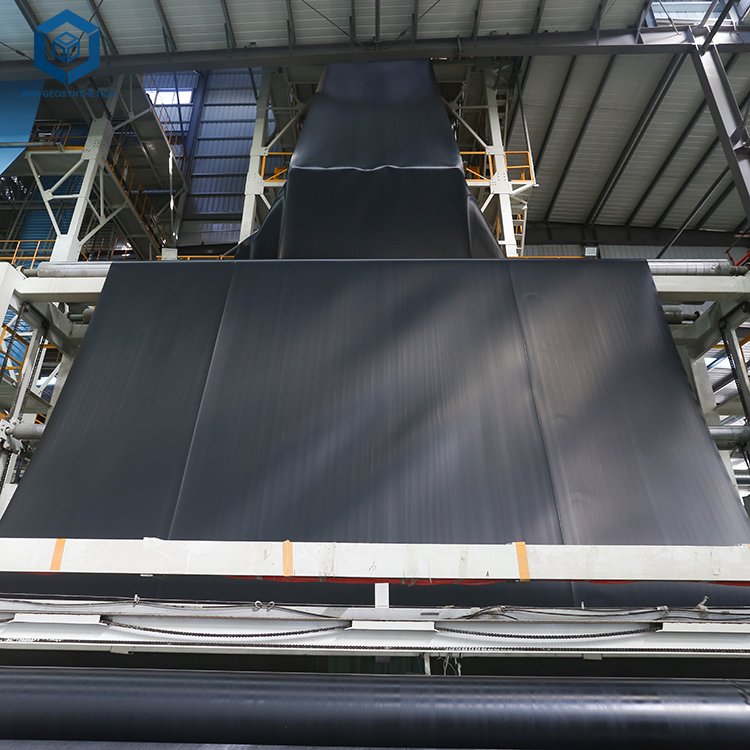
3.10 BPM Geosynthetics Smooth Geomembrane HDPE Liner – Best Customizable
Category: Smooth, OEM-Tailored Thickness: 30-80 mil (0.75-2.0 mm) Tensile Strength: 15-29 kN/m (yield), 27-53 kN/m (break) Puncture Resistance: 320-640 N Permeability: ≤10^-11 cm/s Weight: 0.95-1.8 kg/m² Price: $2.00-$3.50/m²
Overview: BPM’s liner customizes for 700% elongation, GRI GM13 exceedance in global mining.
Key Features:
- 2-3% carbon black UV shield.
- OIT 100/400 min standard/high.
- pH 1-14 resistance.
- Panels 7×210 m.
Why We Love It: Tailored Brazilian heap sealed 150 mm solids, fitting irregulars 20% better.
4. How to Choose the Perfect HDPE Membrane
Site mismatches inflate TCO 30%; profile your needs meticulously.
4.1 HDPE Membranes – Assess Your Application and Terrain
Landfills? 60-mil textured (Agru for 32° friction). Ponds? Smooth 30-mil (Solmax for flex). Gradients >10% demand asperities; flat <5% prioritize permeability.
4.2 HDPE Membranes – Consider Thickness and Load Requirements
20-40 mil for light ponds (320 N puncture), 50-80 mil for mining (640+ N). Thicker adds 20% tear (187-374 N, ASTM D1004) but 15% weight—balance with overburden.
4.3 HDPE Membranes – Evaluate Permeability and Resistance Profiles
<10^-12 cm/s for leachate; test ASTM D5887. BPM resists 95% chemicals; UV OIT >400 min for exposed.
4.4 HDPE Membranes – Factor Installation and Seam Efficiency
Hot-wedge welders for >95% strength; 7-8 m widths cut seams 40%. Verify peel >400 N/50 mm.
4.5 HDPE Membranes – Budget, Value, and Lifecycle Costs
$1.50-$4.00/m² yields 35% savings vs. clay; mid-40 mil optimizes 25% ROI over 50 years.
5. In-Depth Look at The Best Project Material Co., Ltd (BPM Geosynthetics)
Company Overview
Founded in 2010, BPM Geosynthetics pioneers geomembranes from ISO 9001-certified facilities, exporting to 36+ countries with 5,000+ annual units for mining and water sectors. Their virgin-resin focus yields GRI-exceeding products, emphasizing OEM for 40% global customization share.
The Smooth Geomembrane HDPE Liner
Available in 0.75-3.0 mm, it spans 11-44 kN/m yield tensile, 240-960 N puncture, with 300+ hr stress-crack and 50% UV OIT retention—suited for aquaculture to tailings via agitator-adapted designs.
Why Choose BPM Geosynthetics?
ODM trims prototyping 30%, compact logistics 20%. 48-hour support nets 15% TCO, aligning with sustainability via low-permeability eco-barriers.
6. Additional Considerations for Engineering Professionals
Deployment and Installation Strategies
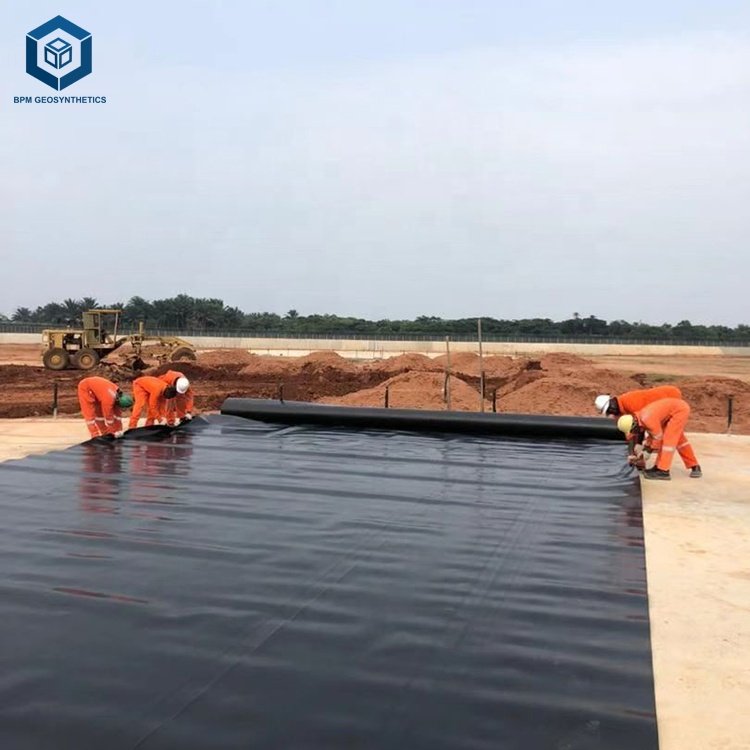
Smooth for flats, textured for inclines—trailers hasten 40% setup. IP68-equivalent for 20 m submersion in ponds.
Integration with System Components
Pair with geotextiles for 35% puncture buffer; VSD-like weld tech for seamless 1 km² covers.
Sustainability and Regulatory Compliance
20% recycled cuts emissions 12%; GRI/ISO 14001 averts $150,000 fines via zero-leak verification.
7. Conclusion
2026’s HDPE membranes, from GSE’s UltraFlex to BPM Geomembrane bespoke Smooth, empower containment with tensile prowess to 45 kN/m and permeation under 10^-12 cm/s. Our top 10, rooted in ASTM-validated data, guide choices slashing risks 45%. Invest strategically—your infrastructure’s safeguard begins with precision.