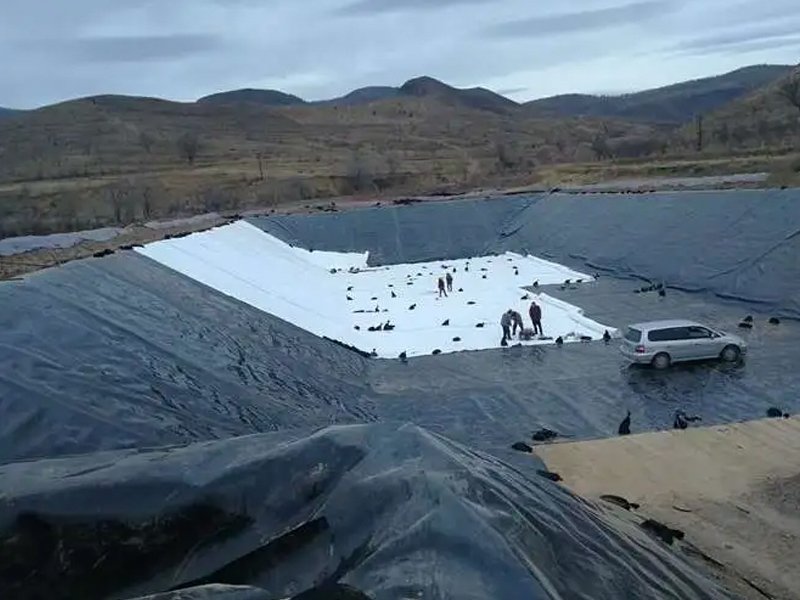
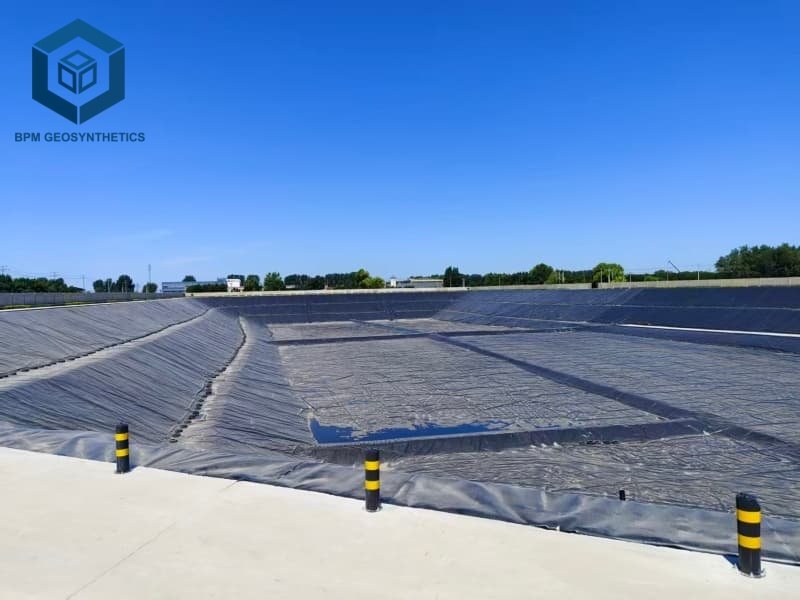
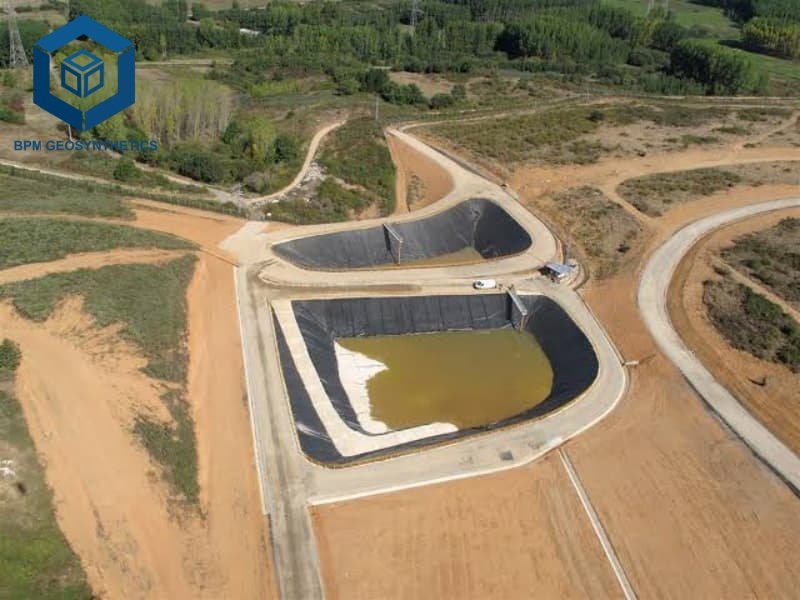
If you are involved in water containment projects, aquaculture, or decorative landscaping, choosing the right geomembrane thickness is a critical decision. Among the many options available, the 300 micron pond liner (equivalent to 0.3 mm or approximately 12 mil) has become a popular choice for a wide range of applications.
As a professional geomembrane supplier, I often get asked: “Why 300 micron? Is it thick enough? What are the real benefits?” This article breaks down the key advantages of using a 300 micron pond liner, from cost efficiency to installation convenience, while addressing common concerns about durability and performance.
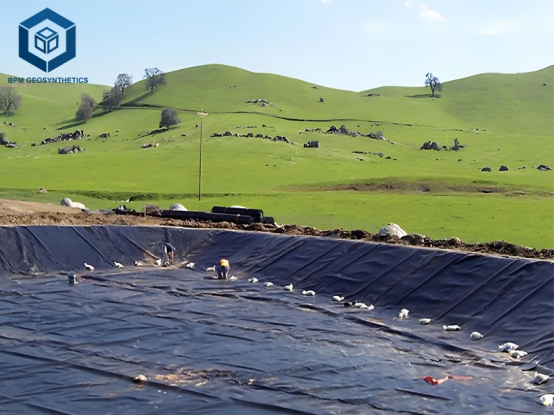
1. Overview of 300 Micron Pond Liner
A 300 micron pond liner is a flexible geomembrane typically manufactured from high-density polyethylene (HDPE), low-density polyethylene (LDPE), or linear low-density polyethylene (LLDPE).
The thickness of 300 microns sits in the middle range – thinner than heavy-duty liners used for industrial tailings ponds (often 1.0 mm or more) but thicker than disposable or temporary liners (below 200 microns). This balance makes it a versatile solution for many water and soil containment needs.
1.1. Common Applications
300 micron pond liners are widely used across various scenarios, including:
Decorative garden ponds and koi ponds.
Firefighting water storage tanks.
Irrigation canals and reservoirs on farms.
Lining for small to medium aquaculture ponds (shrimp, fish).
Secondary containment for chemical or fuel tanks (industry-specific).
Landfill caps or stormwater detention basins.
2. Cost Effectiveness Without Sacrificing Quality
One of the most immediate advantages of a 300 micron pond liner is its affordability. Thicker liners (for example, 500 micron or 1.0 mm) require more raw material, which directly increases the price per square meter.
For projects with moderate mechanical demands, a 300 micron liner provides sufficient strength while reducing material costs.
2.1. Lower Material Costs
Compared to 500 micron or 0.75 mm liners, a 300 micron liner uses about 40% to 60% less resin. This translates into a significantly lower purchase price, especially when covering large surface areas.
For budget-conscious customers – such as small farmers or homeowners – this makes professional-grade lining accessible.
2.2. Reduced Transportation and Storage Expenses
A 300 micron pond liner weighs less per roll. A standard roll of 300 micron geomembrane (say, 6 meters wide by 50 meters long) can weigh roughly 30% to 40% less than an equivalent roll of 500 micron.
Lower weight means cheaper freight costs, easier handling at the warehouse, and less need for heavy lifting equipment during installation. For international shipping, this advantage becomes even more pronounced.
3. Sufficient Mechanical Strength for Typical Water Applications
Many buyers worry that 300 micron is too thin and may puncture easily. In reality, modern polyethylene resins and advanced manufacturing produce liners with excellent tensile strength, elongation, and puncture resistance.
A quality 300 micron HDPE liner typically has a tensile strength of around 15 to 20 kN/m (ASTM D6693) and an elongation at break of 500% to 700%. These values are more than adequate for static water loads and moderate soil contact.
3.1. Puncture Resistance
Under normal installation conditions – a prepared subgrade free of sharp rocks, roots, or debris – a 300 micron liner comfortably resists static puncture from the weight of water and light foot traffic.
For ponds that do not have heavy animals (like cattle or pigs) walking on the liner, or sharp angular rocks pressing against it, 300 micron performs reliably.
3.2. Tear and Burst Strength
The combination of high elongation and balanced tear resistance means that if a small nick does occur (e.g., from a dropped tool), the liner tends to stretch locally rather than propagating a large tear.
Moreover, field repairs using patch sheets or extrusion welding are just as effective on 300 micron as on thicker materials.
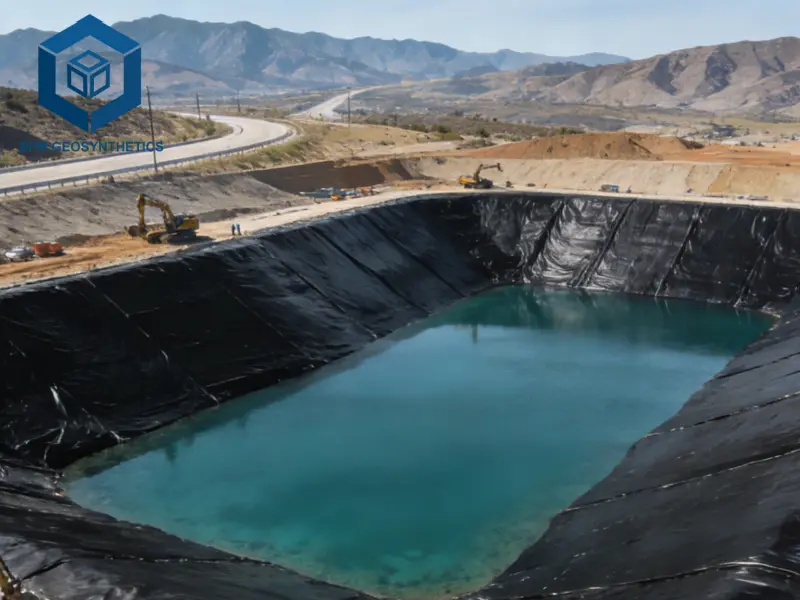
4. Excellent Flexibility and Conformability
A 300 micron pond liner is significantly more flexible than its thicker counterparts. This is especially true for LLDPE or VLDPE (very low-density polyethylene) formulations. Higher flexibility provides several real-world benefits.
4.1. Easier Confirmation of Complex Shapes
Ponds are rarely perfect rectangles with smooth slopes. They have corners, curves, and irregular bottom profiles. A stiff, thick liner (e.g., 1.0 mm HDPE) requires more force to drape into tight corners and may need additional anchors or seaming to prevent bridging.
A 300 micron liner naturally follows the subgrade contour, reducing the risk of voids and stress points.
4.2. Better Performance in Cold Weather
Thick HDPE liners become brittle and harder to handle in low temperatures (below 5°C or 40°F). Thinner liners retain greater flexibility in cold weather, making winter installations more feasible.
For customers in temperate or cold climates, this can extend the working season.
5. Faster and Simpler Installation
Installation time directly impacts labor costs and project schedules. A 300 micron liner offers several installation advantages that can save days of work.
5.1. Lightweight Rolls
As mentioned earlier, 300 micron rolls weigh less. Two workers can easily lift, unroll, and position a roll without a crane or backhoe. For remote or difficult-access sites, this is a major benefit.
5.2. Reduced Seaming Time
Seaming (welding or bonding) a 300 micron liner is generally quicker because the material heats through more evenly and requires less welding energy.
For overlap seams using a hot wedge welder, the machine can travel at a faster speed compared to thicker material. Over a large pond, this reduces total seam length time by 15% to 25%.
5.3. Simpler Geotextile Compatibility
Often a 300 micron pond liner is used together with a geotextile cushion layer (e.g., 200 g/m² nonwoven fabric) to protect against subgrade imperfections.
The combination is lighter and easier to deploy than thick liner systems. For temporary or semi-permanent ponds, some customers even omit the geotextile, relying solely on careful subgrade preparation.
6. Good Resistance to UV and Chemical Exposure
Despite being thinner, a high-quality 300 micron liner made from HDPE or LLDPE with 2% to 3% carbon black offers excellent UV resistance. It can withstand months of direct sunlight without significant degradation.
For applications where the liner will remain exposed (e.g., an open water reservoir), 300 micron provides the same UV protection lifespan as thicker liners, given the same additive package.
6.1. Chemical Compatibility
Polyethylene liners are inherently resistant to a wide range of chemicals: dilute acids, alkalis, salts, and many hydrocarbons. A 300 micron liner is just as chemically resistant as a 1.0 mm liner – thickness does not change the material’s chemical resistance.
For agricultural ponds (fertilizer runoff) or firewater tanks (no aggressive chemicals), 300 micron is perfectly adequate.
6.2. Ozone and Rot Resistance
Unlike rubber pond liners (EPDM), polyethylene does not degrade from ozone or biological attack. Algae, bacteria, and fungi do not consume the material.
A 300 micron liner will not rot or become brittle from biological activity, ensuring long service life in aquatic environments.
7. Environmental and Sustainability Advantages
Increasingly, customers care about the environmental footprint of their materials. A 300 micron pond liner offers some noteworthy green benefits.
7.1. Less Plastic Consumption
By using a thinner liner, you consume less plastic per square meter of coverage. For large projects, this reduces the total fossil fuel-derived material used.
If the liner is eventually removed and recycled (some geomembranes can be recycled into other plastic products), the lower mass reduces recycling energy.
7.2. Lower Carbon Footprint in Transport
Lower weight means lower fuel consumption during shipping. Additionally, many manufacturers now produce 300 micron liners using recycled content or bio-based resins. Ask your supplier for certifications.
7.3. Suitable for Rainwater Harvesting
For environmental projects like rainwater harvesting or stormwater retention, a 300 micron liner provides an economic barrier that encourages the adoption of sustainable water management practices.
A cheaper liner means more farmers and landowners can afford to capture rainwater rather than letting it run off.
8. Limitations and How to Mitigate Them
No product is perfect for every scenario. A 300-micron pond liner has limitations, but most can be managed with proper design and installation.
8.1. Lower Resistance to Heavy Point Loads
If the pond will contain large rocks, heavy machinery, or animals with sharp hooves, 300 micron is not recommended. In such cases, upgrade to 500 micron or 0.75 mm, or add a protective geotextile and a sand layer.
Solution:
Always specify a nonwoven geotextile cushion (e.g., 200 to 300 g/m²) and a 10 cm sand layer over the subgrade before placing the 300 micron liner.
8.2. Reduced Seam Strength Compared to Thicker Liners
The seam strength (peel and shear) of a 300 micron liner is lower than that of thicker materials, but still exceeds the liner’s own tensile strength when properly welded. For high-head applications (water depth over 3 meters), a thicker liner may be required.
Solution:
For ponds deeper than 2.5 meters, consult a geotechnical engineer. In most farming or garden ponds (depth 1 to 1.5 meters), 300 micron seaming is perfectly reliable.
8.3. Shorter Service Life Under Severe Conditions
Under ideal conditions (buried or covered with water), a 300 micron HDPE liner can last 15 to 25 years. Under constant UV exposure without water cover, expect 5 to 10 years, depending on UV intensity.
Thicker liners offer longer UV life due to more carbon black content and a thicker sacrificial layer. However, for many temporary or semi-permanent projects (5-10-year lifespan), 300 microns is fully adequate.
9. Comparison with Other Common Thicknesses
To help you decide, here is a practical comparison of common pond liner thicknesses:
9.1. 200 micron (8 mil)
Very thin and low cost. Suitable only for short-term (1-2 years) or decorative indoor ponds. Not recommended for outdoor applications with UV or mechanical stress.
9.2. 300 micron (12 mil)
Best balance of cost, durability, and workability. Ideal for most agricultural ponds, garden ponds, and secondary containment with low to moderate mechanical demands.
9.3. 500 micron (20 mil)
Heavier, stiffer, more puncture-resistant. Suitable for larger commercial aquaculture, steep slopes, or ponds with rocky subgrade, even after preparation.
9.4. 750 micron to 1.0 mm (30 to 40 mil)
Heavy-duty, used for mining, landfill, or high-traffic industrial ponds. Overkill for most farm or garden applications.
10. Conclusion: Why Choose 300 Micron Pond Liner?
As a geomembrane sales professional, I regularly recommend the 300 micron pond liner to customers who ask for “the best value without cutting corners.” Its advantages can be summarized as follows:
Cost effective – Lowers material and shipping costs compared to thicker liners.
Sufficient strength – Meets the tensile, tear, and puncture needs of most water containment projects.
Excellent flexibility – Conforms easily to irregular pond shapes and performs well in cold weather.
Fast installation – Lightweight rolls and quicker seaming reduce labor expenses.
Good chemical and UV resistance – Same polymer properties as thicker liners, with proper carbon black.
Environmentally friendlier – Less plastic per square meter and lower transport emissions.
Of course, you must assess your specific ground conditions, water depth, animal activity, and expected service life. For rocky subgrades, steep slopes over 1:1.5, or depths beyond 3 meters, I would suggest moving to a 500 micron or thicker liner.