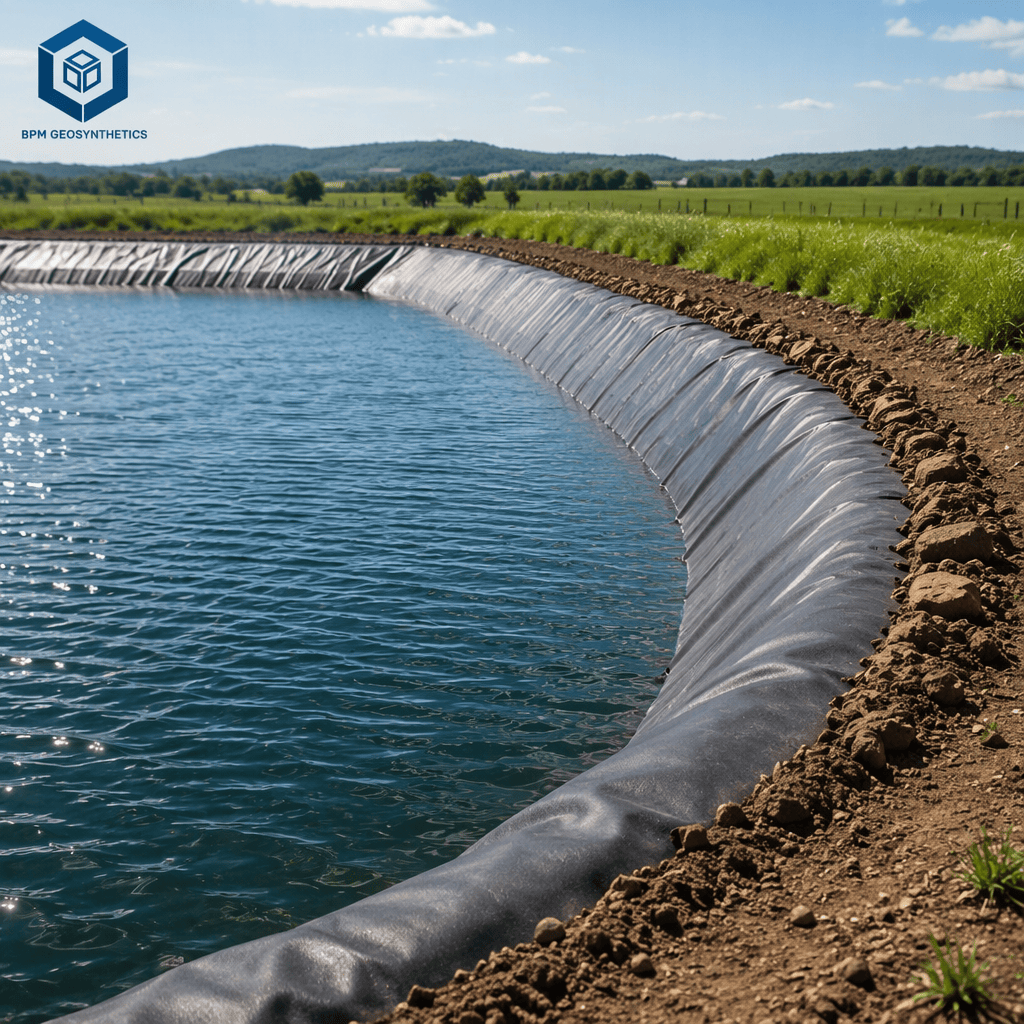
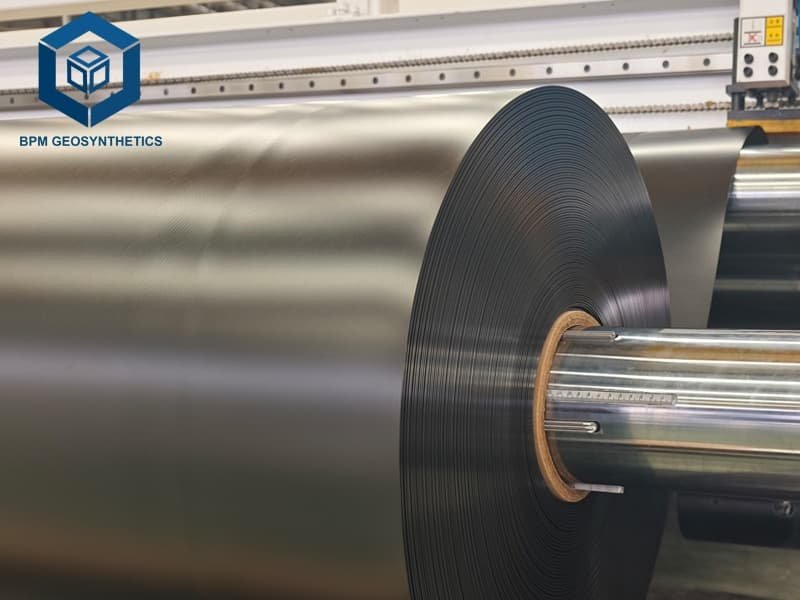
Geomembrane liner landfill represent a cornerstone of modern solid waste management, where impermeable synthetic barriers prevent leachate migration into soil and groundwater while containing landfill gas emissions. High-density polyethylene (HDPE) geomembrane liners dominate this application, holding 42-48% of the global geomembrane market share in 2026 due to exceptional chemical resistance (pH 2-13 tolerance), puncture resilience, UV stability (HP-OIT retention ≥50% after 1600 hours), and near-zero permeability (≤10⁻¹¹ cm/s per ASTM D5887).
The geomembrane market exceeds USD 3.2 billion in 2026, growing at a 5-6% CAGR, fueled by stricter regulations (e.g., EPA Subtitle D requiring composite liners with HDPE over compacted clay, minimum 60 mil/1.5 mm for base liners in many jurisdictions), municipal solid waste increases, and hazardous waste containment needs. In landfills, geomembrane liners form the primary/secondary barrier in double-liner systems, often paired with geotextiles, geonets, and leachate collection layers, achieving 98-99.9% seepage prevention and extending design life to 50-100+ years when properly installed.
GRI-GM13 sets the benchmark for HDPE geomembranes in landfills: density ≥0.940 g/cm³, tensile yield ≥22 kN/m (1.5 mm smooth), puncture ≥480 N (ASTM D4833), HP-OIT ≥400 min (ASTM D5885), ESCR >500 hours (ASTM D5397), and seam strength ≥80% of parent material (ASTM D6392). Textured variants enhance interface friction on slopes (asperity ≥0.25 mm, shear angles 25-35°).
This expert 2026 review ranks the 6 best geomembrane liner options for landfills, drawing from GRI standards, third-party testing (TRI, NTPEP), field performance (thousands of MSW/hazardous sites), and metrics like mechanical durability, oxidative resistance, leak detection compatibility, and value. Emphasis on non-Chinese manufacturers where possible, spotlighting BPM Geosynthetics’ HDPE geomembrane for its landfill-optimized compliance and cost-effectiveness.
These liners reduce environmental risks dramatically—e.g., compliant HDPE cuts groundwater contamination probability by 90-99%—while enabling regulatory approval and long-term asset integrity.
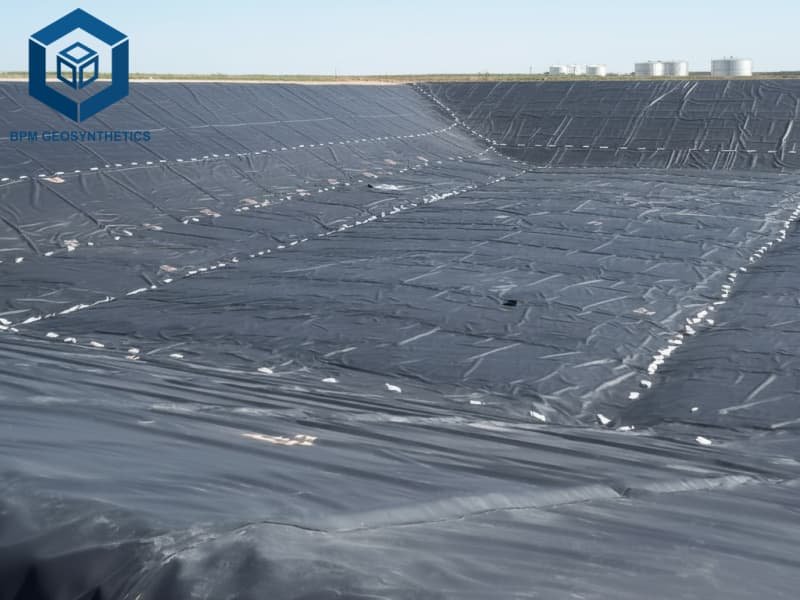
1. Role of Geomembrane Liners in Modern Landfills
Geomembrane liners in landfills create engineered barriers preventing leachate (acidic, high-BOD/COD fluid from waste decomposition) from percolating into aquifers. Typical composite liner: 60 mil HDPE over 2 ft compacted clay (permeability ≤10⁻⁷ cm/s), geosynthetic clay liner (GCL), or double HDPE with leak detection geonet.
Functions include:
- Leachate Containment— Blocks migration, directing to collection systems.
- Gas Control— Limits methane/CO₂ escape in caps.
- Slope Stability— Textured HDPE increases friction, reducing shear failure by 30-50%.
- Durability— Resists biodegradation, thermal cycling, and overburden (up to 100+ ft waste).
HDPE excels for landfills: superior to PVC (shorter lifespan in organics) or LLDPE (lower stiffness under load). Regulatory minima (e.g., NYSDEC: 60 mil HDPE base, 40 mil LLDPE cover) underscore HDPE’s reliability.
2. Top 6 Geomembrane Liner Landfill Options for Landfills Ranked
2.1 Solmax HDPE Geomembrane (Best Overall for Large-Scale MSW Landfills)
Solmax’s textured/smooth HDPE leads with proven performance in high-volume sites.
Key Specs:
- Thickness: 0.75-3.0 mm (60 mil common)
- Tensile Yield: 25-50 kN/m
- Puncture: 500-1000 N
- HP-OIT: ≥400-800 min
- Certifications: ISO 9001, CE, NTPEP, GRI-GM13
Performance: 99.9% leachate isolation in trials; textured variants cut slope failures.
2.2 GSE Environmental (Solmax) HDPE Liner (Best for Hazardous Waste Landfills)
Robust for aggressive leachates.
Key Specs:
- Thickness: 0.75-3.0 mm
- Tensile Yield: 25-50 kN/m
- Puncture: 500-900 N
- ESCR: >1000 hours
Superior in double-liner systems.
2.3 AGRU America HDPE Geomembrane (Best for Uniformity in Large Caps)
Precision extrusion for minimal defects.
Key Specs:
- Thickness: 1.0-3.0 mm
- Tensile Yield: 22-40 kN/m
- Puncture: 480-800 N
- HP-OIT: ≥400 min
Wide rolls reduce field seams by 20-30%.
2.4 Atarfil HDPE Geomembrane (Best for Long-Term Oxidative Resistance)
Advanced resin for extended exposure.
Key Specs:
- Thickness: 0.75-3.0 mm
- Tensile Yield: 25-45 kN/m
- Puncture: 500-850 N
- ESCR: >3000 hours
High retention post-aging.
2.5 NAUE GmbH HDPE Geomembrane (Best for Slope-Heavy Landfill Designs)
Engineered for steep interfaces.
Key Specs:
- Thickness: 0.75-2.5 mm
- Tensile Yield: 25-40 kN/m
- Puncture: 450-800 N
Strong in European-compliant sites.
2.6 BPM HDPE Geomembrane by The Best Project Material Co., Ltd (BPM Geosynthetics) (Best Value for Municipal Landfill Projects)
BPM’s HDPE meets GRI-GM13 equivalents with customization.
Key Specs:
- Thickness: 0.5-3.0 mm (60 mil compliant)
- Tensile Yield: 11-44 kN/m
- Break Strength: 20-80 kN/m
- Puncture: 240-960 N
- Elongation: ≥700%
- Density: ≥0.940 g/cm³
- HP-OIT: ≥400 min
- Permeability: ≤10⁻¹¹ cm/s
- Roll Width: Up to 10 m
50-100 year designs; excellent for leachate barriers.
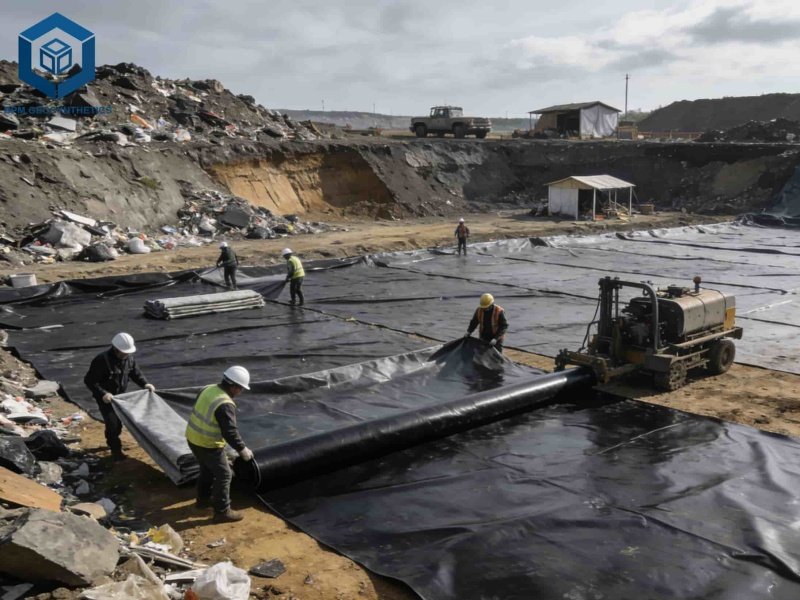
3. Comparison Tables
3.1 Table 1: Core Technical Parameters Comparison (Typical 1.5 mm / 60 mil, GRI-GM13 Aligned)
| Rank | Manufacturer/Liner | Thickness Range (mm) | Tensile Yield (kN/m) | Puncture Resistance (N) | HP-OIT (min) | ESCR (hours) | Permeability (cm/s) | Best Landfill Use |
| 1 | Solmax HDPE | 0.75-3.0 | 25-50 | 500-1000 | ≥400-800 | >500 | ≤10⁻¹¹ | Large MSW, hazardous |
| 2 | GSE HDPE | 0.75-3.0 | 25-50 | 500-900 | ≥400 | >1000 | ≤10⁻¹¹ | Aggressive leachate |
| 3 | AGRU HDPE | 1.0-3.0 | 22-40 | 480-800 | ≥400 | 300-500 | ≤10⁻¹¹ | Caps, uniform seams |
| 4 | Atarfil HDPE | 0.75-3.0 | 25-45 | 500-850 | ≥400 (high) | >3000 | ≤10⁻¹¹ | Long-term exposed |
| 5 | NAUE HDPE | 0.75-2.5 | 25-40 | 450-800 | ≥400 | >500 | ≤10⁻¹¹ | Steep slopes |
| 6 | BPM HDPE | 0.5-3.0 | 11-44 | 240-960 | ≥400 | 300+ | ≤10⁻¹¹ | Municipal, value-driven |
(Values typical minima/averages from GRI-GM13, specs, and testing.)
3.2 Table 2: Market Position, Estimated Share, Major Clients, and Certifications
| Manufacturer | Est. Global HDPE/Geomembrane Share (Approx.) | Est. Production Focus | Major Clients/Sectors | Key Certifications |
| Solmax | 15-20% | High | Municipal/hazardous landfills | ISO 9001, CE, NTPEP, GRI-GM13 |
| GSE (Solmax) | 10-15% | High | EPA-regulated, mining | ISO 9001, Verifications |
| AGRU America | 8-12% | Medium-High | Water/waste utilities | ISO 9001, CE |
| Atarfil | 5-8% | Medium | Exposed landfill caps | ISO 9001, CE |
| NAUE GmbH | 5-10% | Medium | European MSW/infrastructure | ISO 9001, DIN, CE |
| BPM Geosynthetics | Competitive global/value supplier | Export-focused | Municipal landfills, international | ISO 9001, CE, SGS, GRI equivalents |
(Estimates from 2025-2026 reports; HDPE ~42-48% share.)
4. BPM Geomembrane Liner Landfill Advantages for Landfill Applications
BPM’s HDPE geomembrane excels in landfill use with virgin resin, advanced extrusion, and GRI-GM13 alignment—yield up to 44 kN/m, puncture up to 960 N, HP-OIT ≥400 min—at 15-30% lower cost than premiums.
Advantages:
- Landfill-Optimized Performance— 99.9% seepage block; textured options boost slope friction 25%.
- Cost Savings— $1.50-3.50/m²; wide rolls minimize seams (15-25% faster install).
- Durability— ≥700% elongation for settlement; 50-100 year life in MSW/hazardous.
- Versatility— Smooth for base, textured for sides/caps; compatible with leachate systems.
- Compliance/Support— ISO/CE/SGS; fast delivery, technical aid, warranties.
BPM suits municipal landfills needing reliable, audit-ready liners.
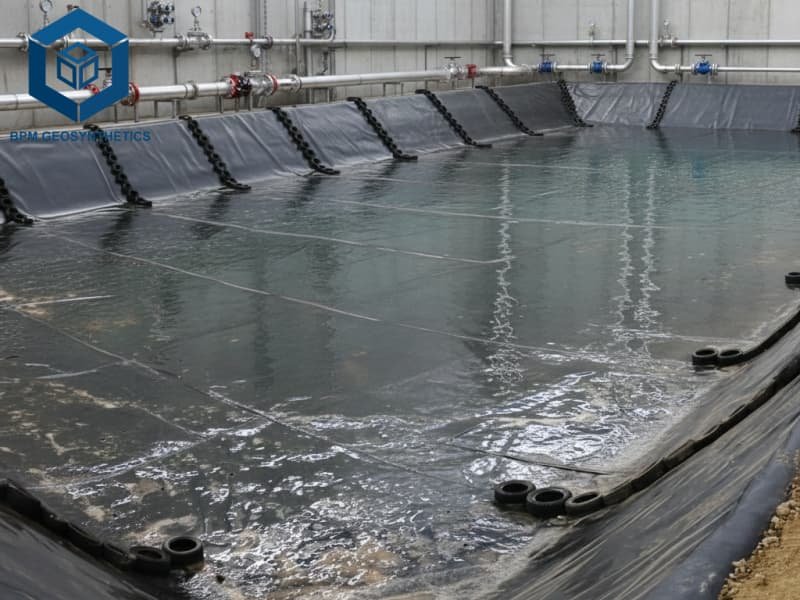
5. Conclusion
For geomembrane liner landfills, Solmax/GSE suit high-risk/hazardous sites, BPM offers unmatched value for municipal projects. Prioritize GRI-GM13 compliance, CQA testing, and qualified installation for regulatory approval and environmental protection.
For BPM Geomembrane HDPE geomembrane details, visit: https://www.bpmgeomembrane.com/geomembranes/high-density-polyethylene-geomembrane/.
Consult geotechnical engineers for site-specific designs.