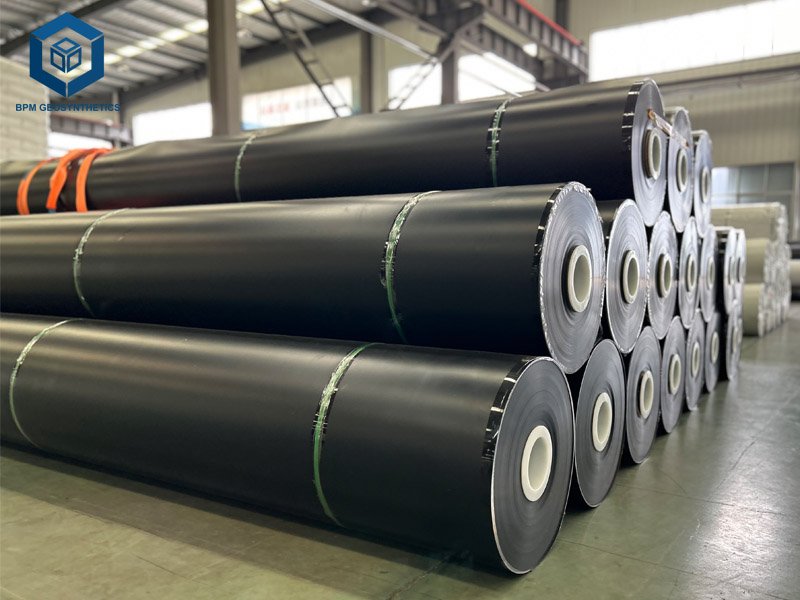
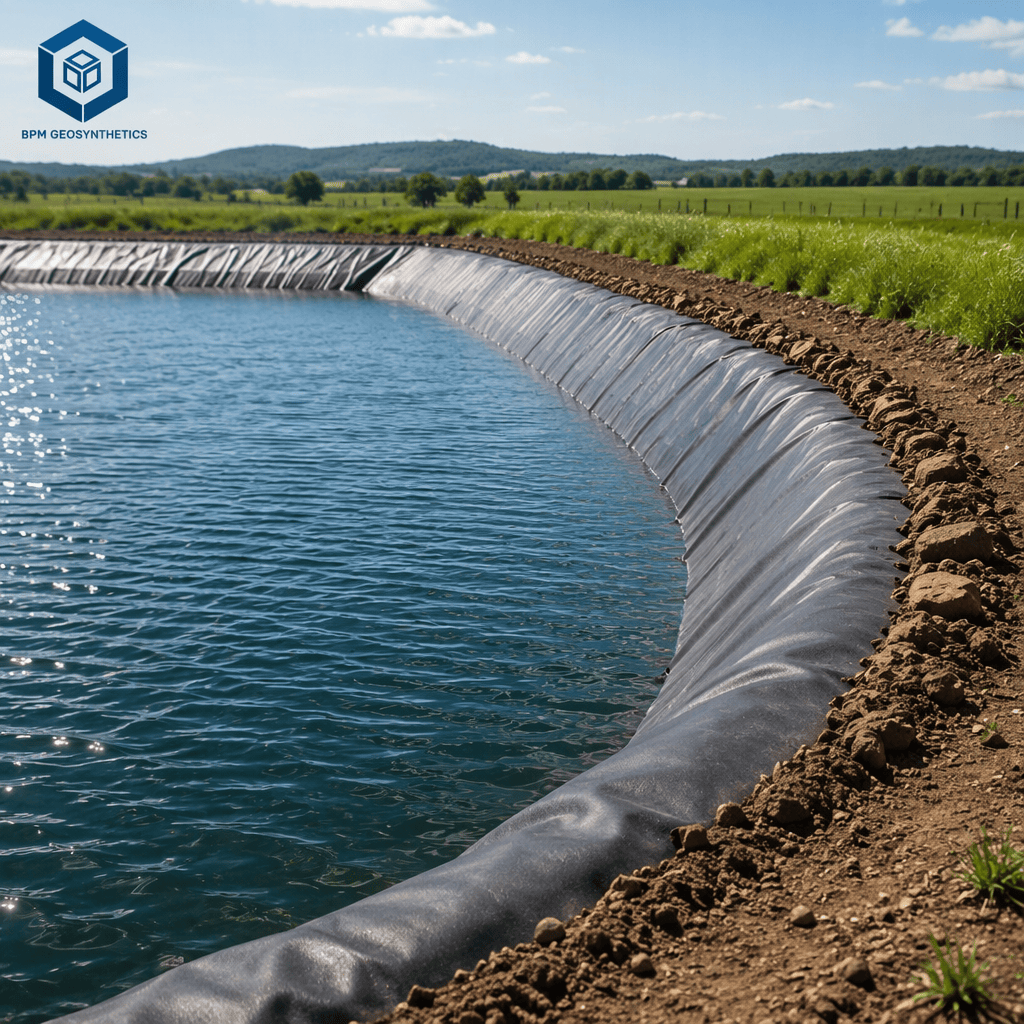
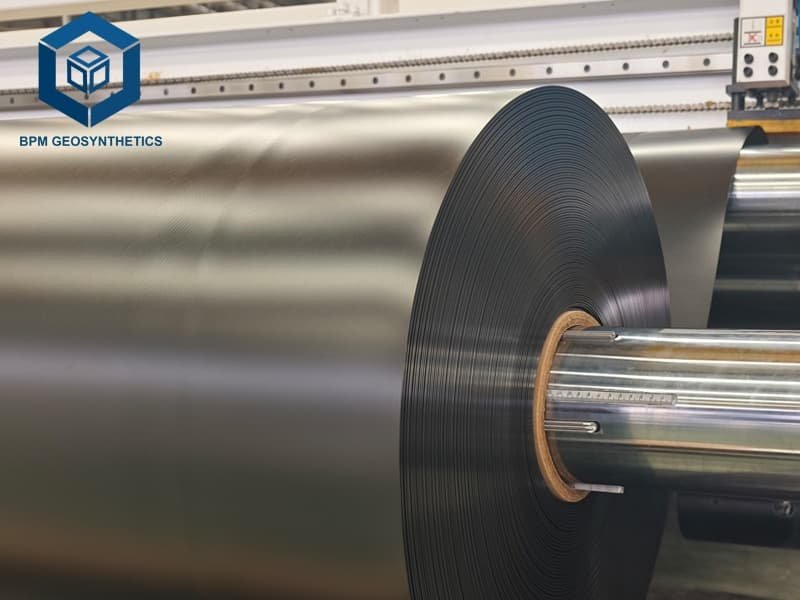
When containment demands are extreme, the 500 micron sheet just won’t cut it. That’s where 1000 micron (1.0 mm) HDPE geomembrane steps in. This heavy-duty liner is the workhorse of landfill cells, mining leach pads, and large-scale reservoir linings where puncture resistance and long-term durability are non-negotiable.
Not all 40-mil equivalent sheets perform equally. At BPM Geomembrane, we’ve tested dozens to separate field-proven products from overpriced marketing. Below is our expert review of the 6 best 1000 Micron HDPE Sheet products on the market, helping you select based on tensile strength, puncture resistance, roll dimensions, and real-world field data.
1. What Is 1000 Micron HDPE Sheet
A 1000 Micron HDPE Sheet is a high-density polyethylene geomembrane with a nominal thickness of 1.0 millimeters, equivalent to approximately 40 mils. This heavy-duty liner delivers exceptional strength for the most demanding containment applications.
Typical mechanical properties include tensile strength at yield of 22–28 kN/m (ASTM D6693) and elongation at break exceeding 500%, ensuring both strength and ductility. Puncture resistance generally ranges from 600 to 900 N (ASTM D4833), while tear resistance meets or exceeds 100 N (ASTM D1004). The material contains 2.0–3.0% carbon black for UV stabilization, providing a minimum of 100 minutes standard oxidation induction time (OIT) per ASTM D3895.
With a permeability coefficient of approximately 1×10⁻¹⁴ m/s, a 1000 micron HDPE sheet effectively resists liquid migration. When properly installed, this thickness delivers a design service life exceeding 50 years for static water containment and up to 75 years for buried applications.
2. The 6 Best 1000 Micron HDPE Sheet Review
2.1 GSE Geomembrane – Industry Benchmark for Critical Projects
Key Features: Premium virgin HDPE with 2–3% carbon black. Specs: 1.0 mm thickness, 4–8 m wide rolls, 20–30 MPa tensile strength. Certifications: ASTM D5397, GRI-GM13, EPA RCRA.
Pros: Superior stress crack resistance and oxidative stability. Wide rolls reduce field seams dramatically. 50+ year lifespan in submerged conditions.
Cons: Premium pricing; over-specified for small projects. Requires certified installers for welding.
Best For: Municipal landfills, mining leach pads, and large reservoirs where long-term integrity is critical.
2.2 AGRU America SureGrip HD – Best Textured Surface for Slope Stability
Key Features: Micro-textured one or both sides for friction. Specs: 1.0 mm thickness, smooth/textured combinations, chemical-resistant formula.
Pros: High interface friction prevents slippage on steep slopes up to 35°. Excellent resistance to acids, alkalis, and hydrocarbons.
Cons: Textured surface complicates perfect welding. Slightly higher cost than smooth sheets.
Best For: Landfill caps, reservoir slopes, and projects with unstable subgrades.
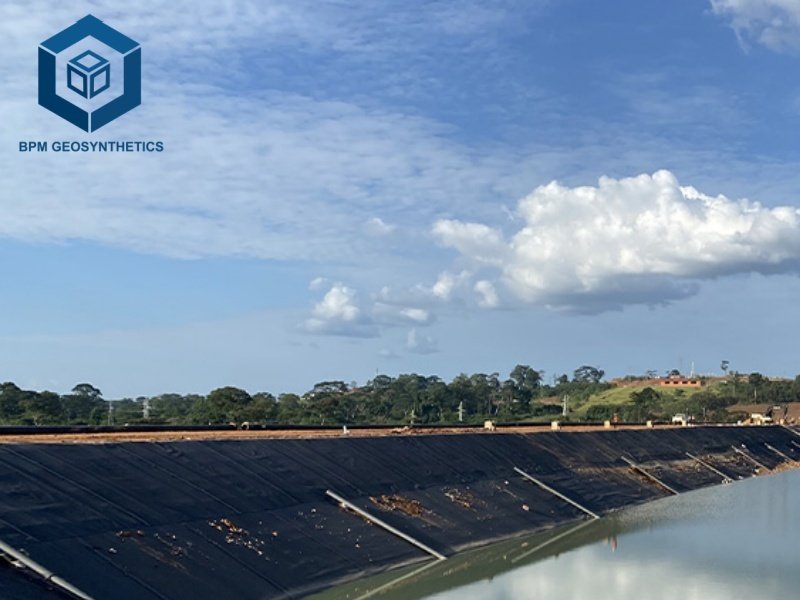
2.3 BPM Geosynthetics Smooth HDPE Sheet – Best Value for Heavy-Duty Projects
BPM Geosynthetics, a leading Chinese manufacturer founded in 2007, produces 1000 micron HDPE sheets using 97.5% virgin HDPE resin with 2.5% premium additives. Their sheets deliver tensile strength of 20–30 MPa, puncture resistance of 600–800 N, and elongation at break of 700–800% — outperforming most competitors in flexibility and impact resistance.
Pros: Cost-effective at 1.50–2.20/m². Lightweight and easy to handle. ISO 9001, ISO 14001, GRI-GM13 certified.
Cons: Smooth surface not ideal for steep slopes. 15–20 year exposed lifespan.
Best For: Construction vapor barriers, canal linings, and industrial containment where budget matters.
2.4 Raven Industries HDPE Multi-Purpose Liner – Most Versatile for Light Industrial Use
Key Features: Virgin HDPE with multi-layer co-extrusion. Specs: 1.0 mm thickness, 720% elongation, 25 kN/m yield strength.
Pros: Flexible enough for irregular surfaces. Resists oils, salts, and industrial chemicals. Easy installation.
Cons: Lower UV resistance than GSE/AGRU. Slightly higher price than budget options.
Best For: Wastewater lagoons, cisterns, and temporary industrial containment.
2.5 Solmax HDPE Heavy-Duty Liner – Best for Large Reservoirs
Key Features: 1.0 mm thickness, 7–8 m wide rolls, GRI-GM13 certified. Triple-track weldable seams.
Pros: Widest rolls on the market minimize seams. Proven track record in reservoir projects across North America. Excellent cold-weather weldability.
Cons: Limited availability outside North America. Premium pricing.
Best For: Large water reservoirs, municipal water storage, and irrigation canals.
2.6 Texplast Black HDPE Sheet – Best UV Resistance for Outdoor Exposure
Key Features: High-concentration carbon black (3%) for maximum UV protection. Specs: 1.0 mm thickness, 5 m wide rolls, 30+ year outdoor lifespan.
Pros: Withstands 2,000+ hours of UV exposure (ASTM D4355). Resists fading and brittleness in direct sunlight.
Cons: Stiffer than standard HDPE; harder to bend during installation. Higher cost than budget sheets.
Best For: Exposed reservoir liners, solar pond applications, and outdoor storage covers.
3. Summary
Choosing the right 1000 Micron HDPE Sheet is not just about thickness — it’s about tensile strength, puncture resistance, UV stability, and weldability. After reviewing the top six options, one thing becomes clear: quality consistency separates reliable liners from field failures.
At BPM Geomembrane, we recommend verifying each supplier’s GRI GM13 test data, especially carbon black dispersion and OIT values, before purchase. A certified 1000 micron sheet will provide over 50 years of service life when properly installed. Choose smart. Line with confidence.