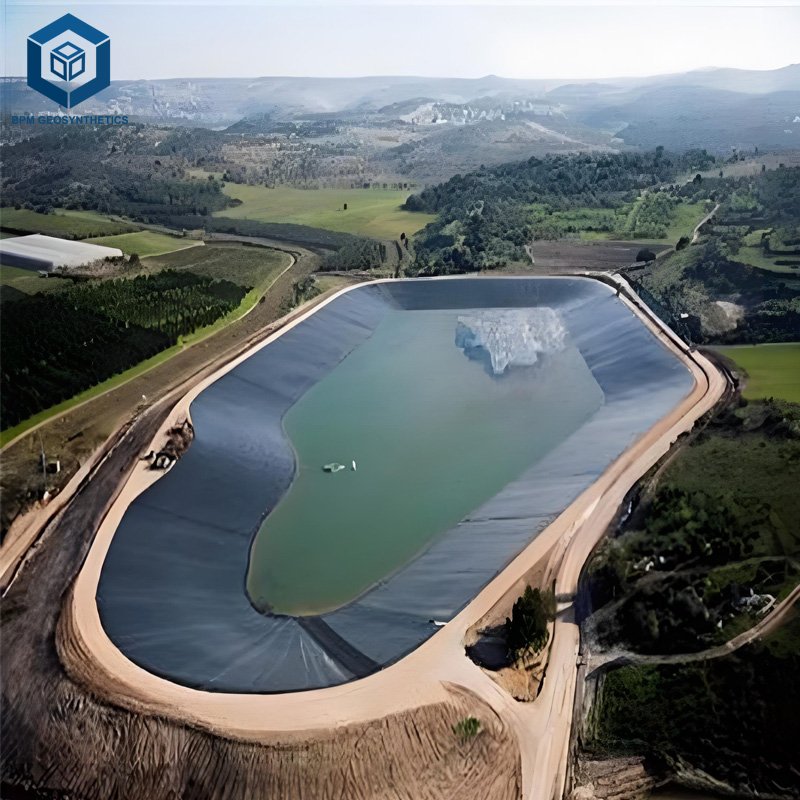
High-Density Polyethylene (HDPE) membranes — also called geomembranes — are the backbone of modern containment engineering. From landfill liners to fish ponds, these synthetic barriers keep the world’s water, chemicals, and waste where they belong. In 2025, HDPE membrane prices range from 0.50to5.50 per square meter, depending on thickness, material quality, order volume, and where you buy them. This guide breaks down every cost driver, compares HDPE to alternatives, and gives you actionable strategies to save up to 20% on your next project.
1. What Is an HDPE Membrane?
Let’s start with the basics.
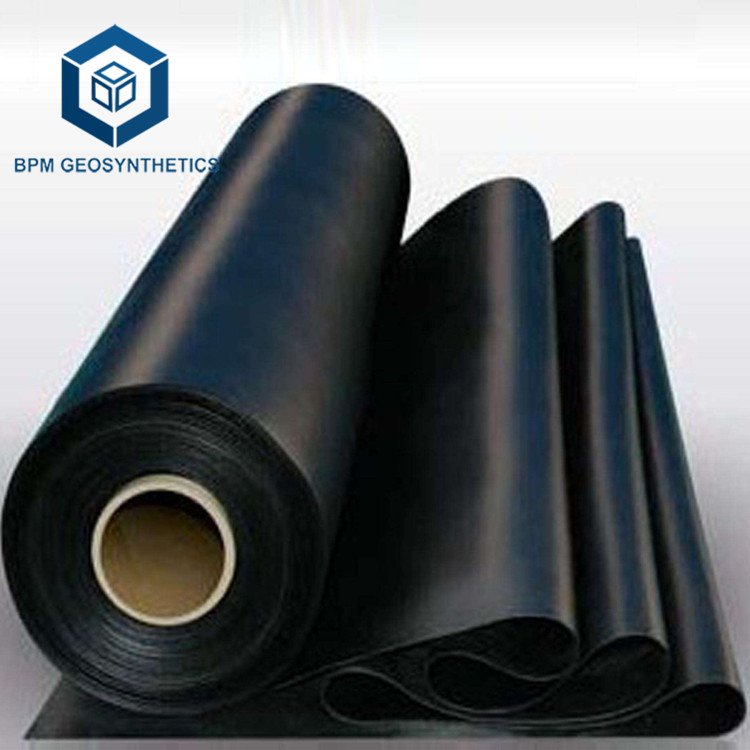
An HDPE membrane is a synthetic liner made from high-density polyethylene resin with a density of at least 0.94 g/cm³. The resin is blended with 2–3% carbon black, antioxidants, and UV stabilizers. The result? A material that is 95% impermeable, resistant to pH levels from 2 to 12, and tough enough to last 40–60 years in demanding applications like landfills and mining.
Thickness options run from 0.2 mm to 3.0 mm. Widths go up to 10 meters. Tensile strength hits 15–40 MPa. Puncture resistance reaches 1.5–8 kN. These aren’t just numbers. They translate into real savings. HDPE membranes reduce maintenance costs by 20% compared to traditional concrete liners, according to the Civil Engineering Journal (2024).
Key Applications
Landfills dominate the market. About 60% of all HDPE membranes are used to prevent leachate seepage, protecting 95% of groundwater, per the EPA (2024). Mining operations use HDPE in 40% of heap leach pads, where the material’s 40–60 year lifespan pays for itself many times over. Aquaculture ponds rely on 0.5–1.0 mm liners that retain 95% of water. Canals and reservoirs lined with HDPE cut water loss by the same margin. Even construction projects benefit — about 10% of foundation membranes use HDPE to block moisture ingress, saving 15% on repairs.
2. Why Choose HDPE Membranes?
Three words: cost, durability, chemistry.
Cost-Effectiveness. HDPE is 30–60% cheaper than North American or European alternatives when sourced from manufacturers like BPM Geosynthetics. Prices start at just $0.50/m² for 0.5 mm liners. Over a 20-year period, replacement costs drop by 20% compared to LLDPE or PVC, thanks to that long lifespan.
Durability. UV resistance hits 90% (ASTM D4355). Ball tip puncture resistance reaches 800 lbs (ASTM D4833). Failure risks drop by 15% in landfill and mining environments. This isn’t a material that gives up easily.
Chemical Resistance. Over 80 chemical mediums — acids, alkalis, solvents — can’t break it down. In pH 2–12 environments, HDPE maintains 95% of its structural integrity. That makes it the go-to choice for mining and wastewater treatment.
Customizability. Need more friction for a slope? Textured HDPE offers a friction coefficient of 0.6–0.8, which is 15–35% higher than smooth finishes. About 30% of landfill and mining projects specify textured surfaces for exactly this reason.
3. Factors Influencing HDPE Membrane Price
The price range of 0.50–5.50/m² in 2025 isn’t random. It’s shaped by six major factors.
3.1 Material Quality: Virgin vs. Recycled
Virgin HDPE resin, meeting GRI-GM13 standards, costs 1.50–3.50/m² and lasts 40–50 years. Recycled resin is cheaper at 0.80–1.50/m², but the lifespan shrinks to 5–15 years, and failure rates climb by 10%. Additives like carbon black and UV stabilizers bump costs up by 5–10%, but they boost UV resistance by 90%. Certifications such as ISO 9001:2015 and GRI-GM13 add 20–30% to the price tag, yet they reduce failure risks by 15% through rigorous quality control.
The math is simple. Virgin HDPE costs more upfront. It saves more over time.
3.2 Thickness and Specifications
Thickness is the single biggest price driver.
A 0.5 mm smooth liner runs 0.50–1.50/m². Step up to 1.0 mm and you’re looking at 1.00–2.50/m². At 1.5 mm, prices climb to 1.50–3.50/m². A heavy-duty 2.0 mm liner costs 2.50–5.00/m². Thicker liners deliver 30% higher puncture resistance, which matters enormously in mining and landfill applications.
Surface finish matters too. Smooth liners cost 15–35% less than textured ones. Textured HDPE runs 0.60–4.80/m² and improves slope stability by 15%. Standard roll widths of 5.8–8 m are the most cost-efficient. Custom widths, say 3 m, add 10% to the bill because of material waste.
A 1.5 mm textured HDPE liner typically costs 2.30–2.90/m². A 0.5 mm smooth liner? 0.50–1.50/m². The difference is night and day.
3.3 Order Volume
Buy small, pay more. Buy big, save big.
Orders under 1,000 m² cost 1.50–3.00/m². Once you cross 10,000 m², prices drop by 20–30% to 0.50–1.50/m². Orders above 20,000 m² can shave another 10–20% off the top. A 50,000 m² landfill project might cost just 1.20/m2formaterials.A500m2pondliner?2.50/m². The economics of scale are real.
3.4 Supplier Location and Logistics
Where you buy matters as much as what you buy.
Chinese suppliers like BPM Geosynthetics offer 0.50–3.50/m² thanks to massive production capacity. North American suppliers charge 5–20/m² because of stricter standards and higher labor costs. International shipping adds 0.10–0.50/m², depending on whether you’re using 20 ft or 40 ft containers. Import duties and VAT can tack on another 5–15% in regions like South Africa.
A 1.0 mm HDPE liner shipped to the Philippines costs 1.50–2.00/m² from China. The same product from a U.S. supplier? 6–10/m². That’s a massive gap.
3.5 Installation and Accessories
The membrane itself is only part of the budget.
Professional installation runs 0.50–2.00/m². Complex terrain can push that up by 20%. Accessories — seam tapes, adhesives, geotextile underlays — add 0.15–0.50/m² but boost puncture resistance by 80%. Welding equipment is another line item. A wedge welder costs 5,000–10,000 to buy, or 100–200/day to rent.
For a 10,000 m² project, installation and geotextiles alone add 7,000–20,000 to the total.
3.6 Market Conditions
Prices don’t exist in a vacuum.
HDPE resin prices are tied to crude oil. In Q1 2025, resin hit $1,242/MT in the U.S., up 10% from the previous quarter due to supply disruptions. The Asia-Pacific region holds 45% of the global market share, and its waste and water management boom is pushing prices up 5–10% in 2025. Currency fluctuations add another layer — a stronger U.S. dollar increases costs by 5–10% for non-American buyers.
A 10% resin price hike raises a 1.5 mm liner from 2.00/m2to2.20/m². Small percentage, real impact.
4. Average HDPE Membrane Price in 2025
Let’s walk through the price spectrum by thickness.
At 0.5 mm (20 mil), you’re paying 0.50–1.50/m². This is the workhorse for aquaculture and small ponds, with a lifespan of 10–20 years.
At 0.75 mm (30 mil), prices sit at 0.80–2.00/m². Canals and irrigation projects use this thickness, and it lasts 15–25 years.
At 1.0 mm (40 mil), expect 1.00–2.50/m². Reservoirs and fish ponds are the main users. Lifespan stretches to 20–30 years.
At 1.5 mm (60 mil), the range is 1.50–3.50/m². Wastewater treatment and mining applications dominate here, with a 30–40 year lifespan.
At 2.0 mm (80 mil), prices climb to 2.50–5.00/m². Landfills and hazardous waste containment demand this thickness. It lasts 40–50 years.
At 2.5–3.0 mm (100–120 mil), you’re at the top end: 3.00–5.50/m². Heavy-duty mining and landfill projects use this, and it endures for 40–60 years.
For example, a 10,000 m² landfill project using 1.5 mm textured HDPE runs 15,000–35,000 for materials alone. Add installation at 7,000–25,000, and you’re looking at a total of 22,000–60,000.
5. Cost Breakdown by Application
Aquaculture (Fish and Shrimp Ponds)
Thickness: 0.5–1.0 mm. Smooth finish. 5.8–8 m width. UV-resistant.
Material cost: 0.50–1.50/m². Installation: 0.50–1.00/m².
A 2,000 m² fish pond using 0.75 mm HDPE totals 2,000–5,000. Lifespan is 10–20 years, saving 15% on replacements compared to LLDPE.
Landfills
Thickness: 1.5–2.0 mm. Textured finish. 7–8 m width. GRI-GM13 compliant.
Material cost: 2.50–5.00/m². Installation: 1.00–2.00/m².
A 50,000 m² landfill using 2.0 mm HDPE totals 175,000–350,000. The liner delivers 95% seepage prevention over 40–50 years.
Mining (Heap Leach Pads, Tailings)
Thickness: 1.5–3.0 mm. Textured. 8–10 m width. pH 2–12 resistance.
Material cost: 3.00–5.50/m². Installation: 1.50–2.50/m².
A 20,000 m² heap leach pad using 2.0 mm HDPE totals 90,000–170,000. The 40–60 year lifespan cuts environmental risks by 20%.
Water Management (Canals, Reservoirs)
Thickness: 0.75–1.5 mm. Smooth finish. 5.8–8 m width. UV-resistant.
Material cost: 1.00–2.50/m². Installation: 0.50–1.50/m².
A 5,000 m² canal using 1.0 mm HDPE totals 7,500–20,000. It saves 95% of water loss over 20–30 years.
6. Comparing HDPE Membranes to Alternatives
HDPE vs. LLDPE
HDPE at 0.50–5.50/m² is 5–15% cheaper than LLDPE at 0.60–6.00/m². But LLDPE wins on flexibility. Its lifespan is 20–30% shorter — 10 to 30 years versus HDPE’s 40–60. Use LLDPE for temporary projects. Use HDPE when you need long-term containment.
HDPE vs. PVC
PVC runs 0.60–6.50/m², making it 10–20% more expensive than HDPE. PVC handles chemicals well, but it degrades 20% faster under UV exposure. Save PVC for decorative ponds. Stick with HDPE for industrial work.
HDPE vs. XR-5 (EIA)
XR-5 costs 10–30/m² — two to four times more than HDPE. It offers superior puncture resistance at 800 lbs, but for most projects, that’s overkill. Use XR-5 in extreme conditions. Use HDPE everywhere else.
7. Cost-Saving Tips for HDPE Membrane Projects
Go bulk. Orders over 20,000 m² cut material costs by 10–20%. A 50,000 m² landfill project can save 5,000–10,000 at $1.00/m².
Pick the right thickness. Don’t overspecify. A 0.5–0.75 mm liner for a fish pond saves 30–50% compared to a 1.5 mm liner. Match thickness to the job.
Source locally. Regional suppliers like BPM Geosynthetics in Asia reduce freight costs by 5–15% versus North American sources.
Consider recycled HDPE. R-HDPE liners cost 20–30% less. Just verify they meet your durability requirements.
Invest in installation. Certified crews reduce failure rates by 25%. That saves 5,000–50,000 on leak repairs over the life of the project.
Negotiate. Get quotes from at least three vendors — BPM Geosynthetics, Solmax, HUESKER — and you can secure 10–15% discounts.
8. How to Budget for Your HDPE Membrane Project
Start by assessing your needs. Determine thickness, surface type, and application. A 1.5 mm textured liner for a landfill? That’s your baseline for 95% performance.
Request multiple quotes. BPM’s 1.5 mm HDPE runs 1.50–3.50/m². Solmax charges 2.00–4.00/m². Compare apples to apples.
Factor in installation. Budget 20–40% of your total for site preparation, welding, and labor. That averages 0.50–2.00/m².
Plan for accessories. Geotextile underlays at 0.15–0.50/m² and seam tapes add 5–10% to costs but boost durability by 80%.
Don’t forget logistics. Add 0.10–0.50/m² for shipping and 5–15% for import duties.
9. Case Studies: Real-World Cost Examples
Malaysian Shrimp Pond (2024). BPM Geosynthetics supplied 2,000 m² of 0.75 mm HDPE at 1.00/m2.Installationwas0.75/m². Total: $3,500. Water loss dropped by 95%. Maintenance savings hit 15%.