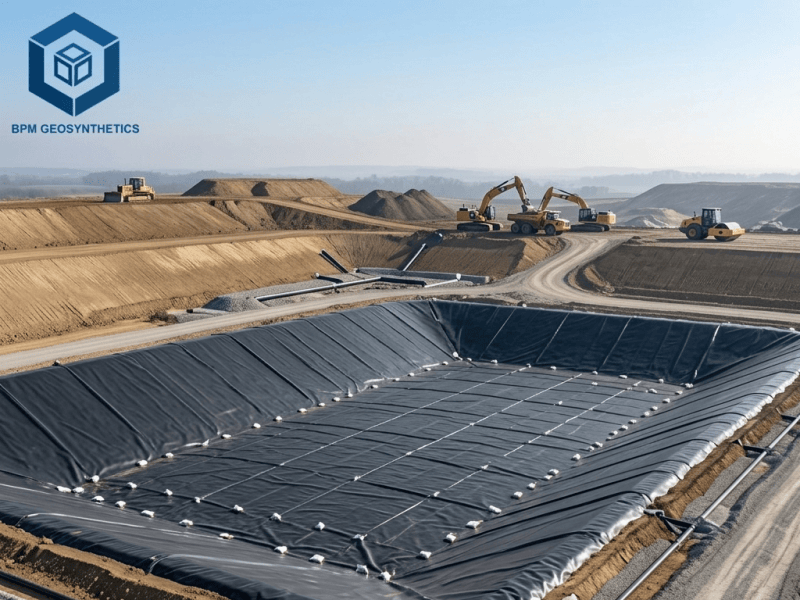
When planning any water containment, environmental protection, or civil engineering project, the first practical question that crosses every project manager and property owner’s mind is always tied to cost. For 2026, as HDPE geomembrane continues to stand as the most widely trusted impermeable material across aquaculture ponds, landfill capping, irrigation reservoirs, and decorative water features, HDPE Geomembrane Price has become one of the most searched. Most discussed topics in the geosynthetics industry. It is not a single, fixed number printed on a universal price tag. Instead, it is a dynamic figure shaped by material formulations, performance specifications, project scale, and market supply chains. To understand what truly makes up the HDPE Geomembrane Price, you have to look beyond the superficial per-square-foot quote and unpack all the hidden variables that define both upfront cost and long-term value.
The Core Foundation of HDPE Geomembrane Price: Raw Material Formulations
The base of HDPE Geomembrane Price is built squarely on the raw materials and formula choices manufacturers use for production. Standard black HDPE geomembranes, the most popular variant on the 2026 market, are formulated with 2-3% carbon black stabilization as a standard feature. This additive is not an unnecessary extra expense. It is the core reason that high-quality HDPE geomembranes can retain 70-80% of their tensile strength after years of continuous UV exposure; outperforming lighter-colored alternatives by 20% in outdoor conditions. Virgin resin formulations, the choice of leading manufacturers like BPM Geosynthetics, carry a modest cost premium over recycled or blended resin materials, but they deliver a permeability rating of ≤10⁻¹¹ cm/s, a puncture resistance of 2.8–5.5+ kN, and a buried service life of 30–50+ years. These performance differences directly translate to noticeable gaps in HDPE Geomembrane Price. In 2026, the base material cost for standard HDPE geomembranes typically ranges from 0.40–2.50 per square foot. This wide range is not arbitrary. The lower end of the spectrum corresponds to thinner, 20 mil products designed for short-term, low-demanding residential applications, while the higher end belongs to premium 60 mil formulations with enhanced anti-aging, chemical-resistant additives built for harsh industrial environments.
Many first-time buyers mistakenly judge HDPE Geomembrane Price only by the material cost per square foot listed on product pages, but they quickly learn that installed cost represents a far larger share of the total project budget. The total installed HDPE Geomembrane Price in 2026 sits between 0.90–4.00 per square foot, and the gap between the lower and upper ends of this range is driven by multiple site-specific factors. Installation cost first depends on the complexity of the project site. A flat, regular-shaped residential garden pond requires far less labor and seam processing than a sloped, irregularly shaped 10-acre aquaculture reservoir or a rugged municipal landfill base. The width of the geomembrane rolls you select also has a direct, measurable impact on total HDPE Geomembrane Price. Modern premium HDPE geomembranes are available in wide roll formats spanning 4–15 meters. These wide rolls minimize the number of field seams by 15–35% compared to narrow, small-sized rolls. Every seam that you do not need to weld on site saves hours of skilled labor, reduces the risk of future leak points, and cuts total installation labor costs by 15–30%. This is why many experienced project planners are willing to pay a slightly higher unit material cost for wide-format HDPE geomembranes. They know this choice will bring down the total HDPE Geomembrane Price significantly when the full installed budget is calculated.
Performance Certifications and Customization: Hidden Value Behind HDPE Geomembrane Price
Performance and industry certification standards are another layer that reshapes what HDPE Geomembrane Price actually includes. A basic no-name HDPE geomembrane with no third-party certification may seem cheap at first glance, but it often fails to meet the minimum requirements for critical projects. Premium HDPE geomembranes that carry GRI-GM13, ISO 9001, and ISO 14001 certifications, or fish-safe NSF/ANSI 61 formulations for koi ponds and aquaculture, will carry a higher HDPE Geomembrane Price, they eliminate almost all hidden risks that could cost a project far more in the long run. For example, an aquaculture farm using an uncertified low-cost HDPE geomembrane may find that the liner degrades in just 5 to 8 years under continuous sun exposure, leading to massive water leakage that kills stock and forces a full, costly re-installation. A premium HDPE geomembrane with proper certifications, despite its higher initial HDPE Geomembrane Price, will deliver 30 to 50+ years of stable service, reduce water loss by up to 95%+ throughout its lifespan, and offer a far higher return on investment. The mechanical specifications written into the product also correspond directly to HDPE Geomembrane Price. Standard HDPE geomembranes have thickness ranging from 20–60 mil (0.5–1.5 mm), tensile strength of 12–45+ kN/m, elongation at break of 380–800%+, and tear resistance of 90–300+ N. Products with higher ratings on all these indicators will naturally carry a higher HDPE Geomembrane Price, because they can handle harsher site conditions, resist punctures from sharp rocks, and withstand decades of ground settlement without cracking.
Customization and supplementary service factors also add nuance to the true value wrapped up in HDPE Geomembrane Price. Many leading manufacturers, including BPM Geosynthetics, do not just sell a plain roll of HDPE geomembrane at a fixed per-unit price. They offer pre-fabricated custom panels cut exactly to the dimensions of a customer’s project. This service eliminates almost all on-site cutting waste, further reduces seam work, and makes installation far faster, even for complex-shaped projects. This pre-fabrication service will slightly raise the unit HDPE Geomembrane Price, but it cuts down material waste by 10-20% on most projects, saving buyers money in the long run. Additional supporting services, such as on-site technical guidance, installation training, and long-term performance warranties, are also often included in the HDPE Geomembrane Price from trusted suppliers. A buyer who pays a slightly higher HDPE Geomembrane Price to get access to professional technical support never needs to worry about making wrong choices during liner laying, subgrade preparation, or geotextile underlay matching. For projects built on rocky ground that require extra puncture protection, you can also opt for textured HDPE geomembrane variants that improve slope stability. These specialized products carry a modest premium over smooth standard HDPE, but they significantly reduce the risk of liner slippage on steep slopes, preventing costly reworks after installation.
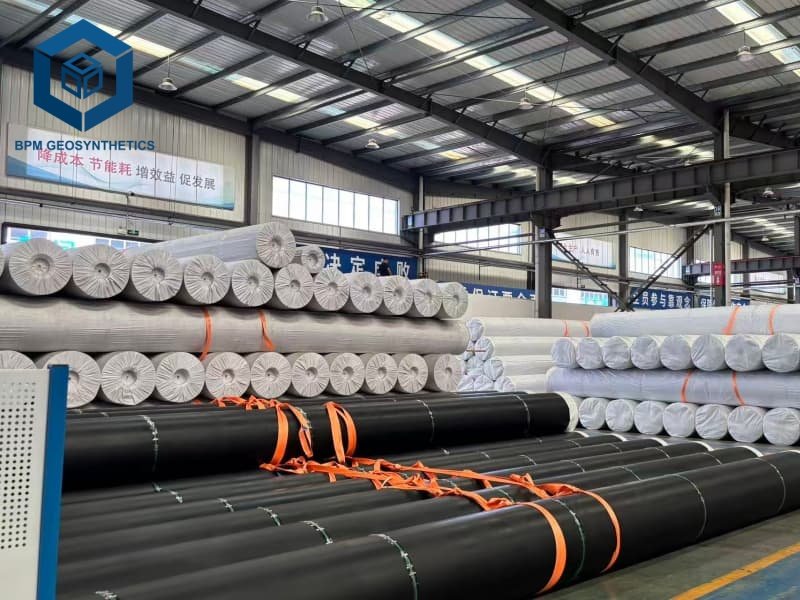
2026 Market Dynamics and Final Guide to Evaluating HDPE Geomembrane Price
Market shifts in 2026 also keep HDPE Geomembrane Price in a state of gentle, predictable fluctuation. The global supply of high-density polyethylene resin, changes in carbon black pricing, and shifts in logistics and international shipping costs all create small, periodic adjustments to base HDPE Geomembrane Price. Bulk purchasing for large commercial projects also unlocks significant price advantages. A buyer ordering 100,000 square feet of HDPE geomembrane will get a far lower unit HDPE Geomembrane Price than a residential buyer ordering 500 square feet for a small backyard pond. This scale discount is one of the key reasons that large aquaculture operators and municipal environmental engineering contractors often work directly with manufacturers rather than through third-party retailers. Direct manufacturer cooperation also eliminates intermediate markup, ensuring that customers get a fair HDPE Geomembrane Price while accessing full quality assurance and after-sales support.
At the end of the day, HDPE Geomembrane Price is never just about finding the lowest possible number on a quote sheet. It is about finding the right balance between upfront cost and decades of reliable performance. An unrealistically low HDPE Geomembrane Price almost always signals thin, low-quality material made from recycled resin, with poor UV stabilization, low puncture resistance, and a service life that falls far short of advertised figures. A reasonable, market-aligned HDPE Geomembrane Price from a trusted manufacturer, on the other hand, buys you 30 to 50+ years of worry-free impermeability, massive savings on water loss, zero unexpected re-installation costs, and full peace of mind for every project from a small backyard koi pond to a sprawling industrial landfill. Before you lock in your next HDPE geomembrane purchase, look past the single per-square-foot number. Break down what the price includes, check the material specifications and certifications, calculate the full installed cost, and you will find that the most cost-effective HDPE Geomembrane Price is always the one that delivers performance, longevity, and value that matches the specific needs of your project. For access to transparent, competitively priced HDPE geomembrane solutions backed by full manufacturing support, you can reach out to the team at BPM Geosynthetics for a customized quotation tailored to your project’s unique requirements.