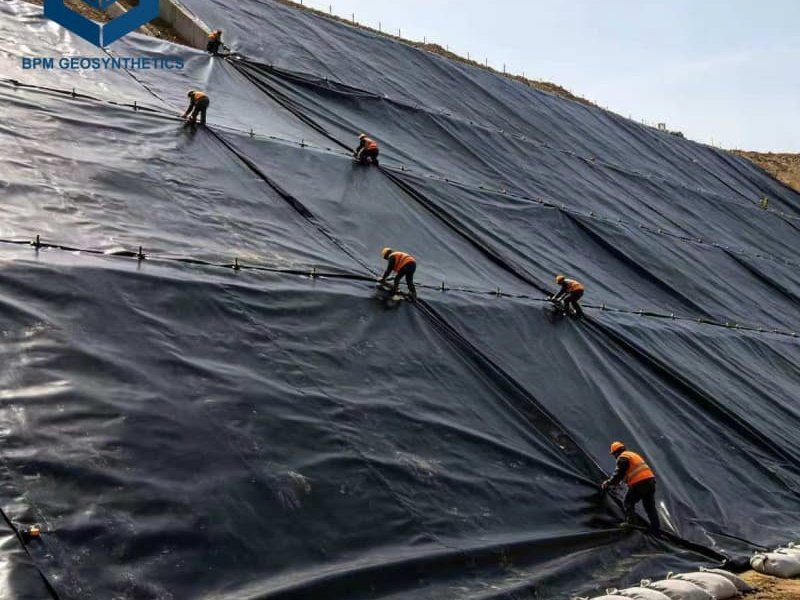
1.5mm HDPE geomembrane stands out as the most versatile liner choice for global environmental and hydraulic projects. Contractors pick this thickness to balance cost, durability, and anti-seepage performance. It works reliably for tailings ponds, landfill sites, reservoirs, and large aquaculture farms.
If you search for trusted 1.5mm HDPE liner suppliers, this guide helps you compare key features and match products to your project demands. We break down core advantages, application scenarios and critical buying tips for engineers and project buyers.
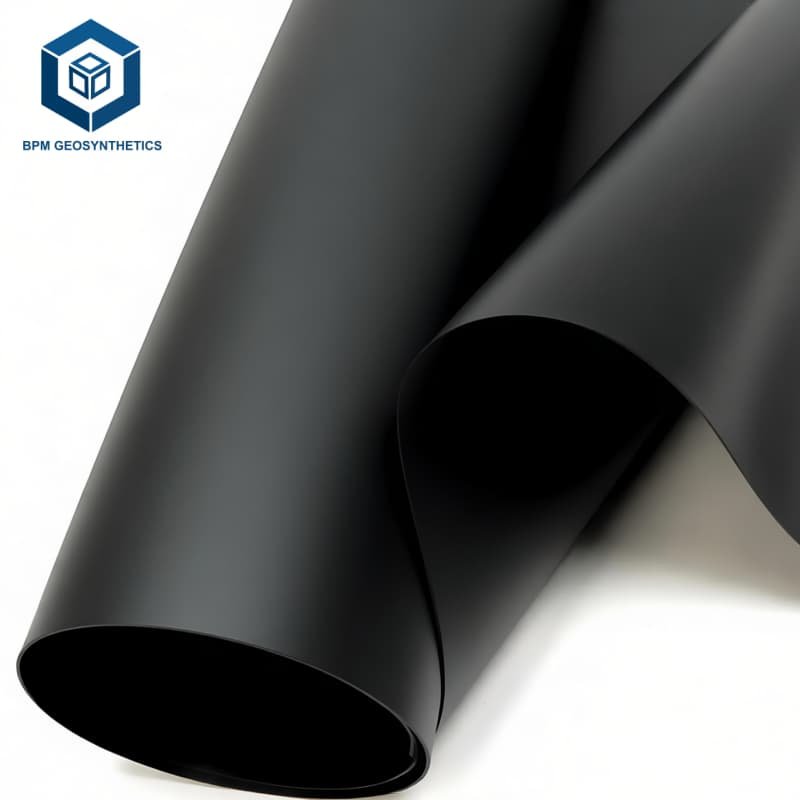
1. Why Choose 1.5mm HDPE Geomembrane
Many project owners choose 1.5mm HDPE geomembrane instead of thinner or thicker options. Thinner liners face a higher risk of puncture on rough subsoil. Thicker membranes unnecessarily inflate overall material budgets.
1.5mm HDPE liner delivers strong resistance against chemical corrosion, ultraviolet rays, and ground settlement. It fits medium and large-scale projects including mining tailings storage, municipal waste landfills, and water reservoirs.
This material also supports hot wedge welding construction. Installers can form seamless anti-leakage layers on slopes and flat ground to stop liquid penetration effectively.
2. Quality Standards for 1.5mm HDPE Geomembrane
High-quality 1.5mm HDPE geomembrane follows strict international testing standards. Focus on these indicators when you evaluate supplier samples.
First, check tensile strength and elongation at break. Good liners maintain flexibility under slope deformation. Second, confirm anti-oxidation and anti-UV properties for long-term outdoor exposure.
Third, ask for penetration resistance test reports. Sharp gravel and construction equipment often cause hidden damage to low-quality geomembranes. Reliable 1.5mm HDPE liner avoids these risks during installation and operation.
3. Top 7 Uses of 1.5mm HDPE Geomembrane
3.1 Mining Tailings Storage Ponds
Mining wastewater contains heavy metals and chemical residues. 1.5mm HDPE geomembrane blocks contaminated liquid from leaking into underground soil and groundwater.
The liner covers flat zones and slope surfaces continuously. Workers use sand bags to fix membrane edges and complete welding at slope-floor joints. It meets environmental protection requirements for global mining projects.
3.2 Municipal Solid Waste Landfills
Landfill leachate creates severe pollution risks. 1.5mm HDPE geomembrane forms the core anti-seepage layer inside landfill pits.
It resists erosion from acidic and alkaline leachate. Most medium-sized landfill projects adopt this thickness to satisfy local environmental inspection rules. Continuous laying eliminates exposed soil inside the anti-seepage zone.
3.3 Large Reservoir & Hydraulic Projects
Many artificial reservoirs use 1.5mm HDPE liner to reduce water loss from soil seepage. The material adapts well to complex terrain including steep slopes and bottom corners.
Installers extend geomembrane across all connection areas between slopes and flat ground. The seamless liner stabilizes water storage capacity and cuts long-term water supply costs for irrigation and daily use.
3.4 Commercial Fish & Shrimp Aquaculture Ponds
Large-scale fish farms rely on 1.5mm HDPE geomembrane to prevent water seepage. The liner avoids soil pollutants mixing with breeding water and simplifies pond cleaning work.
Farm operators save water resources and control water quality easily. The smooth membrane surface reduces sediment accumulation, supporting stable aquatic product growth all year round.
3.5 Landscape Lakes & Artificial Water Bodies
Urban landscape projects select 1.5mm HDPE geomembrane to maintain stable water levels. It prevents underground water exchange and protects surrounding building foundations.
The black liner blocks sunlight and slows algae growth. It works well for park lakes, golf course water zones, and residential community artificial ponds.
3.6 Wastewater Treatment & Biogas Ponds
Industrial wastewater treatment facilities need reliable anti-seepage materials. 1.5mm HDPE geomembrane withstands long-term contact with organic wastewater.
It prevents sewage leakage and avoids underground environment contamination. Many environmental engineering companies specify this thickness for new sewage tank construction and renovation projects.
3.7 Salt Evaporation Ponds
Salt production projects use 1.5mm HDPE geomembrane to stop brine penetration. The material resists corrosion from high-concentration salt solutions.
The durable liner extends service life under continuous outdoor sunlight. It helps salt factories lower raw material loss and improve production efficiency.
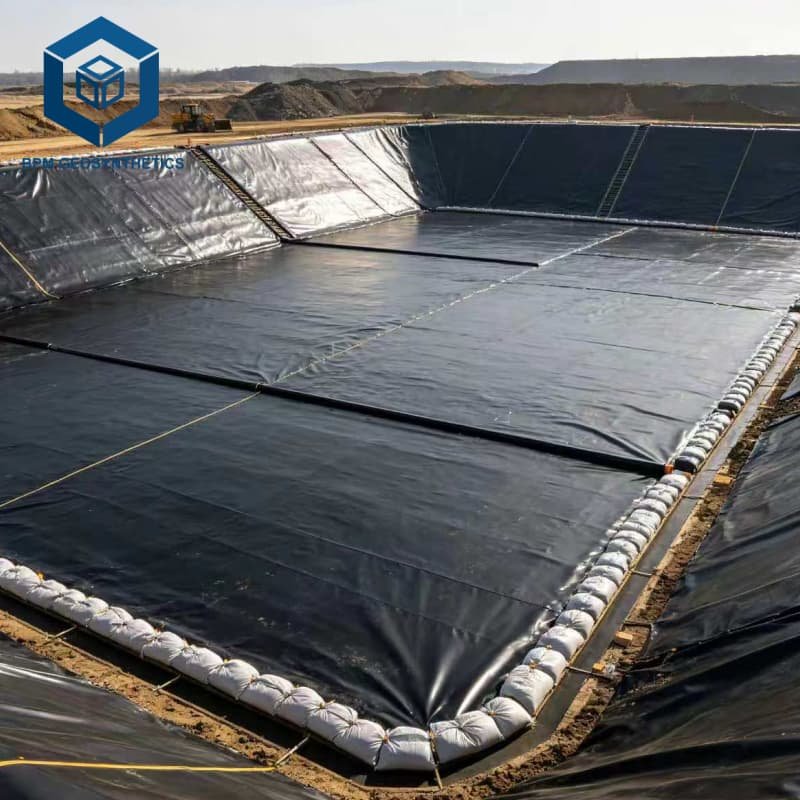
4. Installation Tips for 1.5mm HDPE Geomembrane
Perfect performance depends on standardized construction. Start by leveling and compacting the base ground. Remove sharp stones and hard objects to avoid membrane punctures.
Lay the geomembrane from low areas to high slopes. Keep enough material allowance for temperature-induced expansion and contraction. Complete hot wedge welding strictly at all seams.
Always cover all transition areas between slopes and flat bottoms. Do not leave bare soil inside the anti-seepage zone. Use sand bags to stabilize the membrane before finishing all welding work. Carry out air pressure testing on every weld seam to check for leakage risks.
5. How to Select Reliable Geomembrane Suppliers
Global buyers face many geomembrane manufacturers. Do not judge products only by unit price. Request official test reports and factory audit documents before bulk orders.
Ask suppliers to provide construction case photos for tailings ponds, landfills, or reservoirs. Experienced manufacturers understand on-site construction challenges for large projects.
Confirm customizable roll width and delivery cycles. Reliable suppliers can offer technical support including installation guidance for overseas engineering teams.
6. FAQs about 1.5mm HDPE Geomembrane
6.1 Outdoor Service Life
High-quality raw material HDPE geomembrane can serve 20 to 30 years under exposed conditions. Anti-UV additives slow aging speed significantly. Service life shortens if you choose recycled low-quality raw materials.
6.2 Application on Steep Slopes
Yes. Proper fixing methods, including anchor trenches and sand bags, keep the membrane stable. You must leave enough stretch margin during laying to prevent tearing under terrain deformation.
6.3 Suitability for Landfill Projects
It fits medium-sized landfill projects. Super-large landfills with strict environmental standards often upgrade to 2.0mm HDPE geomembrane. Communicate your project requirements with engineers to decide the best thickness.