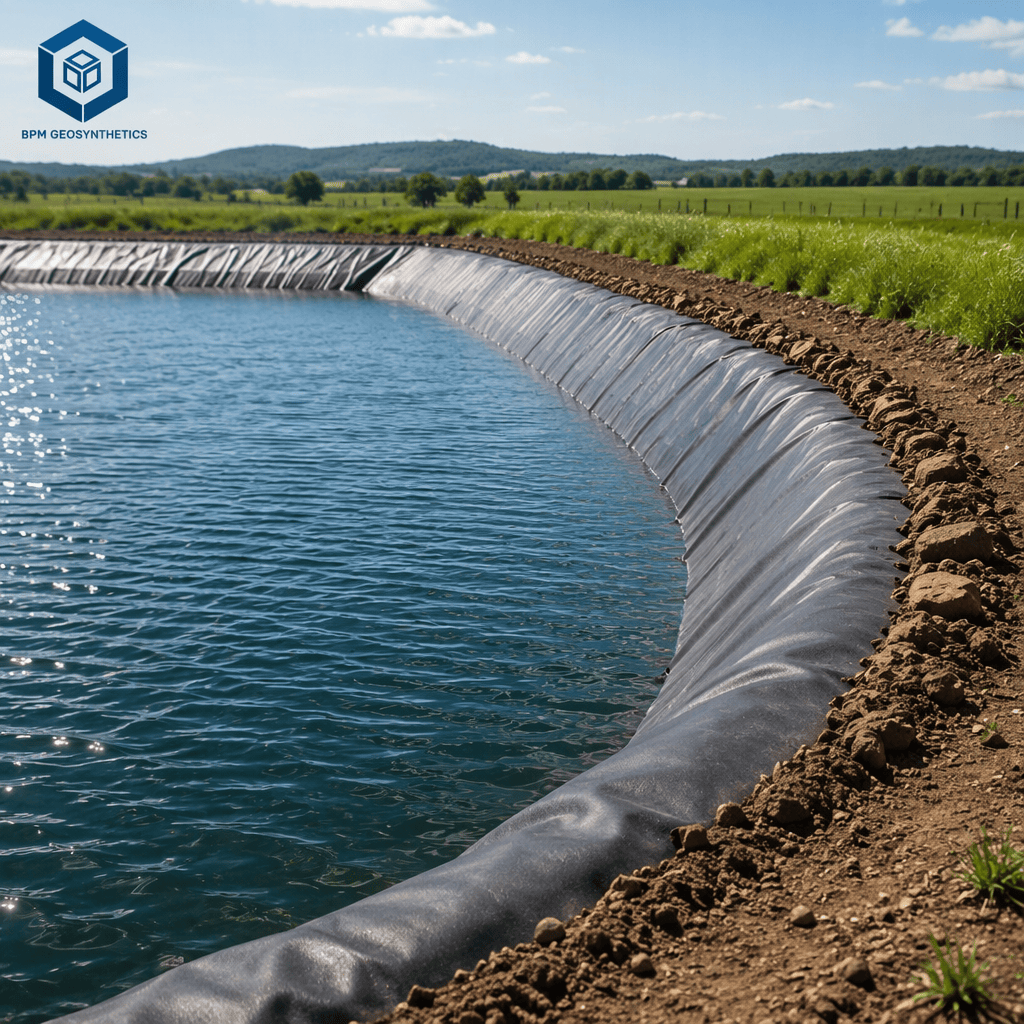
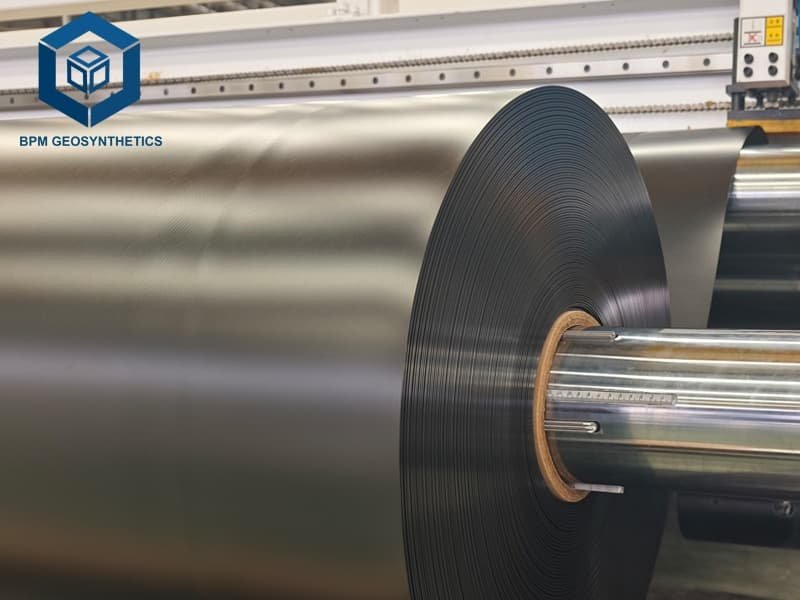
Landfill geomembranes are not just “plastic sheets”—they are the first line of defense against environmental contamination, regulatory penalties, and long-term liability. For waste management professionals, municipal engineers, or project managers overseeing landfill construction, selecting the right geomembrane is a decision that impacts decades of operations. According to the U.S. Environmental Protection Agency (EPA) 2024 data, 78% of landfill failures stem from substandard liner systems, leading to average fines of $2.3 million per violation and remediation costs that exceed initial installation expenses by 10–15x. This guide breaks down the critical steps, factors, and best practices to choose a geomembrane that aligns with your site’s unique needs, waste type, and regulatory obligations.

2. Core Factors to Select the Right Geomembrane
2.1 Material Type: Match the Polymer to Your Waste
2.1.1 High-Density Polyethylene (HDPE)
- Ultra-low permeability (≤1 x 10⁻¹² cm/s)—100x less permeable than PVC, ensuring leachate stays contained for decades.
- Strong chemical resistance: Handles municipal solid waste (MSW) leachate, acids, and hydrocarbons with minimal degradation.
- Long lifespan: 50+ years when buried, thanks to carbon black additives that protect against UV damage.
- Cost-effectiveness: \(1.20–\)2.80 per square foot (for 60-mil thickness).
2.1.2 Linear Low-Density Polyethylene (LLDPE)
- High elongation at break (≥700%)—30% higher than HDPE—resisting tears from soil settling or freeze-thaw cycles.
- Cold-climate performance: Remains flexible at -40°F (no cracking) and stable up to 140°F.
- Good chemical resistance (though less than HDPE for strong solvents like acetone).
2.1.3 Polyvinyl Chloride (PVC)
- Plasticizer leaching: Over 10 years, plasticizers (additives that make PVC flexible) leach out, reducing strength by 20% (ASTM D5322 testing).
- High permeability (1 x 10⁻¹⁰ cm/s)—100x more permeable than HDPE, risking leachate seepage.
- Acid sensitivity: Degrades quickly in environments with pH <5.
2.1.4 Specialty Materials (EPDM, CSPE)
- EPDM (Ethylene Propylene Diene Monomer): A synthetic rubber with excellent weather resistance but high permeability. Used primarily in gas collection systems (not liners).
- CSPE (Chlorosulfonated Polyethylene, or Hypalon): Highly chemical-resistant but costly (\(4–\)6 per square foot) and less durable than HDPE for long-term use. Rarely used unless no other material meets chemical needs.
2.2 Thickness: Balance Protection and Cost
2.2.1 Low-Risk Applications: 30–40 Mil
2.2.2 Standard Applications: 60–80 Mil
2.2.3 High-Risk Applications: 100+ Mil
2.3 Permeability: The Non-Negotiable Metric
- Top performers: HDPE and LLDPE consistently meet this standard.
- Poor performers: PVC (1 x 10⁻¹⁰ cm/s) and EPDM (even higher permeability) are unsuitable for primary containment.
2.4 Chemical Compatibility: Test Against Your Leachate
2.4.1 MSW Landfills
2.4.2 Hazardous Waste Sites
2.4.3 Industrial Waste Facilities
2.5 Seam Strength: Fix the “Weakest Link”
2.5.1 HDPE/LLDPE Seams
2.5.2 PVC Seams
2.5.3 Mandatory Field Testing
- Vacuum testing (ASTM D5594) for thin liners (30–80 mil).
- Spark testing (high-voltage probe) for thick liners (100+ mil).
2.6 Regulatory Compliance: Avoid Delays and Fines
2.6.1 U.S. Requirements
- EPA Subtitle D (40 CFR §258): Mandates 60-mil minimum thickness for MSW landfills and strict leachate collection rules.
- Resource Conservation and Recovery Act (RCRA): Applies to hazardous waste, requiring additional testing (e.g., chemical compatibility) and monitoring.
2.6.2 EU Requirements
- EN 13491: Sets geomembrane specifications for strength and permeability.
- Directive 1999/31/EC: Requires liners to prevent “significant adverse environmental effects” and mandates secondary liners for high-risk sites.
2.6.3 Global Guidelines
- ISO 12236: International standard for geomembrane performance.
- ISO 13424: Covers leachate management and liner design for cross-border projects.

3.1 Site Preparation
- Clear debris: Remove rocks, roots, and sharp objects—ASTM D1633 limits particle size to 25mm (1 inch) to avoid punctures.
- Compact soil: Achieve 95% Proctor density (a measure of compaction) to prevent settling, which stretches and tears liners.
- Install geotextile underlay: Use a 200+ g/m² geotextile between soil and geomembrane to add a protective layer against small debris.
3.2 Handling and Deployment
- Avoid dragging: Use cranes or forklifts with soft pads to lift 100-mil+ liners. Dragging causes invisible micro-tears.
- Choose ideal temperatures: Install only between 40°F and 90°F. Extreme cold makes liners brittle (heat welding fails), while extreme heat causes uneven melting.
- Leave slack: Add 2–3% slack to accommodate thermal expansion (hot weather) and contraction (cold weather). Too-tight liners crack in freezing temperatures.
3.3 Routine Maintenance and Monitoring
- Quarterly seam inspections: Check for cracking, delamination, or separation—focus on high-traffic areas (e.g., waste drop-off points).
- Annual leak detection: Use GPS-based electrical resistivity testing or manual surveys. Repairing small leaks (≤1mm) costs 500–1,000, versus $10,000+ for large leaks.
- Immediate repairs: Use manufacturer-approved patch kits (matching the geomembrane material) and heat-weld patches—adhesives degrade over time and fail.
4. Cost vs. Value: Why Cheap Liners Cost More
- 30-mil PVC liner: 0.75persquarefootupfront,butlifespanof15years.
- 60-mil HDPE liner: 1.50persquarefootupfront,lifespanof50+years.Totallifecyclecost:
1.50 per square foot (no replacement needed).
For high-risk sites, the stakes are higher. A single leak at a hazardous waste landfill costs
- Choose HDPE for flat, stable subgrades (e.g., former agricultural land) and no extreme temperatures—it’s cheaper and more durable.
- Choose LLDPE for uneven terrain (e.g., quarries), rocky soil, or cold winters—its flexibility prevents tearing.

Conclusion: Invest in Long-Term Protection
- Test your leachate to match the right polymer (HDPE for most sites, LLDPE for challenging terrain).
- Select thickness based on risk (60–80 mil for standard use, 100+ mil for high-risk sites).
- Prioritize seam quality and 100% field testing.
- Work with a landfill engineer to ensure regulatory compliance.