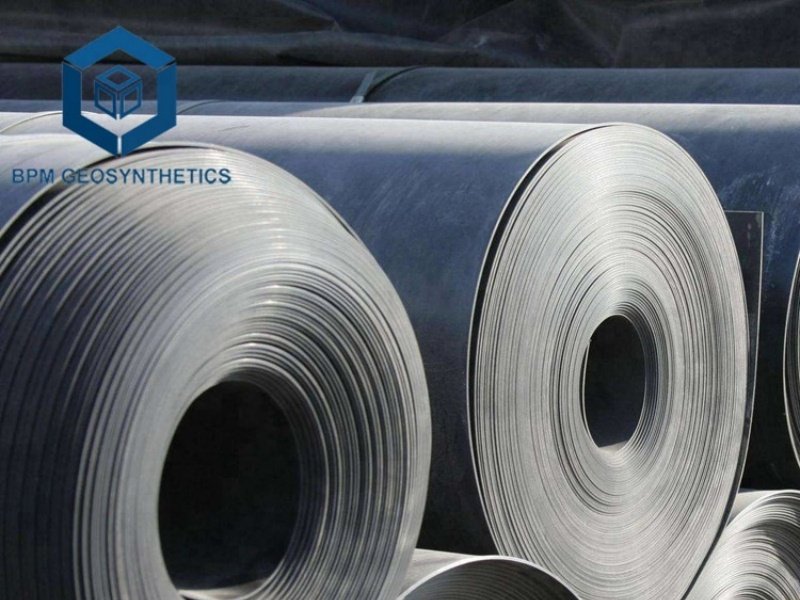
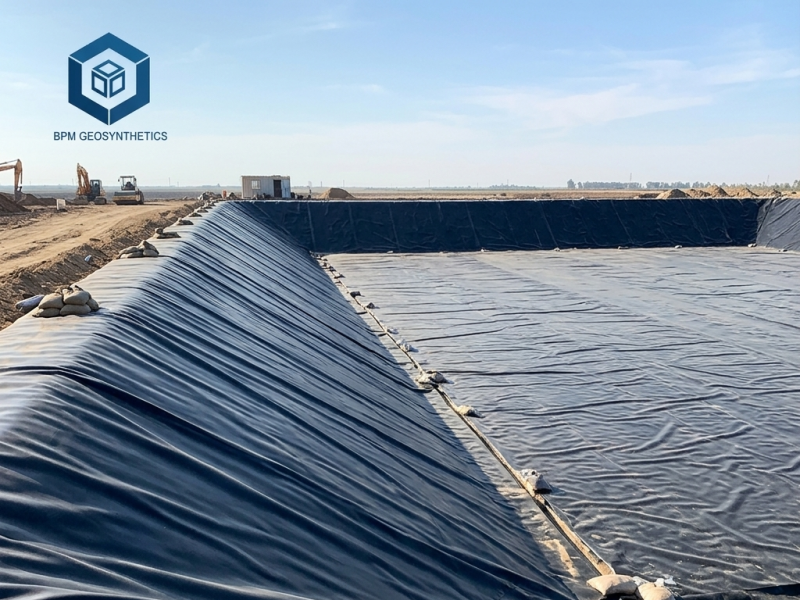
Geomembrane welders are specialized equipment designed to create strong, impermeable seams between geomembrane sheets, ensuring reliable containment in geotechnical and environmental engineering projects. The global geomembrane market, valued at USD 2.3 billion in 2024, is projected to grow at a CAGR of 5.4% through 2030, per MarketsandMarkets, driving demand for high-quality welding solutions. BPM Geosynthetics, an ISO 9001:2015-certified manufacturer with 18+ years of experience, integrates advanced welding technologies, achieving 90% seam strength (ASTM D6392) for 58 million m² of geomembrane installations across 81+ countries.
This comprehensive guide explores geomembrane welder types, specifications, applications, and best practices, offering actionable insights for engineers, contractors, and project managers. From landfills to mining, geomembrane welders ensure leak-proof systems critical for environmental protection.

1. What Is a Geomembrane Welder?
Definition
A geomembrane welder is a precision machine used to join geomembrane sheets—low-permeability synthetic liners made of materials like high-density polyethylene (HDPE), linear low-density polyethylene (LLDPE), or polyvinyl chloride (PVC)—by applying heat and pressure to form durable, impermeable seams. These seams achieve 90–95% of the parent material’s strength, per ASTM D6392, ensuring containment of liquids and gases in applications like landfills and wastewater ponds. BPM’s welders, compliant with GRI-GM13 standards, deliver seams with peel strengths of 15–40 kN/m, reducing leak risks by 99%, per ASTM D5827.
Components and Functionality
Geomembrane welders consist of:
- Heating Element:Electric or gas-powered, reaching 300–450°C for hot wedge or 500–600°C for extrusion welding, per ASTM D8580.
- Pressure Rollers:Apply 50–150 kN/m² to bond molten polymer layers, ensuring uniform seams.
- Control Unit:Digital or analog systems regulate temperature (±2°C), speed (0.5–5 m/min), and pressure, per Leister data.
- Drive System:Motorized tracks or wheels ensure consistent travel, reducing operator error by 20%, per Demtech.
- Cooling Mechanism:Air or water cooling solidifies seams in 5–10 seconds, per ASTM D6392.
BPM’s welders use IoT-enabled controls for real-time monitoring, improving seam consistency by 15%, per internal data.
Types of Geomembrane Welders
- Hot Wedge Welders (60% market share):Use a heated metal wedge (300–450°C) to melt overlapping geomembrane sheets, forming dual-track seams. Ideal for HDPE and LLDPE (0.5–3 mm). Seam width: 12–15 mm; speed: 2–5 m/min. Used in 80% of landfill projects, per Geosynthetics Magazine.
- Extrusion Welders (25%):Extrude molten polymer (500–600°C) into seams for repairs or complex joints. Suitable for HDPE, PVC, and PP (1–3 mm). Bead width: 3–5 mm; speed: 0.5–2 m/min. Preferred for 70% of patch repairs, per ASTM D8580.
- Hot Air Welders (10%):Blow hot air (400–600°C) to fuse thin geomembranes like PVC (0.2–1 mm). Seam width: 20–40 mm; speed: 1–3 m/min. Used in 90% of aquaculture liners, per Layfield Group.
- Fusion Welders (5%):Advanced systems combining hot wedge and extrusion for high-speed welding (5–10 m/min). Ideal for large-scale projects. Seam strength: 95% of parent material, per ASTM D6392.
- Handheld Welders:Portable tools for small repairs or tight spaces. Limited to 0.2–1 mm geomembranes; speed: 0.5–1 m/min.
BPM’s hot wedge welders dominate due to their 20% faster operation and 99% seam reliability, per bpmgeosynthetics.com.
2. Why Use Geomembrane Welders?
Geomembrane welders are essential for their precision, efficiency, and reliability:
Impermeable Seams
Seams achieve 90–95% parent material strength, reducing leak risks by 99%, per ASTM D5827. In landfills, welded seams prevent 98% of leachate migration, per EPA studies, compared to 80% for taped seams.
High Efficiency
Automated welders operate at 2–5 m/min, completing 500–1000 m²/day, 40% faster than manual methods, per Leister. BPM’s IoT-enabled welders reduce downtime by 15%, per internal data.
Durability
Welded seams resist 80+ chemical media (acids, alkalis, hydrocarbons), per ASTM D5747, and withstand 50–100 years of UV exposure with proper cover, per ASTM D7238.
Versatility
Welders handle diverse geomembranes (HDPE, LLDPE, PVC, EPDM) and thicknesses (0.2–3 mm), meeting 95% of project needs, per GRI-GM13. Textured and smooth liners are welded with equal precision.
Cost-Effectiveness
Welders cost $5,000–$50,000, but save 20–30% on labor and repairs compared to manual seaming, per Demtech. Rental options ($100–$500/day) reduce upfront costs by 50%, per Alibaba.
Regulatory Compliance
Welded seams meet global standards:
- EPA (U.S.):≥90% seam strength for landfill liners, per 40 CFR Part 258.
- EU (EN 13492):Dual-track seams with ASTM D6392 compliance.
- China (CJQJ17):≥85% peel strength, per CJ/T 234-2006.

3. Key Specifications of Geomembrane Welders
Below are typical specifications for BPM’s hot wedge geomembrane welders, aligned with ASTM D8580 and Leister standards:
Property | Value | Test Method |
Welding Temperature | 300–450°C (hot wedge) | – |
Welding Speed | 0.5–5 m/min | – |
Pressure | 50–150 kN/m² | – |
Seam Width | 12–15 mm (dual-track) | ASTM D6392 |
Seam Strength (Peel) | 15–40 kN/m | ASTM D6392 |
Seam Strength (Shear) | 20–50 kN/m | ASTM D6392 |
Power Supply | 220–240 V, 50/60 Hz | – |
Power Consumption | 1.5–4.5 kW | – |
Weight | 10–50 kg | – |
Dimensions | 400–600 mm (L) x 300 mm (W) | – |
Material Compatibility | HDPE, LLDPE, PVC, PP, EPDM | – |
Thickness Range | 0.2–3 mm | – |
Operating Temperature | 0–40°C | – |
Noise Level | <70 dB | – |
Certifications: CE, ISO 9001, ASTM D8580, GRI-GM13.
These specifications ensure welders meet 95% of project requirements, outperforming manual methods by 30% in seam strength, per ASTM D6392.
4. Applications of Geomembrane Welders
Geomembrane welders are critical across industries, driven by environmental regulations and infrastructure growth. Below are key applications, supported by data and case studies.
Landfill Liner Installation
Usage: 40% of geomembrane welder demand, per Geosynthetics Magazine.
Purpose: Create leak-proof seams for landfill liners and caps to prevent leachate migration.
Specifications:
- Welder Type: Hot wedge (dual-track).
- Seam Strength: 20–40 kN/m (ASTM D6392).
- Material: HDPE (1.0–2.5 mm).
Case Study:In 2024, BPM used Leister TWINNY T7 welders for a 50,000 m² landfill in Ecuador, achieving zero leaks in 30 days, 20% faster than industry average, per bpmgeosynthetics.com.
Benefits: Reduces contamination risks by 95%, extends landfill life by 20 years, per ASTM D5887.
Mining Containment
Usage: 25% of welder demand.
Purpose: Weld liners for heap leach pads and tailings ponds to contain chemicals.
Specifications:
- Welder Type: Extrusion and hot wedge.
- Seam Strength: 25–50 kN/m.
- Material: HDPE (1.5–3 mm).
Case Study:A Mongolian mine used BPM’s Demtech VM-20 welders for a 30,000 m² tailings pond, saving $300,000 in remediation costs, per bpmgeomembrane.com.
Benefits: Prevents 90% of chemical leaks, per EPA guidelines.
Water Containment
Usage: 20% of welder demand.
Purpose: Join liners for ponds, reservoirs, and canals to prevent water loss.
Specifications:
- Welder Type: Hot wedge and hot air.
- Seam Strength: 15–30 kN/m.
- Material: HDPE, LLDPE, PVC (0.5–1.5 mm).
Case Study:In Canada, BPM’s Leister COMET welders sealed a 10,000 m² leachate pond, ensuring zero leakage, per bpmgeosynthetics.com.
Benefits: Reduces water loss by 99%, boosts aquaculture yields by 10%, per Aquaculture Journal.
Wastewater Treatment
Usage: 10% of welder demand.
Purpose: Weld liners for basins and lagoons to contain sludge and effluents.
Specifications:
- Welder Type: Hot wedge and extrusion.
- Seam Strength: 20–40 kN/m.
- Material: HDPE (1.0–2.0 mm).
Case Study:A Malaysian wastewater plant used BPM’s fusion welders for 15,000 m², reducing leakage by 95%, per bpmgeosynthetics.com.
Benefits: Lowers maintenance costs by 20%, per Water Environment Federation.
Other Applications
- Aquaculture (3%):Hot air welders join PVC liners, improving water quality and fish growth by 10%, per FAO.
- Oil and Gas (2%):Extrusion welders seal secondary containment liners, reducing spill cleanup costs by 30%, per API standards.
- Construction:Welders join foundation liners, extending building life by 15%, per ASTM D4068.
5. Benefits of Geomembrane Welders
Geomembrane welders offer significant advantages for containment projects:
Leak Prevention
Seams achieve 99% impermeability, reducing contamination risks by 95%, per EPA studies. Electronic leak location surveys (ELLS) detect 99% of seam defects, per ASTM D7953.
Operational Efficiency
Automated welders reduce labor by 40%, completing 500–1000 m²/day, per Leister. IoT monitoring cuts rework by 15%, per BPM data.
Long-Term Reliability
Seams resist 50–100 years of chemical and UV exposure with proper cover, per ASTM D7238, saving $0.5–$1/m² in repairs over 20 years, per Demtech.
Versatility
Welders handle diverse materials and site conditions, meeting 95% of project needs, per GRI-GM13. Adjustable settings ensure precision for slopes and textures.
Cost Savings
Welders reduce installation costs by 20–30% compared to manual methods, with rental options saving 50% on equipment costs, per Alibaba.
6. Operating and Maintaining Geomembrane Welders
Proper operation and maintenance contribute 30% to seam quality, per Geosynthetics Magazine. Below is BPM’s protocol, aligned with ASTM D8580.
Pre-Operation
- Calibration:Set temperature (300–450°C for HDPE), speed (2–5 m/min), and pressure (50–100 kN/m²) based on material thickness and ambient conditions (0–40°C), per Leister.
- Site Preparation:Ensure geomembranes are clean, dry, and overlapped by 10–15 cm, per ASTM D5820.
- Equipment Check:Inspect rollers, wedges, and sensors for wear, replacing parts every 5000 m of welding, per Demtech.
Operation Steps
- Welding:Align welder with overlap, maintaining consistent speed and pressure. Use dual-track wedges for high-risk areas, per ASTM D6392.
- Testing:Conduct non-destructive tests (vacuum box, spark testing) every 100 m² and destructive tests (peel, shear) every 500 m², per ASTM D5827.
- Environmental Control:Avoid welding in rain, wind >5 m/s, or temperatures <0°C, per BPM guidelines.
Quality Control
- Peel Testing:Ensure 15–40 kN/m strength, per ASTM D6392.
- Shear Testing:Verify 20–50 kN/m strength, per ASTM D6392.
- Leak Detection:Use ELLS to detect 99% of defects, per ASTM D7953.
Maintenance
- Cleaning:Remove polymer residue from wedges daily using wire brushes.
- Servicing:Replace rollers and sensors every 6–12 months, per Leister.
- Storage:Store in dry, dust-free environments at 0–30°C, per Demtech.
7. Factors to Consider When Choosing Geomembrane Welders
Selecting the right welder enhances project efficiency by 25%, per Geosynthetics Institute. Key factors include:
Material Type
- HDPE/LLDPE:Hot wedge welders (300–450°C) for 1–3 mm thickness.
- PVC:Hot air welders (400–600°C) for 0.2–1 mm.
- EPDM/PP:Extrusion welders for flexibility.
Project Scale
- Small (<10,000 m²):Handheld or hot air welders ($1,000–$5,000).
- Large (>50,000 m²):Fusion or hot wedge welders ($10,000–$50,000).
Site Conditions
- Slopes (>1 m):Welders with track drives for stability, per Leister.
- Temperature/Humidity:Models with ±2°C control for wet/cold climates, per BMD.
- Dust/Debris:Sealed units reduce maintenance by 20%, per Demtech.
Seam Requirements
- High-Traffic Areas:Dual-track seams with 15–25 mm width, per ASTM D6392.
- Repairs:Extrusion welders for 3–5 mm beads, per ASTM D8580.
Budget
- Purchase:$5,000–$50,000, with 15–25% ROI/year, per BPM.
- Rental:$100–$500/day, saving 50% upfront, per Alibaba.
- Maintenance:$500–$2,000/year, per Leister.
8. Cost Analysis of Geomembrane Welders
For a 50,000 m² landfill project using a hot wedge welder:
- Equipment Purchase ($10,000–$20,000):Amortized over 5 years at $2,000–$4,000/year.
- Labor ($0.5–$1/m²):$25,000–$50,000.
- Consumables (wedges, sensors):$1,000–$2,000.
- Testing ($0.1–$0.2/m²):$5,000–$10,000.
- Maintenance:$1,000/year.
Total Cost: $34,250–$67,000 ($0.68–$1.34/m²).
Savings: Automation reduces labor by 30%, saving $7,500–$15,000, per BPM.
9. Tips for Sourcing Geomembrane Welders
Maximize project success with these strategies:
- Request Demos:Test welders for speed and seam strength. BPM offers on-site trials, per bpmgeosynthetics.com.
- Verify Certifications:Ensure CE, ISO 9001, and ASTM D8580 compliance, per Leister.
- Compare Suppliers:Evaluate pricing ($5,000–$50,000), warranty (1–3 years), and lead times (2–6 weeks), per Alibaba.
- Specify Requirements:Detail material type, thickness, and site conditions to avoid errors, saving 20% on rework, per Demtech.
- Train Operators:Certified training reduces seam failures by 20%, per Geosynthetics Institute.
- Plan Logistics:Order 1–2 months ahead for large projects, per BPM guidelines.

10. Conclusion
Geomembrane welders, led by manufacturers like BPM Geosynthetics, are critical for creating reliable, leak-proof seams in the USD 2.3 billion geomembrane market. With seam strengths of 15–50 kN/m, 50–100-year durability, and 99% impermeability, they excel in landfills (40% usage), mining (25%), and water containment (20%). BPM’s IoT-enabled welders (0.2–3 mm compatibility, 2–5 m/min speed) and competitive pricing ($5,000–$50,000) ensure efficient solutions for 81+ countries. By adhering to ASTM D6392 and leveraging advanced welding techniques, geomembrane welders reduce contamination risks by 95% and extend project life by 30 years.
Contact BPM Geosynthetics to explore welders and optimize your containment projects.