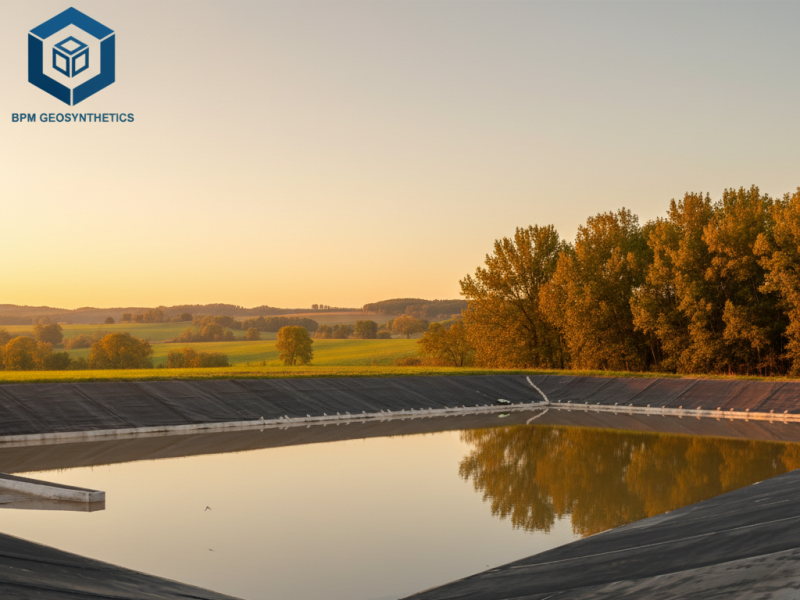
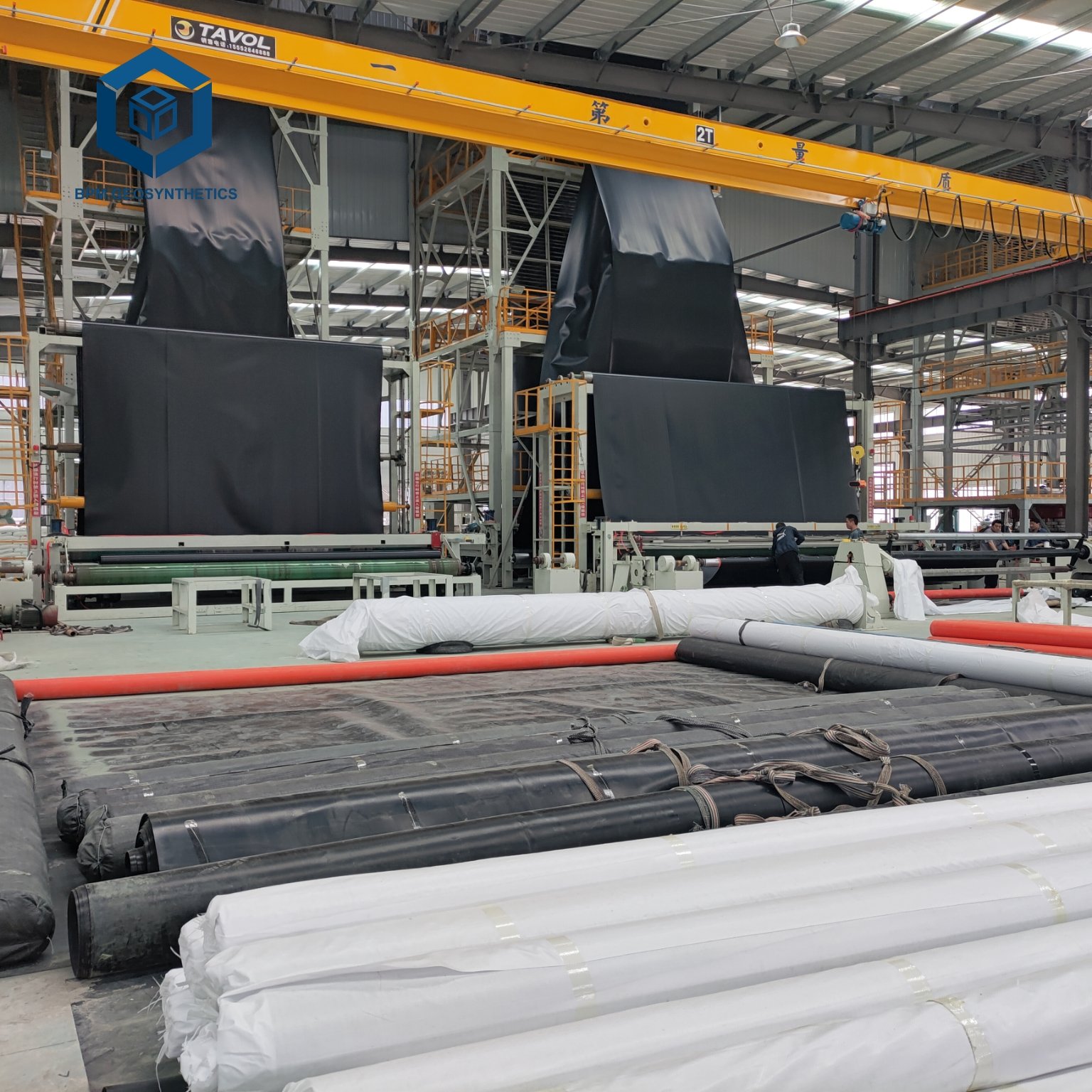
LLDPE Geomembranes have become indispensable in modern engineering projects ranging from landfill containment to aquaculture pond lining. Among the various materials available, Linear Low-Density Polyethylene (LLDPE) geomembranes have gained significant traction due to their unique properties. However, like all materials, they present both advantages and limitations. This article examines the technical merits and drawbacks of LLDPE geomembranes while drawing comparisons to their HDPE counterparts, particularly referencing challenges outlined in discussions about HDPE pond liners.
1. Understanding LLDPE Geomembrane
LLDPE geomembranes are flexible synthetic membranes manufactured from linear low-density polyethylene resins. Unlike High-Density Polyethylene (HDPE), which has a rigid molecular structure, LLDPE Geomembrane’s polymer chains contain short branches, resulting in enhanced flexibility and elongation capabilities. These characteristics make LLDPE geomembranes particularly suitable for projects requiring adaptability to uneven surfaces or dynamic loads.
1.1 Key manufacturing features include:
(1) Thickness range: 0.5mm to 3.0mm
(2) Density: 0.915–0.925 g/cm³
(3) Melt flow index (MFI): 0.5–10 g/10 min

2. Advantages of LLDPE Geomembrane
2.1. LLDPE geomembrane – Superior Flexibility and Conformability
The most prominent advantage of LLDPE lies in their exceptional flexibility. With elongation rates exceeding 700%, they can conform to irregular subgrade surfaces without developing stress cracks. This makes them ideal for:
(1) Landfill caps over uneven waste surfaces
(2) Floating covers for biogas reservoirs
(3) Pond liners in rocky terrain
By comparison, HDPE geomembranes—with elongation rates typically below 600%—are more prone to brittle fractures when installed over sharp protrusions.
2.2 LLDPE geomembrane – Enhanced Chemical Resistance
LLDPE geomembrane demonstrate excellent resistance to acids, alkalis, and organic solvents. Their non-polar structure prevents chemical interactions with most industrial effluents, making them suitable for:
(1) Mining leachate ponds
(2) Chemical storage secondary containment
(3) Wastewater treatment lagoons
While HDPE offers comparable chemical resistance, its crystalline structure becomes vulnerable to stress cracking when exposed to certain surfactants—a limitation not observed in LLDPE.
2.3 LLDPE geomembrane – Low-Temperature Performance
LLDPE Geomembrane retains flexibility at temperatures as low as -70°C (-94°F), outperforming HDPE geomembranes, which become brittle below -50°C (-58°F). This thermal resilience makes LLDPE geomembrane preferable for:
(1) Arctic oil containment systems
(2) Cryogenic storage facilities
(3) Winter aquaculture projects
2.4. LLDPE geomembrane – Seam Strength and Installation Efficiency
The molecular structure of LLDPE allows for robust thermal fusion seams. Field tests show peel strengths exceeding 50 N/mm, reducing leakage risks at overlaps. Their lightweight nature (20–30% lighter than HDPE) also simplifies installation, requiring smaller crews and less heavy equipment.
2.5. LLDPE geomembrane – UV Resistance and Longevity
Modern LLDPE formulations incorporate carbon black (2–3%) and antioxidants, achieving UV resistance for 20+ years. Accelerated aging tests at 70°C show retained tensile strength above 85% after 10,000 hours—a performance comparable to premium HDPE liners.
3.Limitations of LLDPE Geomembrane
3.1. Lower Puncture Resistance
The flexibility of LLDPE geomembrane comes at the cost of reduced puncture resistance. ASTM D4833 testing reveals puncture strengths of 300–500 N, significantly lower than HDPE’s 600–900 N range. This necessitates:
(1) Thorough subgrade preparation
(2) Use of protective geotextiles in high-risk areas
(3) Avoidance in applications with sharp aggregate contact
3.2. Thermal Expansion Challenges
LLDPE’s coefficient of thermal expansion (200 × 10⁻⁶/°C) exceeds HDPE’s (120 × 10⁻⁶/°C), requiring careful design of expansion joints in temperature-fluctuating environments. Unmanaged thermal movement can lead to:
(1) Wrinkling in exposed installations
(2) Stress accumulation at fixed points
(3) Reduced service life in desert climates
3.3 Permeability Trade-offs
While both materials exhibit low permeability, HDPE’s crystalline structure provides slightly better barrier properties (water vapor transmission rate: 0.03 g·mm/m²/day vs. LLDPE’s 0.05 g·mm/m²/day). This difference becomes critical in:
(1) Potable water storage
(2) Radioactive waste containment
(3) Landfill primary liners
3.4. Cost Considerations
Raw material costs for LLDPE geomembranes are 10–15% higher than HDPE equivalents. However, this is partially offset by:
(1) Reduced installation labor (20% faster deployment)
(2) Lower transportation costs (lighter rolls)
(3) Minimal repair requirements post-installation
4. Optimal Applications for LLDPE Geomembrane
4.1. Aquaculture and Decorative Ponds
LLDPE excel in water containment projects due to:
(1) Conformability to organic shapes
(2) Non-toxic formulations (FDA-compliant grades available)
(3) Resistance to algal growth
4.2 Landfill Caps and Temporary Containment
Their flexibility allows LLDPE to accommodate settlement in landfill capping systems, outperforming rigid HDPE liners that may fail under differential subsidence.
4.3. Floating Covers
LLDPE’s combination of UV resistance and low-temperature flexibility makes it ideal for floating covers in biogas plants and evaporation ponds.

5. Mitigating LLDPE Geomembrane Limitations
5.1. Puncture Risk Reduction Strategies
(1) Deploy 300 g/m² needle-punched geotextiles as cushion layers
(2) Use LLDPE-geotextile composites for critical zones
(3) Maintain minimum 1.5mm thickness for high-stress applications
5.2. Thermal Expansion Management
(1) Install expansion loops every 30m in exposed systems
(2) Use ballasted anchor trenches instead of rigid attachments
(3) Select white or reflective LLDPE Geomembrane grades for solar-intensive regions
5.3. Permeability Compensation
(1) Implement double-liner systems with leak detection layers
(2) Utilize bentonite-enhanced LLDPE Geomembrane composite
6. Future Innovations in LLDPE Geomembrane Technology
Recent advancements address traditional LLDPE Geomembrane limitations:
(1) Nanocomposite LLDPE: Incorporation of montmorillonite nanoparticles improves puncture resistance by 40% without sacrificing flexibility.
(2) Hybrid LLDPE-HDPE Blends: New copolymer formulations balance flexibility and rigidity.
(3) Self-Healing LLDPE Geomembrane: Microencapsulated rejuvenators automatically repair minor punctures.
7.Conclusion
Liner Low-Density Polyethylene (LLDPE) offers key benefits, including flexibility, durability, and chemical resistance, making it ideal for packaging (e.g., films, stretch wraps) and industrial applications (e.g., chemical tanks, geomembranes). Its high impact strength suits demanding environments like landfill liners, while its ease of processing (extrusion, molding) enables versatile product designs.
However, LLDPE Geomembrane has notable drawbacks. Environmental concerns arise from its fossil fuel origin and non-biodegradability, contributing to pollution. Its lower heat resistance compared to HDPE limits high-temperature uses (e.g., hot water pipes). Additionally, LLDPE’s poor barrier properties restrict its use in perishable food packaging, and its lower tensile strength makes it less suitable for structural applications than PP or PET.
In geomembranes, LLDPE Geomembrane excels in flexibility, low-temperature performance, and contour adaptability, outperforming HDPE in dynamic settings (e.g., uneven terrain). Yet, its lower puncture resistance and higher thermal expansion require careful engineering. Advances in material science may address these limitations, enhancing LLDPE’s role in containment solutions.
Overall, LLDPE Geomembrane is a versatile material with strengths in toughness and processability but faces challenges in heat resistance, environmental impact, and mechanical properties. Strategic selection and innovation are key to maximizing its potential.