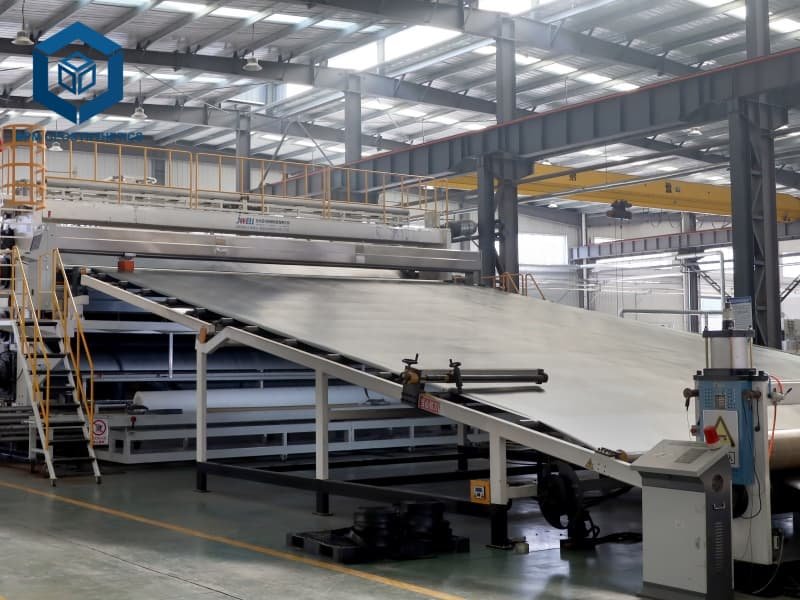
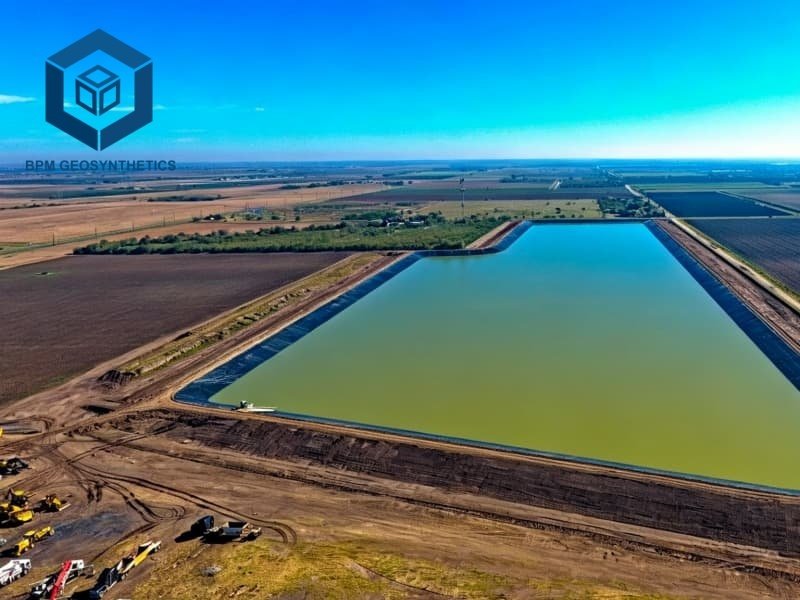
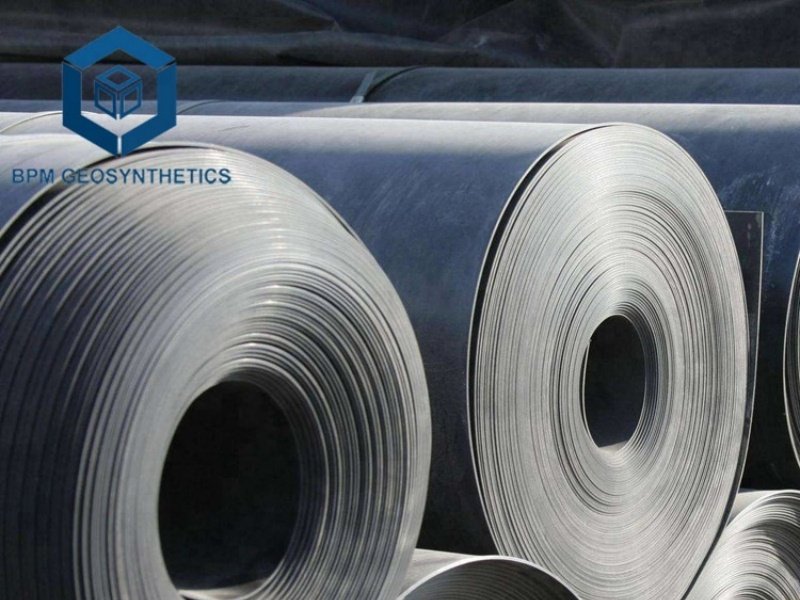
https://bpmgeomembranes.com/Heap leach pond liners sit at the center of modern mining operations. Whether you run a gold heap leach with cyanide or a copper operation using sulfuric acid, the liner keeps valuable metals in the process and stops contamination from reaching soil and groundwater. A single leak can cost millions in lost recovery and environmental fines.
The global mining industry installed more than 120 million square meters of geomembrane liners in 2025, and heap leach pads made up about 35 percent of that volume, says the International Geosynthetics Society. As ore grades drop and ore piles grow taller, demand for stronger liners keeps rising.
This review ranks the 7 best heap leach pad liners available in 2026. We compared manufacturer data sheets, independent lab tests, field performance, weld quality, puncture resistance, chemical compatibility, and value.
What to Look For
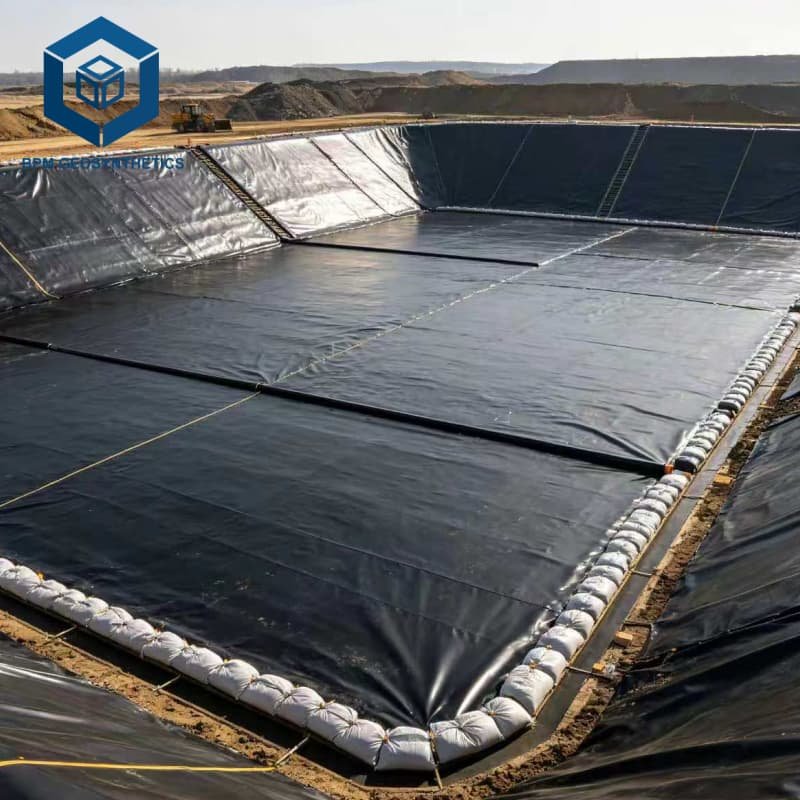
Heap leach ponds put more stress on a geomembrane than almost any other containment job. The liner must resist punctures from sharp rock, stand up to aggressive chemicals for decades, and support ore piles 60 meters or taller. UV exposure during construction adds another load.
Five things matter most.
Chemical resistance. Gold operations use alkaline cyanide around pH 9.5 to 11.5. Copper leaching uses sulfuric acid at pH 1 to 2. HDPE is the industry standard.
Puncture resistance. Crushed ore has sharp edges. Most leaks come from installation or stacking damage, not chemical breakdown.
Thickness. 1.5 mm is the minimum for primary containment. 2.0 mm is the standard. 2.5 mm goes into high-heap or sharp ore situations.
Weld quality. A liner is only as good as its seams. The product needs to weld well across wind, dust, and temperature swings.
Value. Material runs $6 to $16 per square meter. But the cheapest liner up front is rarely the cheapest over 20 years.
2.The 7 Best Heap Leach Pad Liners in 2026
2.1 Best Overall: BPM HDPE Heap Leach Pad Liner (2.0 mm Smooth)
BPM Geosynthetics makes a 2.0 mm smooth HDPE liner that hits the sweet spot for most heap leach operations. It meets and often exceeds GRI-GM13 requirements at a price that works for mid-size and large mines.
The material uses virgin HDPE resin with 2.5 to 3.0 percent carbon black. Tensile yield strength is at least 29 MPa, with 400 N minimum puncture resistance. Standard OIT is 150 minutes, and high-pressure OIT reaches 500 minutes.
This liner has been used in gold and copper projects across South America, Africa, and Southeast Asia. Its weldability in hot field conditions stands out. Crews report seam strengths above 90 percent of parent material, even in deserts with big temperature swings.
BPM offers roll widths up to 8 meters, which cuts field seams and speeds installation. The main tradeoff is brand recognition in North America, but the product passes all major international standards.
Best for: Standard gold and copper heap leach pads wanting a balance of performance, availability, and cost.
2.2 Best for Steep Slopes: Solmax GSE HX Textured HDPE Liner
Solmax, the world’s largest geosynthetics manufacturer, markets its premium mining liner under the GSE HX line. The textured version is the top choice when pad slopes exceed 3 horizontal to 1 vertical.
The liner uses bimodal HDPE resin with exceptional stress crack resistance — PENT values exceed 10,000 hours. The textured surface increases friction with adjacent layers, with interface friction angles of 28 to 34 degrees. On steep slopes, this stops the liner from sliding downhill under ore load.
GSE HX liners have been installed at major gold mines in West Africa and copper operations in Chile. The downside is cost. Textured liners cost 20 to 40 percent more than smooth ones.
Best for: Pads with steep side slopes and high ore loads.
2.3 Best for Extreme Puncture Resistance: AGRU HDPE Geomembrane (2.5 mm)
AGRU, the Austrian manufacturer, is known for precision flat-die extrusion and high material quality. Their 2.5 mm HDPE geomembrane is the heavy-duty option for pads with very sharp ore or extra-tall heaps.
Flat-die extrusion makes a more uniform sheet than blown film processes, independent testing shows. Thickness variation is lower, so there are no thin spots that could fail under puncture load.
tensile yield strength hits at least 31 MPa, and puncture resistance reaches 500 N minimum. AGRU’s 2.5 mm sheet is often specified for the bottom liner of double-liner systems.
Best for: High-heap operations with sharp angular ore and double-liner systems.
2.4 Best Integrated Drainage: AGRU Drain Liner
Most heap leach pad systems use a separate geomembrane plus a separate drainage layer. AGRU Drain Liner combines both into one product, with raised studs on one side that create flow channels for leachate.
The integrated design solves a slope stability problem. When you have a separate liner and geonet, the interface between them is a potential slip plane. By making the studs part of the same sheet, AGRU removes that interface.
Installation goes faster with one product instead of two. The stud pattern also resists clogging better than some geonet products. Drain Liner works best on side slopes.
Best for: Heap leach pad slopes where combining containment and drainage improves stability.
2.5 Best Value for Copper Leaching: GSC Mining Grade HDPE Liner
Shandong Geosino (GSC) makes a mining-grade HDPE liner formulated for acidic copper heap leach environments. It is a popular choice for copper mines in South America and central Asia where cost control matters but performance cannot be sacrificed.
Copper heap leaching uses sulfuric acid that can be more aggressive than cyanide solutions. GSC’s antioxidant package is tuned for acidic environments. Independent tests show tensile retention above 90 percent after 120 days in pH 1.5 acid at 60 degrees Celsius.
The 2.0 mm version delivers at least 400 N puncture resistance and 29 MPa tensile yield strength. The product meets GRI-GM13.
Best for: Copper heap leach operations wanting strong chemical performance at a competitive price.
2.6 Best for Gold and Cyanide Operations: GSE HD Smooth Liner (2.0 mm)
The GSE HD Smooth Liner has been around for decades and is one of the most widely specified products in gold mining. Its track record in cyanide heap leach operations is longer than almost any other liner.
Gold mines favor it for three reasons. First, chemical resistance to alkaline cyanide is well documented — installations from the 1990s are still performing.
Second, GSE makes it in many colors, including white. White liners absorb less heat during installation and make scratches easier to see during inspection.
Third, the global distribution network means rolls and support are available almost anywhere.
At 2.0 mm, the liner delivers at least 29 MPa tensile yield strength and 400 N puncture resistance. The main drawback is price. Equally capable products cost 20 to 30 percent less.
Best for: Gold heap leach pads using cyanide and projects requiring an established brand.
2.7 Best Composite System: BPM Composite Geomembrane with Geotextile Backing
A composite geomembrane bonds a nonwoven geotextile layer directly to the HDPE sheet at the factory. You get containment and puncture protection in a single roll.
The geotextile backing acts as a built-in cushion. When sharp ore presses against the liner, the geotextile spreads the point load over a wider area, cutting puncture risk sharply.
The composite structure also increases friction between the liner and the subgrade. On pads with modest slopes, this can be enough to prevent sliding without a textured liner.
The geomembrane layer comes in 1.0 to 2.0 mm thicknesses, and the geotextile ranges from 200 to 800 gsm. Puncture resistance can be 50 to 200 percent higher than bare geomembrane alone. The bonded geotextile makes welding trickier.
Best for: Mid-size heap leach pads and operations wanting to simplify installation.
3.How to Choose
With seven strong options, the right choice depends on your site conditions. Ask these questions.
What ore and leach solution are you using? Copper acid leaching needs strong antioxidant performance in low-pH environments. Gold cyanide operations need alkaline resistance.
How tall is the heap, and how sharp is the ore? Higher heaps and sharper rock mean more puncture resistance. Move up from 1.5 to 2.0 or 2.5 mm.
How steep are the pad slopes? Anything steeper than 3:1 probably needs a textured liner. If you also need drainage on slopes, look at AGRU Drain Liner.
What is your regulatory situation? Strict regulators often prefer established brands with long track records.
What is your budget? The price gap between cheapest and most expensive can be 40 percent. But a liner failure can cost 100 times the material savings.
Heap leach pad liners are not a place to cut corners. The right liner costs more on day one, but it pays for itself many times over through decades of reliable containment.
For most standard heap leach pads — gold or copper — the BPM 2.0 mm Smooth HDPE Liner offers the best overall balance. For premium projects, the Solmax GSE HX line is hard to beat. And for operations with unusual slope or drainage needs, AGRU’s specialized products deserve a close look.