Chemical resistance comes first for long-term safety. Landfill leachate, acid water and alkaline solutions all attack liners. HDPE handles most aggressive chemicals very well.
Formulation quality decides how long the liner will last. Good HDPE liner materials keep strength after years of contact.
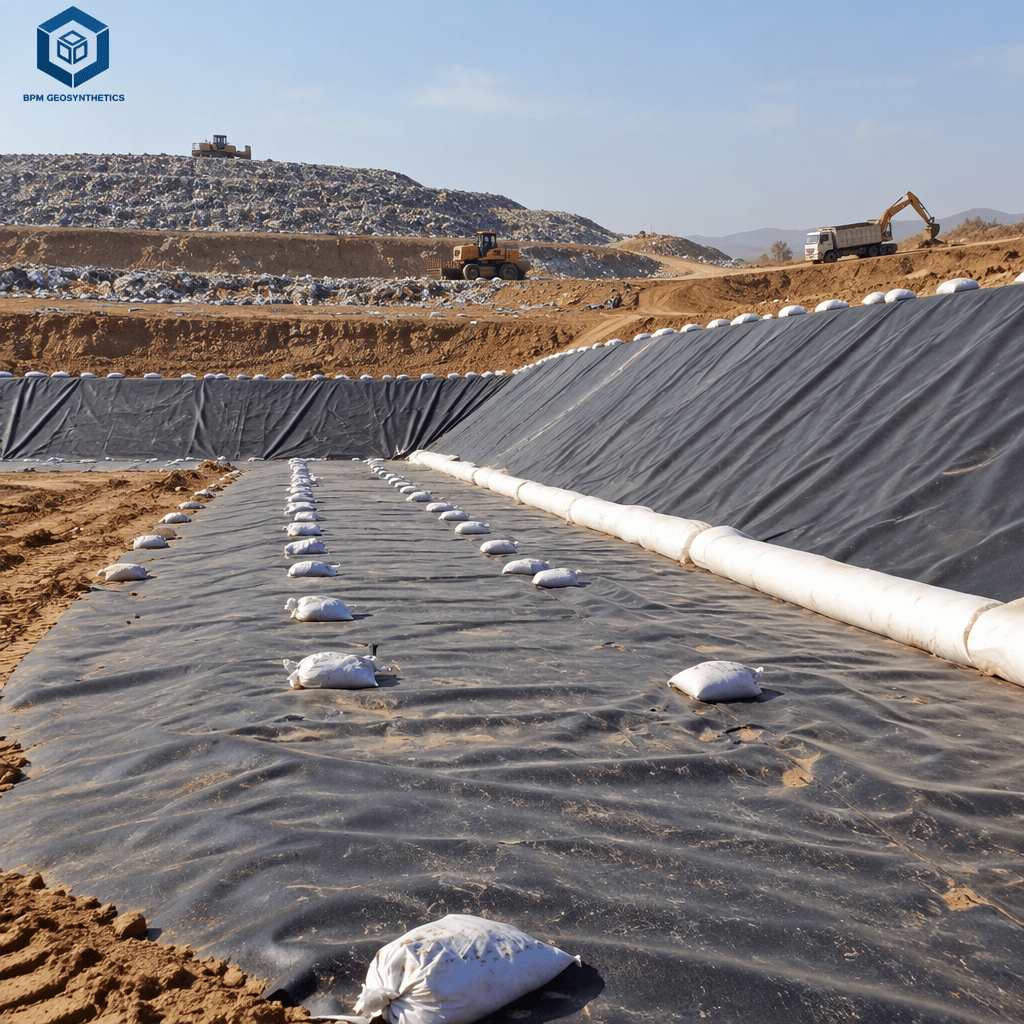
Puncture resistance protects against sharp subgrade rock. Crushed ore and construction debris often damage thin sheets. Most leaks start from installation damage, not chemical breakdown.
A cushion layer or thicker sheet sharply reduces this risk. Strong puncture performance is essential for HDPE liner materials.
Thickness must match the project’s load and depth. 1.0 mm suits small ponds and light-duty cells. 1.5 mm works for most standard containment projects. 2.0 mm is preferred for deep basins and high-load sites. Thicker HDPE liner materials add safety margin but cost more.
Weld quality determines whether the system holds water. A liner is only as good as its seams. Every weld should reach at least 90 percent of parent strength.
Testing seams before filling is always good practice. Field crews value HDPE liner materials that weld reliably.
UV resistance matters during the exposed phase. Strong sun can degrade unprotected polyethylene quickly. Carbon black protects the sheet from sunlight damage. Good HDPE liner materials use 2 to 3 percent carbon black.
Long-term value should guide the final decision. Material prices range from $4 to $16 per square meter. The cheapest sheet rarely saves money over a project life. Repairs and replacement easily exceed initial savings. Quality HDPE liner materials pay back over decades.
1. What to Look For
Containment projects place heavy stress on HDPE liner materials. The liner must resist punctures, chemicals and long-term water load.
Sites may also face intense UV exposure during construction. Six things matter most when comparing products
Chemical resistance comes first for long-term safety. Landfill leachate, acid water and alkaline solutions all attack liners. HDPE handles most aggressive chemicals very well.
Formulation quality decides how long the liner will last. Good HDPE liner materials keep strength after years of contact.
Puncture resistance protects against sharp subgrade rock. Crushed ore and construction debris often damage thin sheets. Most leaks start from installation damage, not chemical breakdown.
A cushion layer or thicker sheet sharply reduces this risk. Strong puncture performance is essential for HDPE liner materials.
Thickness must match the project’s load and depth. 1.0 mm suits small ponds and light-duty cells. 1.5 mm works for most standard containment projects.
2.0 mm is preferred for deep basins and high-load sites. Thicker HDPE liner materials add safety margin but cost more.
Weld quality determines whether the system holds water. A liner is only as good as its seams. Every weld should reach at least 90 percent of parent strength.
Testing seams before filling is always good practice. Field crews value HDPE liner materials that weld reliably.
UV resistance matters during the exposed phase. Strong sun can degrade unprotected polyethylene quickly.
Carbon black protects the sheet from sunlight damage. Good HDPE liner materials use 2 to 3 percent carbon black.
Long-term value should guide the final decision. Material prices range from $4 to $16 per square meter. The cheapest sheet rarely saves money over a project life.
Repairs and replacement easily exceed initial savings. Quality HDPE liner materials pay back over decades.
2. The 7 Best HDPE Liner Materials Reviewed
2.1 Best Overall: BPM 2.0 mm Smooth HDPE Geomembrane
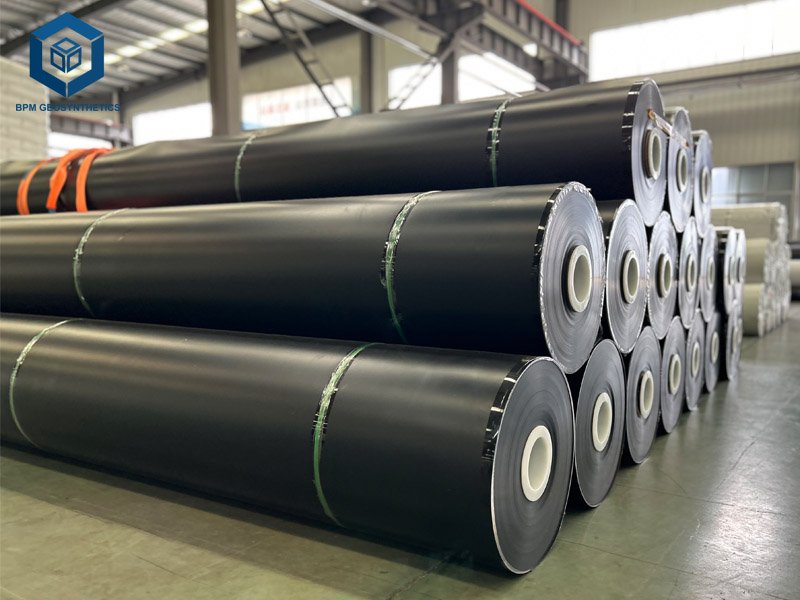
BPM Geosynthetics makes a 2.0 mm smooth HDPE geomembrane. This product hits the sweet spot for most containment projects.
It meets GRI-GM13 requirements at a practical price point. The factory uses virgin HDPE resin with proper carbon black.
Tensile yield strength reaches at least 29 MPa in tests. Puncture resistance meets 400 N minimum requirements.
Standard OIT is 150 minutes and high-pressure OIT reaches 500. The sheet handles both acidic and alkaline exposure well.
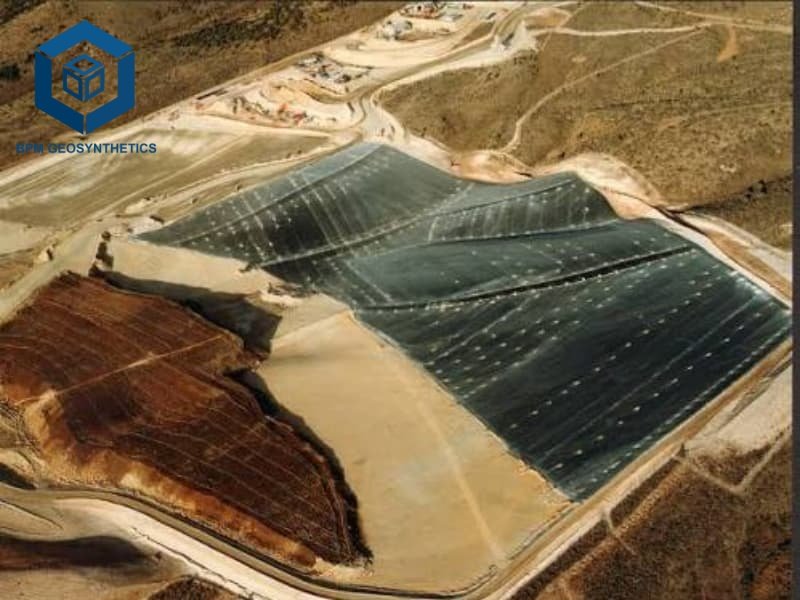
This liner has served gold, copper and pond projects worldwide. Crews report stable welding even in hot, dusty field conditions.
Seam strength stays above 90 percent of parent material. Roll widths up to 8 meters reduce field seams significantly. Wide rolls speed up installation and cut leak risks.
The main tradeoff is brand recognition in some regions. However, the product passes all major international standards.
Best for standard projects seeking balanced performance and cost.
2.2 Best for Steep Slopes: Solmax Textured HDPE Liner
Solmax markets a premium textured HDPE liner for steep sites. The textured surface suits slopes steeper than 3 to 1. It uses bimodal resin with exceptional stress crack resistance. PENT values exceed 10,000 hours in independent testing.
The texture raises friction with adjacent soil and geotextile layers. Interface friction angles reach 28 to 34 degrees. This stops the liner from sliding under heavy load. Installations include mines in West Africa and Chile.
The downside is material cost.Textured sheet costs 20 to 40 percent more than smooth.
Best for steep slopes and high-load containment areas.
2.3 Best for Extreme Puncture: AGRU 2.5 mm Heavy-Duty Liner
AGRU, the Austrian manufacturer, is known for precise flat-die extrusion.
Its 2.5 mm HDPE sheet is the heavy-duty option for sharp conditions. Flat-die process produces a more uniform sheet than blown film. Thickness variation is lower, so there are no weak thin spots.
Tensile yield strength reaches at least 31 MPa.
Puncture resistance exceeds 500 N minimum. This grade handles very sharp ore and extra-tall stacked piles. It is often specified for bottom layers of double systems.
The higher thickness adds weight and shipping cost.
Best for high-load areas with sharp angular material.
2.4 Best Integrated Drainage: AGRU Drain Liner
Most systems use a separate membrane plus a separate drainage layer. AGRU Drain Liner combines both into a single product. Raised studs on one side create channels for liquid flow.
This removes the slip plane between two separate layers. Slope stability improves because the studs belong to the sheet. Installation goes faster with one product instead of two.
The stud pattern also resists clogging better than some nets. The product works best on side slopes and long runs.
The main limit is a narrower range of thickness options.
Best for slopes needing containment and drainage together.
2.5 Best Value for Acid Service: GSC Mining Grade HDPE Liner
Shandong Geosino produces a mining-grade HDPE liner material. The formulation targets acidic leach and low-pH service.
It suits copper and industrial projects with cost pressure. The antioxidant package is tuned for acidic conditions.
Independent tests show tensile retention above 90 percent. That data follows 120 days in pH 1.5 acid at 60 degrees.
The 2.0 mm version delivers 400 N puncture resistance. Tensile yield strength reaches 29 MPa and meets GRI-GM13.
This option offers strong chemical performance at a fair price. The main tradeoff is limited brand presence in some markets.
Best for acid service projects wanting value and reliability.
2.6 Best Track Record for Alkaline Service: GSE HD Smooth Liner
The GSE HD Smooth Liner has served industry for decades. It is one of the most widely specified products in gold work.
Its record in alkaline service is longer than most competitors. Installations from the 1990s are still performing today.
The sheet is available in many colors, including white. White liners absorb less heat during installation. Light color also makes scratches easier to spot in inspection. Global distribution keeps rolls and support widely available.
At 2.0 mm it delivers 29 MPa tensile and 400 N puncture resistance. The main drawback is price. Equally capable HDPE liner materials cost 20 to 30 percent less.
Best for alkaline service and projects preferring an established brand.
2.7 Best Composite System: BPM Composite Liner with Geotextile
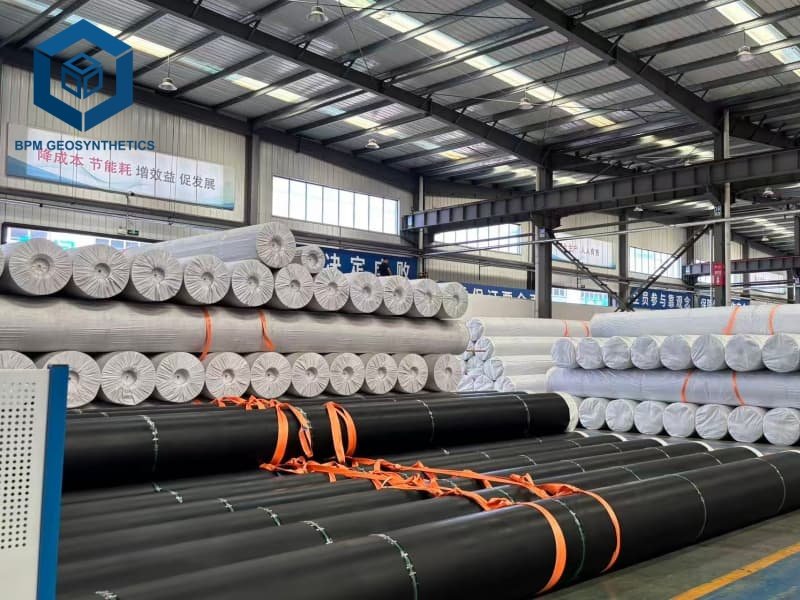
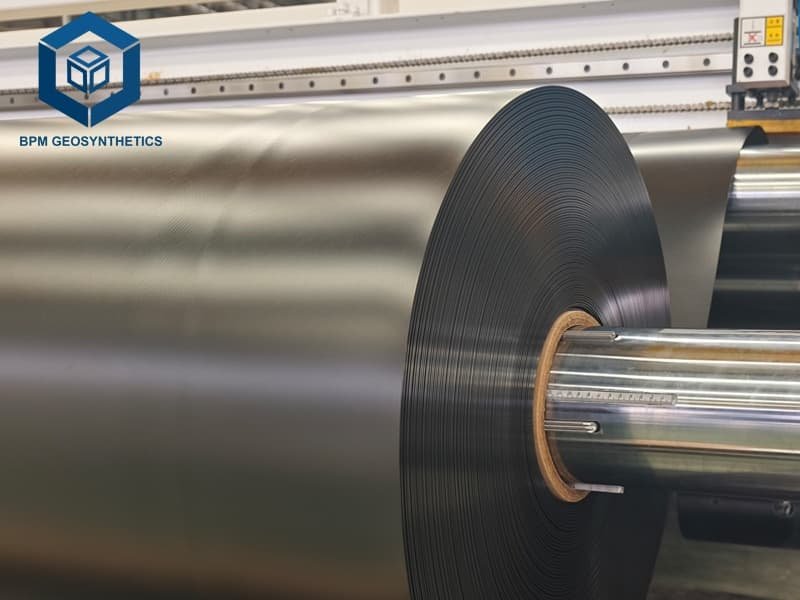
A composite product bonds nonwoven geotextile to the HDPE sheet. The factory does this bonding, so the roll arrives ready.
You get containment and puncture protection in one roll. The geotextile acts as a built-in cushion.
When sharp material presses against the sheet, the fabric spreads load. This cuts puncture risk sharply compared to bare membrane.
The composite also raises friction with the subgrade. On moderate slopes this may replace a textured liner.
Membrane thickness runs from 1.0 to 2.0 mm. Geotextile weight ranges from 200 to 800 gsm. Puncture resistance can rise 50 to 200 percent above bare sheet. The bonded fabric makes field welding slightly trickier.
Best for mid-size projects wanting simpler installation.
3. How to Choose HDPE Liner Materials
Seven strong options exist, so selection depends on site conditions. Ask these questions before you commit to a product.
What chemical will the liner contact?
Acid service needs strong antioxidant performance at low pH. Alkaline service needs proven long-term resistance. Match the formulation to the actual service environment.
How deep is the basin and how sharp is the subgrade?
Deeper basins and sharper rock demand thicker sheet. Move up from 1.5 to 2.0 or 2.5 mm as risk rises. A cushion layer often solves puncture problems cheaply.
How steep are the slopes?
Anything steeper than 3 to 1 probably needs textured sheet. If you also need drainage on slopes, consider combined products. Stability analysis should confirm the final choice.
What is your regulatory situation?
Strict regulators often prefer established brands with long records. Certificates and test reports speed up project approval. Keep full documentation for every roll delivered.
What is your budget?
The gap between cheapest and most expensive can reach 40 percent. But a liner failure can cost 100 times the material savings. Balance first cost against total lifecycle cost.
4. Conclusion
HDPE liner materials are not a place to cut corners. The right sheet costs more on day one and pays back for decades. For most standard containment projects, BPM 2.0 mm smooth HDPE works best.
Premium sites benefit from Solmax textured or AGRU heavy-duty grades. Acid service favors value-focused mining grades. Alkaline service favors long-proven products.
Composite systems simplify installation on mid-size sites. Each project has a best fit among these seven options.
Review your site conditions before the final purchase. Confirm thickness, chemical exposure and slope requirements.
Then select HDPE liner materials that match those needs. Careful selection protects your project for many years.