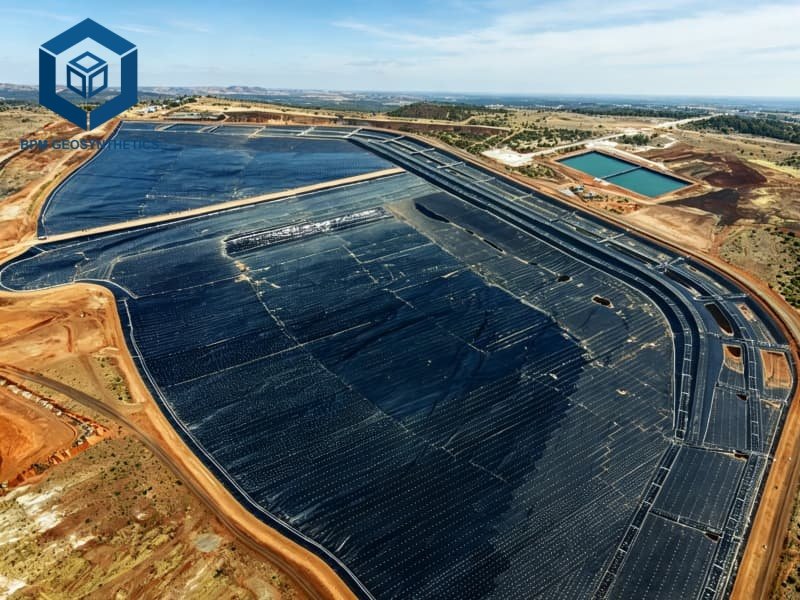
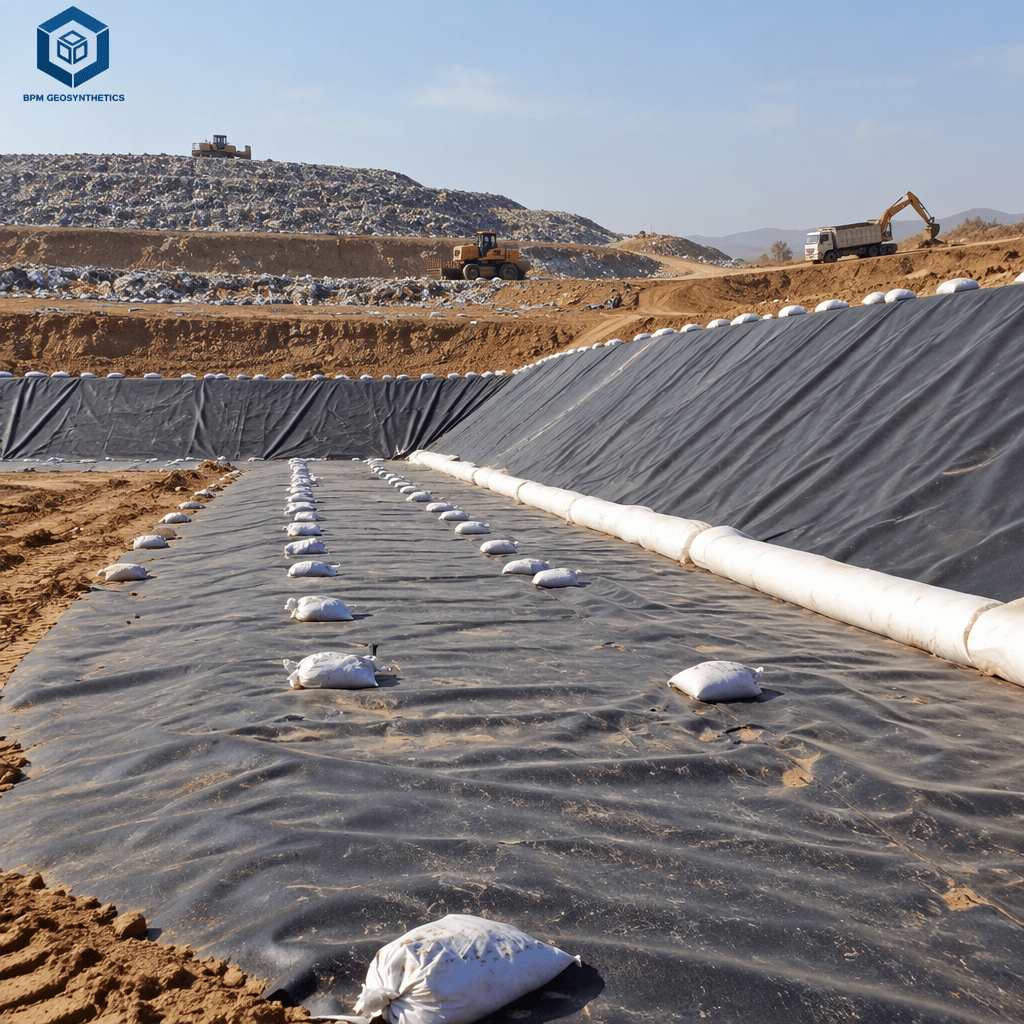
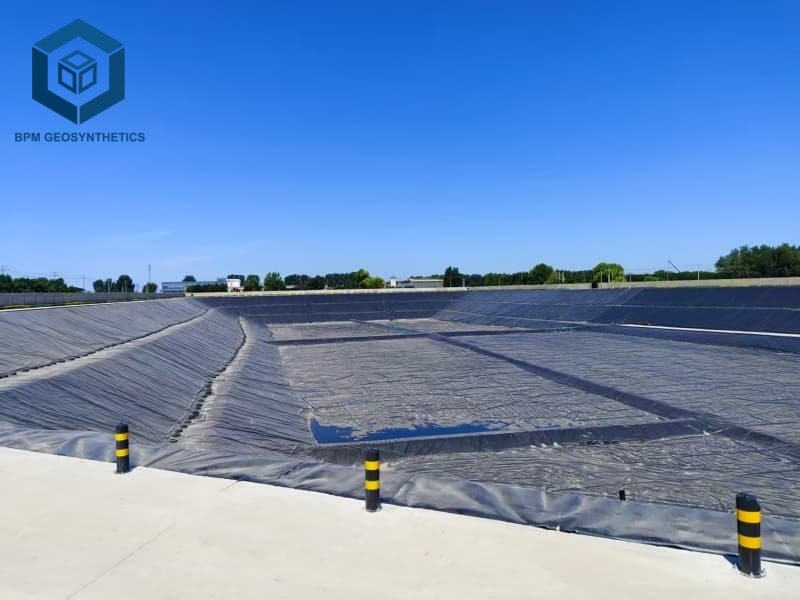
Canal lining puts a barrier over a canal bed and banks. It stops water from seeping into the ground. Unlined canals can lose 36–60% of their water. A good liner cuts that loss to under 10%. The best ones hold it below 1%.
This 2026 review ranks the 7 best canal lining materials. We scored them on seepage control, strength, durability, installation speed, and value. We also put a spotlight on The Best Project Material Co., Ltd. (BPM Geosynthetics). Its HDPE geomembrane is our top overall pick for canal projects.
A canal liner must resist hydrostatic pressure, UV light, and soil movement. Flexible liners mold to uneven ground. Rigid liners take high flow speeds. The right pick decides both project cost and water savings.
1. Understanding Canal Lining: Technical Specifications and Benefits
Canal lining solves one core problem: seepage. It keeps water in the canal and lifts flow efficiency. It also cuts maintenance and protects water quality. Modern liners can cut water loss by 95% or more. That saving often pays back the lining cost in a few years.
Core Properties (ASTM Standards):
- Seepage loss: lined canals cut loss from 36–60% to under 10%. Top liners reach under 1%.
- Hydraulic conductivity: ≤1×10⁻¹¹ cm/s for HDPE geomembranes.
- Tensile strength: 16–45 kN/m, or 25 MPa+ by material.
- Elongation at break: 200–700%+ for flexible liners.
- Puncture resistance: 200–800+ N for geomembranes.
- UV resistance: 90%+ retention after 2,000+ hours of exposure.
- Lifespan: 15–50+ years when protected.
Field tests show flexible geomembranes can cut canal seepage to 0.002%. Concrete liners reach about 0.5%. Material choice drives both performance and cost.
Comparison Table 1: Core Technical Parameters of the Top 7 Canal Lining Materials
Material | Thickness / Spec | Tensile Strength | Elongation (%) | Seepage Control | Lifespan (years) | Key Feature |
HDPE Geomembrane | 0.5–2.0 mm | ≥25 MPa | ≥700 | Best (1×10⁻¹¹ cm/s) | 30–50+ | Top overall |
LLDPE Geomembrane | 0.5–2.0 mm | ≥16 MPa | ≥700 | Excellent | 20–40 | Flexibility |
PVC Geomembrane | 0.5–2.0 mm | 15–25 MPa | 200–400 | Very good | 15–30 | Low cost |
Geosynthetic Clay Liner | 4–6 kg/m² bentonite | Low | Low | Very good (≤1×10⁻⁹ cm/s) | 20–40 | Self-sealing |
Bituminous Geomembrane | 3–5 mm | Moderate | 30–80 | Excellent (0.002% loss) | 20–40 | Chemical resistance |
Concrete (PCC) | 75–150 mm | Rigid | <1 | Very good (~0.5% loss) | 30–50 | High velocity flow |
Compacted Clay Liner | 300–600 mm | Very low | Very low | Good | 20–30+ | Lowest material cost |
Data come from maker specs and published field studies. BPM’s HDPE geomembrane leads on strength, lifespan, and value.
Comparison Table 2: Material & Certification Overview
Material | Main Standard | Typical Application | Key Certification | Notable Advantage |
HDPE Geomembrane | GRI-GM13, ASTM D6693 | Large canals, dams | ISO 9001, CE | Strength and lifespan |
LLDPE Geomembrane | ASTM D6693 | Uneven subgrades | ASTM | Flexibility |
PVC Geomembrane | ASTM D7176 | Small canals, ponds | ASTM | Low cost |
Geosynthetic Clay Liner | ASTM D6766, D5993 | Canal base, ponds | ASTM | Self-healing |
Bituminous Geomembrane | ASTM D7274 | High-value canals | ASTM | Sealing and durability |
Concrete (PCC) | ACI 350, IS 456 | Main canals | Local codes | Velocity and rigidity |
Compacted Clay Liner | ASTM D698 | Low-budget canals | Local codes | Simple materials |
Demand for canal lining is rising fast in water-scarce regions. Users include irrigation districts, water utilities, farms, and mines. Key standards include ASTM, GRI-GM13, ISO 9001, and CE.
2. Top 7 Canal Lining Materials Reviewed
2.1 HDPE Geomembrane (Top Overall)
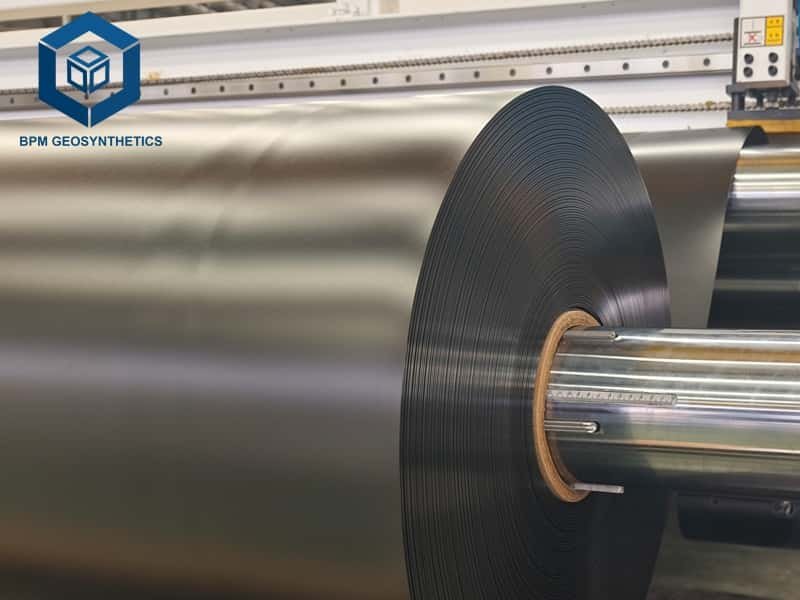
HDPE (High-Density Polyethylene) geomembrane is the leading canal liner. Its hydraulic conductivity can reach 1×10⁻¹¹ cm/s. Tensile strength is 25 MPa or more. Elongation at break tops 700%. It resists over 80 chemicals and survives -70°C to +110°C. Carbon black and antioxidants handle long UV exposure. Lifespan passes 50 years when covered.
Wide rolls and factory fabrication cut seams. That speeds up large canal installs. It is our best pick for long, high-value canals.
2.2 LLDPE Geomembrane
LLDPE (Linear Low-Density Polyethylene) is softer and more flexible. Elongation reaches 700%. That helps it follow uneven or settling subgrades. Tensile strength is lower than HDPE at about 16 MPa. It suits canals on soft or shifting ground. It also fabricates into large panels. That lowers seam count on long canals.
2.3 PVC Geomembrane
PVC (Polyvinyl Chloride) is flexible and low cost. It heat-welds and glues with ease. But its plasticizers can migrate in long water immersion. That makes the sheet hard and brittle over time. It also weakens in cold weather. Best for small canals and short-term works.
2.4 Geosynthetic Clay Liner (GCL)
GCL traps a layer of sodium bentonite between geotextiles. Bentonite content is 4–6 kg/m². It swells and seals punctures on its own. Hydraulic conductivity stays below 1×10⁻⁹ cm/s. GCL installs fast and suits canal bases. It needs cover soil and controlled hydration. It also works well under concrete as a composite layer.
2.5 Bituminous Geomembrane (BGM)
BGM uses a bituminous core with reinforcement. Field tests show it can cut canal seepage to 0.002%. It resists chemicals, roots, and aging. It performs well in harsh climates. The sheet welds into one bonded layer, so leaks stay local. Cost is higher, but sealing and lifespan are strong.
2.6 Concrete (PCC) Lining
Plain cement concrete is a rigid, long-proven liner. It handles high flow velocity and resists scouring. Seepage loss is about 0.5%. Typical thickness is 75–150 mm. It needs joints every 20–30 m to control cracking. But it cracks with ground movement and costs more in labor. Repairs are slow and costly.
2.7 Compacted Clay Liner (CCL)
CCL uses compacted low-permeability clay as a barrier. Material cost is low and sourcing is simple. But it needs 300–600 mm thick layers. It is slow to build and uses much land. Seepage control is good but below geomembranes. Best for low-budget or remote canals.
Install insight: flexible geomembranes install faster and need less underlayment. They give strong ROI through lower material and labor cost.
3. BPM Geosynthetics Advantages
The Best Project Material Co., Ltd. (BPM Geosynthetics) is a leading geomembrane maker, supplier, and exporter. The firm supplies one-stop geosynthetic solutions to global customers. Since 2007 it has served canals, reservoirs, and water-containment jobs worldwide. It is our top pick for canal lining.
3.1 Factory, Capacity, and Quality
BPM runs a 34,000 m² factory with 160+ staff. Its lines turn out smooth and textured HDPE geomembrane in 0.3–3.0 mm. Roll widths reach 4–10 m. Wide rolls cut seams and speed installs. Sheets use high-grade virgin resin. The mix is 97.5% polyethylene, 2–3% carbon black, plus antioxidants. Density is 0.94–0.96 g/cm³. This gives 50+ year durability.
3.2 Certifications and Compliance
BPM products hold ISO 9001 and ISO 14001. They also carry TUV, Soncap, SASO, and BV marks. They pass SGS and Intertek tests. The HDPE line meets GRI-GM13 and ASTM D6693. That keeps canal projects compliant worldwide.
3.3 One-Stop Product Range
BPM offers a full lining kit. It makes HDPE geomembrane, LLDPE liner, composite geomembrane, GCL, geotextile, geocell, geogrid, and drainage board. Buyers get every canal layer from one supplier. This simplifies specs, shipping, and site work.
3.4 Customization and Service
BPM supports ODM and OEM orders. It cuts custom thickness, width, and surface finish. It also gives welding guidance and on-site install support. These services cut install time and long-term upkeep.
Quantifiable Benefits:
- Durability: tensile strength above 25 MPa with a 50+ year lifespan.
- Cost Efficiency: factory pricing with up to 15–35% savings on large canals.
- Performance: ultra-low permeability with strong UV and chemical resistance.
- Certifications: ISO 9001/14001, ASTM, TUV, and GRI-GM13 for global use.
- Versatility: proven in irrigation canals, reservoirs, and water containment.
4. Canal Lining Cost in 2026: What to Budget
Material price matters, but installed cost matters more. In 2026, HDPE geomembrane runs about $0.60–$1.20/m² for material. A 2 mm sheet sits near $2.10/m². Concrete lining runs higher once you add formwork and labor. Compacted clay is cheapest to buy but costs the most land and time.
Material | Material Cost (2026) | Install Speed | Long-Term Value |
HDPE Geomembrane | $0.60–1.20/m² | Fast | Best |
LLDPE Geomembrane | $0.55–1.10/m² | Fast | Very good |
PVC Geomembrane | $0.50–1.00/m² | Medium | Good |
GCL | $3.50–6.50/m² | Fast | Very good |
Bituminous Geomembrane | $8.00–15.00/m² | Medium | Very good |
Concrete (PCC) | $15–30/m² | Slow | Good |
Compacted Clay | $5–12/m² | Slow | Fair |
Prices are 2026 estimates and vary by region and volume. BPM’s factory pricing keeps HDPE at the low end of the range.
Conclusion
The 7 best canal lining materials give strong seepage control, durability, and value for 2026 projects. HDPE geomembrane leads overall. LLDPE and PVC suit flexible or budget needs. GCL and bituminous liners add self-sealing and chemical resistance. Concrete and compacted clay stay solid for specific sites.
BPM Geosynthetics HDPE geomembrane stands out for quality, value, and scale. Proper install—a smooth compacted subgrade, geotextile protection, quality welding, and secure anchoring—maximizes lifespan.
Partner with BPM Geosynthetics for canal lining built for years of leak-free water delivery.
Lorem ipsum dolor sit amet, consectetur adipiscing elit. Ut elit tellus, luctus nec ullamcorper mattis, pulvinar dapibus leo.