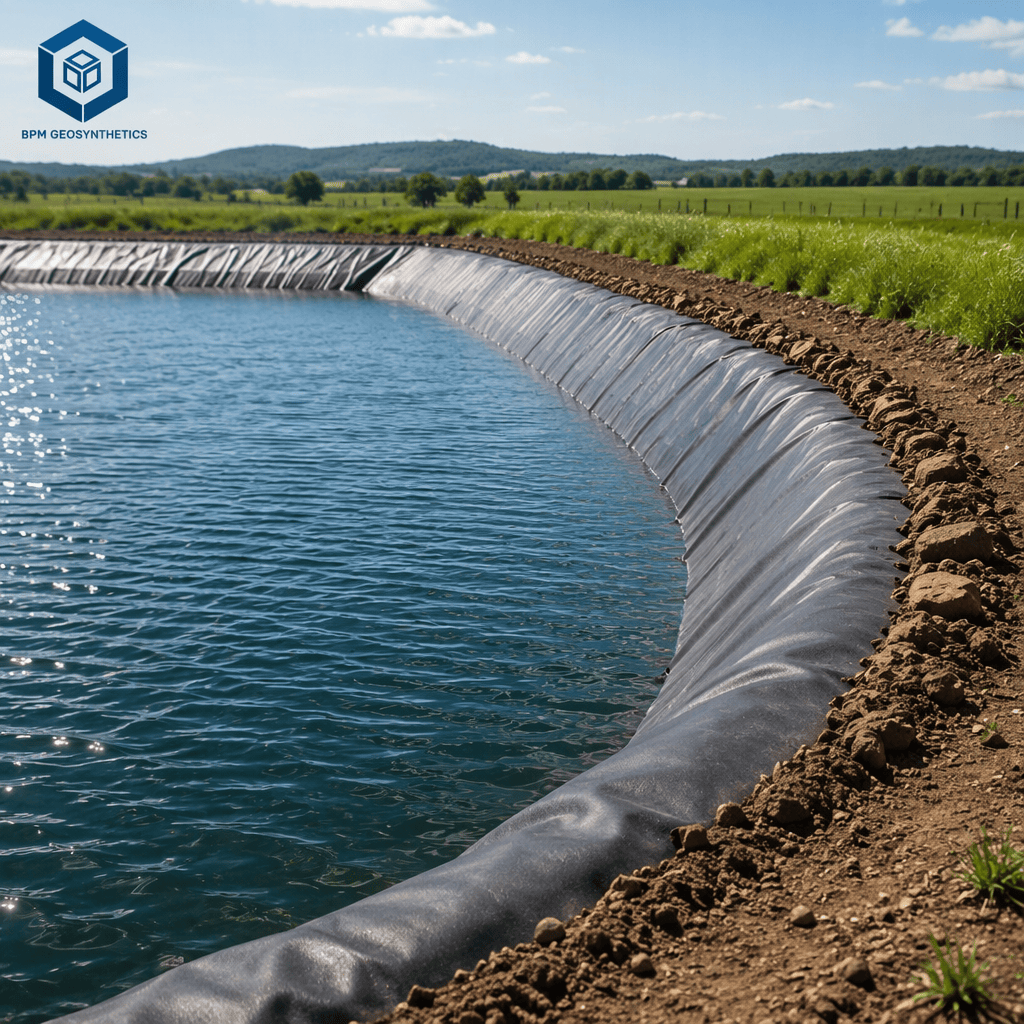
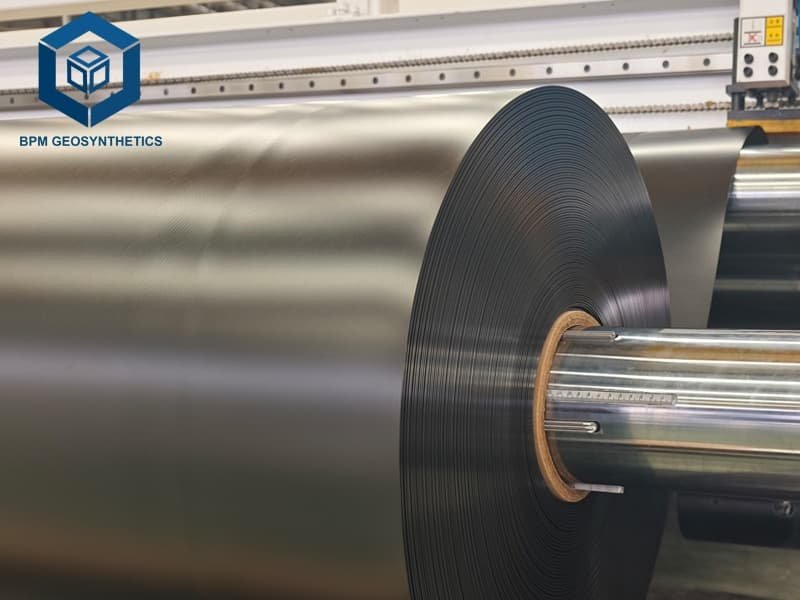
1.What is HDPE Liner 2mm?
HDPE liners are geomembranes made from high-density polyethylene resin, providing excellent resistance to UV radiation, chemicals, and punctures. The 2mm (80 mil) thickness provides an optimal balance between:
Strength (resists punctures from waste debris)
Flexibility (conforms to uneven terrain)
Chemical resistance (withstands leachate corrosion)
Longevity (50+ years lifespan with proper installation)
High-Density Polyethylene (HDPE) liners are widely used in various industries due to their durability, chemical resistance, and impermeability. Among the different thicknesses available, the 2mm HDPE liner is one of the most commonly used for applications such as landfill containment, wastewater treatment, and mining operations.

2.Key Properties of HDPE Liner 2mm
Chemical Resistance: HDPE is inert to most acids, alkalis, and organic solvents, making it ideal for hazardous waste containment.
2.1.UV Stability: Advanced carbon black additives ensure resistance to ultraviolet degradation, even in exposed environments.
2.2.Low Permeability: With a permeability coefficient of less than 1×10⁻¹³ cm/s, it effectively prevents fluid migration.
2.3.Temperature Tolerance: Performs reliably in temperatures ranging from -50°C to 80°C.
2.4.Environmental Safety: HDPE is non-toxic and recyclable, aligning with sustainable engineering practices.
3.Applications of 2mm HDPE Liners
3.1.Landfill Liners (Primary & Secondary Containment)
One of the most critical uses of 2mm HDPE liners is in municipal solid waste (MSW) landfills and hazardous waste containment systems. They prevent leachate (contaminated liquid from waste) from seeping into groundwater.
3.2.Installation Process in Landfills:
3.2.1.Subgrade Preparation: The base must be smooth, compacted, and free of sharp objects.
3.2.2.Liner Deployment: Rolls of HDPE are unrolled and welded together using hot wedge or extrusion welding.
3.3.Seam Testing: All seams are tested for leaks using air pressure, vacuum, or ultrasonic methods.
3..3.1Protection Layer: A geotextile or soil layer is placed over the liner to prevent damage from waste placement.
3.3.2Post-Installation Performance in Landfills:
After installation, the 2mm HDPE liner effectively:
Reduces leachate migration into the soil by >99%.
Extends landfill lifespan by preventing contamination.
Meets EPA and international environmental regulations (e.g., Subtitle D in the U.S.).
Studies show that properly installed HDPE liners in landfills can last over 50 years with minimal maintenance.
3.4..Mining Industry (Heap Leach Pads, Tailings Dams)
In mining, 2mm HDPE liners are used to contain toxic chemicals and prevent acid mine drainage (AMD). They are commonly applied in:
Heap leach pads (for gold, copper extraction).
Tailings storage facilities (TSFs) to prevent heavy metal leakage.
3.5.Water & Wastewater Treatment
Potable water reservoirs (prevents contamination).
Sewage lagoons & anaerobic digesters (contains biogas).
3.6.Aquaculture & Decorative Ponds
Fish & shrimp ponds (prevents water loss and contamination).
3.7.Artificial lakes & decorative ponds (ensures water retention).

4.BPM (Best Practice Management) for HDPE Liner Installation
To ensure optimal performance, Best Practice Management (BPM) guidelines must be followed during installation and maintenance:
4.1.Proper Subgrade Preparation
Remove rocks, roots, and sharp debris.
Compact the soil to avoid differential settlement.
4.2.Quality Welding & Seam Inspection
Use certified welders and Non-Destructive Testing (NDT) methods.
Conduct spark testing or peel tests for seam integrity.
4.3.Protection Against Damage
Use geotextile cushioning under and over the liner.
Avoid heavy machinery directly on the liner.
4.4.Regular Inspections & Maintenance
Check for tears, UV degradation, or chemical wear.
Repair minor damages promptly using HDPE patches.
5.Why Do Landfills Need 2mm HDPE Liners?
Landfills must prevent toxic leachate from contaminating soil and groundwater. A 2mm HDPE liner is the minimum recommended thickness for municipal solid waste (MSW) landfills due to:
5.1.Superior Leachate Containment
Leachate (a toxic liquid from decomposing waste) contains heavy metals, ammonia, and organic pollutants.
A 2mm HDPE liner has extremely low permeability (≤1×10⁻¹³ cm/s), reducing leakage risk by >99% compared to clay liners.
5.2.Puncture Resistance Against Waste Debris
Landfill waste includes sharp objects (glass, metals, construction debris) that can damage thinner liners. 2mm thickness provides sufficient puncture resistance while remaining cost-effective.
5.3.Long-Term Durability Under Stress
Landfills experience settlement, compression, and mechanical loads from waste compaction.
2mm HDPE maintains integrity under long-term stress, unlike thinner liners (1mm or 1.5mm).
5.4.Compliance with Environmental Regulations
EPA (U.S.), EU Landfill Directive, and Chinese GB standards require minimum 1.5mm–2.5mm HDPE liners for hazardous and MSW landfills.
2mm meets most global landfill liner specifications while optimizing material costs.
5.5.Cost-Effectiveness for Large-Scale Use
Thicker liners (e.g., 2.5mm) are more expensive but offer marginal additional protection in standard landfills.
2mm provides the best balance of performance and affordability for most landfill projects.

6.Conclusion
The 2mm HDPE liner is a versatile and reliable solution for landfills, mining, and water containment projects. When installed following BPM standards, it provides long-term environmental protection, cost savings, and regulatory compliance. Its effectiveness in preventing leachate contamination in landfills makes it a preferred choice for sustainable waste management.
For optimal results, proper installation techniques, seam testing, and maintenance must be prioritized to ensure the liner performs as expected over decades.
For the bidding of the landfill site in the Philippines, BPM Company was found. The specific requirements of the project were communicated with the salesperson. BPM provided the customer with 2mm samples and third-party test reports. According to the project requirements, the customer tested the samples, which met the project requirements and ordered 80,000 HDPE liners
BPM Geomembrane had been specialized in delivering one stop HDPE geomembrana and other geosythetics to worldwide customers for over 14 years. In recent years, we had been keeping on investing in technological innovation, manufacturing facilities improvement and turnkey engineering abilities. We had invested 10 million dollars into our manufacturing factory with advanced production lines and optimized manufacturing processes. BPM geomembranes, geosythetics and solutions can meet your requirements by our solid technologies and professional staffs.
BPM had provided many types of effective and states of the art geomembranes and other geosythetics to over 36 countries. Our main customers are from Australia, France, Sweden, UK, Hong Kong, Hungary, New Zealand, Poland, Mexico, Ecuador, Brazil, Pakistan, Bangladesh, Thailand, Vietnam, Malaysia, Indonesia, Singapore, Philippines, Sri Lanka, India, UAE, Saudi Arabia, Qatar, Kenya, Ghana, Ethiopia, Somalia, Nigeria, South Africa, Swaziland, Mongolia etc.