Understanding the cost per square meter of HDPE liner is crucial. For projects, this information allows for accurate budget planning, avoiding wasted or insufficient funds and ensuring smooth project progress. It also helps assess a project’s economic feasibility. When purchasing, it allows comparison of prices and quality across different products to select the most cost-effective hdpe liner, thereby controlling costs and improving profitability. For manufacturers, this information helps them formulate reasonable pricing strategies and enhance their market competitiveness. Investors can also use this information to assess industry profitability and development potential, allowing them to make informed decisions. In short, knowing the cost per square meter of hdpe liners has a positive impact on project development, business development, and overall industry development.
1.Brief introduction to HDPE liner
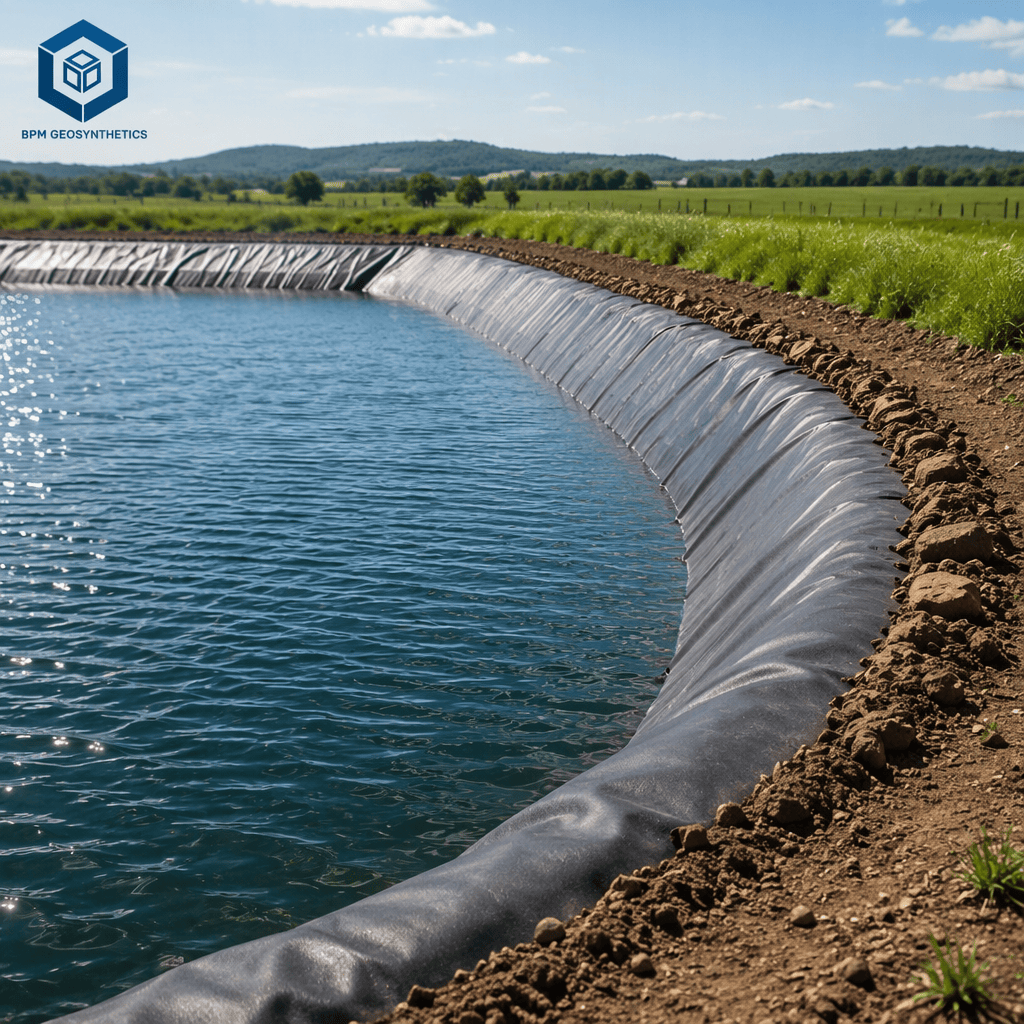
HDPE liner is a geomembrane made from high – density polyethylene. It boasts high strength, good chemical resistance, and low permeability. Widely used in environmental projects like landfills for leak – proofing, water conservancy for reducing seepage in dams, and mining for containing tailings. Its durability and adaptability make it a key material for various containment and protection needs.

2.Factors Affecting HDPE Liner Cost Per m²
2.1: Material Specifications (The Liner Itself)
This is the most significant category, directly determining the raw material cost.
2.1.1 Thickness (The Primary Driver)
Description: Measured in mils (0.001 inches) or millimeters (mm). Thickness directly correlates to material volume, durability, and performance.
Impact on Cost: The relationship is generally linear or slightly exponential. Doubling the thickness will significantly more than double the cost.
Examples:
30 mil (0.75 mm): Economical, for less critical applications.
40 mil (1.0 mm): The industry standard for ponds and landfills.
60-100 mil (1.5-2.5 mm): Premium, for harsh environments (mining, chemical containment).
2.1.2. Textured or smooth surface
Impact on Cost:
Smooth: Least expensive. Used for flat bases, caps, and underliners.
Textured (One Side): Standard price. The textured side provides friction against slopes.
Textured (Two Sides): Most expensive. Used for steep slopes and soil-to-soil interfaces (e.g., landfill caps) where maximum friction is needed.
2.1.3. Quality of Raw Materials & Additives
Impact on Cost:
Virgin Resin vs. Recycled Content: Liners made with 100% primary virgin resin are more expensive but offer guaranteed consistency and longevity.
Additives Package: The type and quantity of additives (e.g., Carbon Black for UV resistance, Anti-Oxidants for long-term thermal stability) increase cost but are essential for a long service life. A higher-quality additive package costs more.
2.1.4. Manufacturer and Brand
Description: Reputable manufacturers (e.g., GSE, AGRU, NAUE, BPM) often command a premium due to their quality control, testing standards, and proven track record.
Impact on Cost: A liner from a top-tier manufacturer may cost 10-20% more than a generic equivalent, but it reduces the risk of premature failure.
2.2: Project & Quantity Factors
The price of HDPE liner is significantly influenced by project requirements and quality standards, with both factors driving cost variations through material selection, thickness, performance parameters, and production processes.
2.2.1. Project Size / Total Quantity (Economies of Scale)
Impact on Cost: This is critical. Larger orders have a lower cost per m². Factory production runs, setup costs, and shipping are amortized over a larger area. A 1,000 m² project will have a much higher unit cost than a 100,000 m² project.
2.2.2 Panel Size and Layout
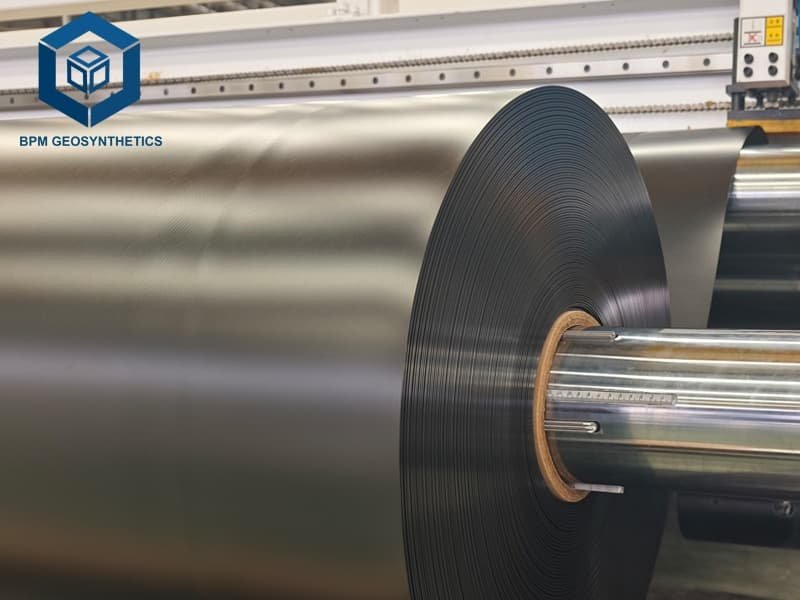
HDPE liner is manufactured in large rolls (e.g., 5m-10m wide). The factory can custom-panel the liner to minimize on-site seaming.
Impact on Cost: A design that utilizes full roll widths and minimizes the number of field seams is more material and labor-efficient. Complex layouts with many seams and cuts will increase waste and labor, raising the effective cost per m².
2.3: Market & Logistics Factors
2.3.1. Global Resin Pricing
Description: The cost of polyethylene resin is a commodity subject to global supply and demand, oil prices, and logistics costs.
Impact on Cost: This is a volatile factor. A spike in crude oil prices or a production shortage will directly increase the cost of all HDPE liners.
2.3.2. Geographic Location & Shipping
Description: The distance from the manufacturing plant to the project site.
Impact on Cost: Shipping heavy, bulky rolls of HDPE is expensive. A project in a remote area or a different continent will incur significantly higher freight costs, which are added to the per m² price.
2.3.3. Order Timing and Lead Time
Description: How quickly you need the material.
Impact on Cost: Rush orders that disrupt a production schedule may incur expedited fees. Planning ahead for standard lead times is the most cost-effective approach.
2.4: Installation & Ancillary Costs
2.4.1. Site Conditions & Complexity
Impact on Cost:
Simple Site: A flat, easily accessible pond with no obstructions. Lowest installation cost.
Complex Site: A site with steep slopes, many corners, pipes, or penetrations. This requires more labor, more intricate seaming, and generates more waste, dramatically increasing the installed cost per m².
2.4.2. Required Accessories & Subgrade
Impact on Cost:
Geotextile Underlayment: A protective fabric is almost always used underneath the HDPE. This adds $1.00 – $3.00+ per m² to the material cost.
Subgrade Preparation: The cost to prepare a smooth, stable, and compacted subgrade is often greater than the cost of the liner itself but is non-negotiable for performance.
2.4.3. Installation Labor & Expertise
Impact on Cost: This is a major variable. Certified, experienced welders command higher rates but deliver a more reliable, long-lasting seam. Labor can range from $2.50 to $10.00+ per m².
3.How to Get an Accurate Quote
Firstly,determine the required thickness based on your application and local regulations.
Secondly,calculate the total square meterage of your project accurately (include side slopes).
Finally,contact several reputable suppliers and installers. Provide them with:
①:Project Type (e.g., potable water reservoir, mining leach pad, fish pond).
②:Required Liner Thickness.
③:Total Surface Area (m²).
④:Your Location (for freight calculation).
4.Conclusion
In summary, the question “How much does an HDPE liner cost per m²?” does not have a single, simple answer. The final price is primarily determined by the liner’s thickness, with standard 40-mil (1.0 mm) geomembranes typically ranging from $4.50 to $7.00 USD per square meter for the material alone.
However, an accurate budget must look beyond this base material cost. Key factors like project size, the necessity of a protective geotextile underlayment, specialized seaming, and freight can significantly influence the final tally. Crucially, the cost of professional installation often matches or even exceeds the material cost itself.
Therefore, when planning a project, it is essential to budget for the total installed cost, which can easily range from $10 to $20+ per m², rather than focusing solely on the price of the HDPE sheet. The most reliable path to an accurate budget is to obtain detailed quotes from reputable suppliers and installers based on your project’s specific requirements, ensuring a successful and cost-effective outcome.