1. Understanding Geo Fabric Membrane: Basics First
1.1 What Is Geo Fabric Membrane?
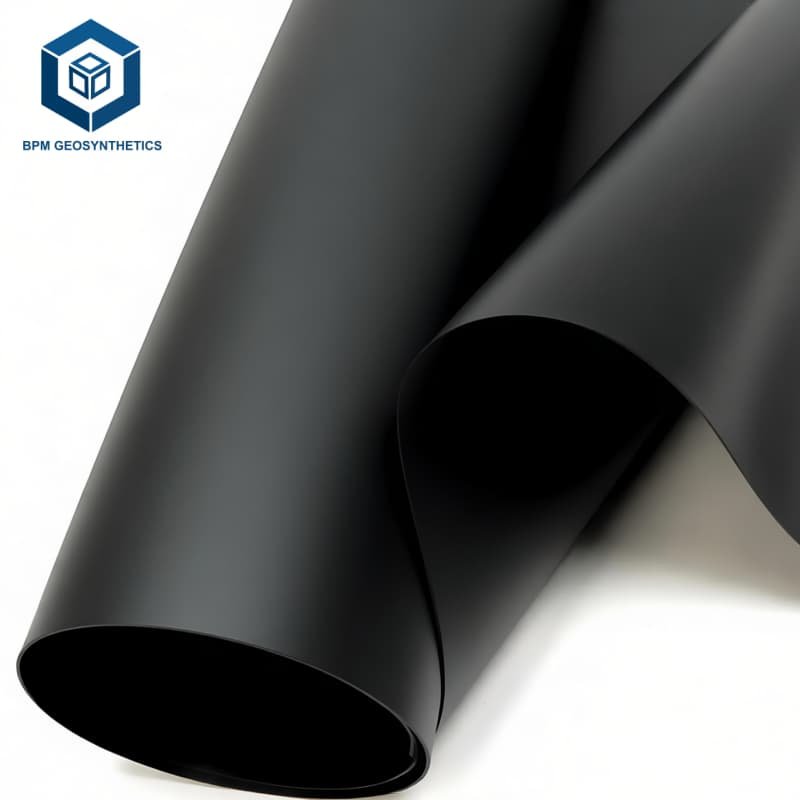
Geo fabric membrane (often called geomembrane) is a synthetic, low-permeability barrier engineered to control fluid flow. Made from polymers like polyethylene (HDPE), polyvinyl chloride (PVC), and ethylene propylene diene monomer (EPDM), it protects infrastructure and the environment in construction, waste management, and water-related projects. Its primary role is preventing leaks while enduring physical stress like soil pressure or temperature changes.
1.2 Main Types of Geo Fabric Membrane
- HDPE (High-Density Polyethylene): Rigid, chemical-resistant, and long-lasting (20+ years). Ideal for landfills, mining, and industrial containment. Available in smooth (for flat surfaces) or textured (for slope stability) finishes.
- LLDPE (Linear Low-Density Polyethylene): Flexible and ductile, adapting to irregular terrains like curved ponds or uneven subgrades. Suitable for agricultural ponds and residential water features.
- PVC (Polyvinyl Chloride): Lightweight, easy to weld, and cost-effective. Best for small-scale projects like garden ponds or temporary water storage, but avoid chemical-exposed areas.
- EPDM (Ethylene Propylene Diene Monomer): UV-resistant and weatherproof, perfect for exposed applications like canals, rooftop gardens, or outdoor reservoirs.
- GCL (Geosynthetic Clay Liner): A composite of geomembrane and bentonite clay. Cost-efficient for landfills and wetlands, offering enhanced seepage control via clay’s swelling properties.
2. Key Factors for Selection
2.1 Material Matching to Project Needs
Start by defining your project’s core demands. For harsh environments (e.g., landfill leachate or mining chemicals), HDPE is unmatched—it resists acids, alkalis, and organic solvents. For projects needing flexibility (e.g., irregularly shaped ponds), LLDPE’s ability to conform to surfaces reduces installation gaps. For UV-exposed areas (e.g., open canals), EPDM or HDPE with carbon black additives (for UV protection) prevents premature degradation. Avoid PVC in chemical-rich sites, as it can degrade when exposed to oils or strong acids.
2.2 Thickness and Strength Requirements
Thickness directly impacts durability.
- HDPE single-layer membranes: 0.3–3.0mm thick. Use 0.5–1.0mm for light applications (e.g., garden ponds) and 1.5–3.0mm for heavy-duty needs (e.g., reservoirs or landfills).
- Composite membranes (film + fabric): 0.1–1.5mm film paired with 80–1000g/㎡ Choose higher fabric weights (500+ g/㎡) for high-traffic areas like road subgrades.
Key strength metrics: Aim for tensile strength ≥25MPa (for HDPE/LLDPE), puncture resistance ≥500N (to withstand sharp debris), and elongation ≥600% (to handle ground movement).
2.3 Environmental Adaptability
Assess your project’s location conditions:
- Temperature: HDPE tolerates -70℃ to 60℃, making it suitable for cold climates. EPDM performs well in hot regions (up to 80℃) without cracking.
- Chemicals: Test for compatibility—HDPE resists most industrial chemicals, while LLDPE is better for milder substances like agricultural fertilizers.
- Soil pH: For acidic soils (e.g., mining sites) or wetlands, use HDPE or GCL; avoid PVC, which can corrode in low-pH environments.
2.4 Installation Compatibility
Choose a material that fits your installation capabilities. Flexible LLDPE/PVC can be installed with simple heat guns or tape, making it ideal for DIY or small teams. Stiff HDPE requires professional hot-welding (at 270±15℃) with 10–15cm overlaps to ensure seams are leak-proof. Also, match material width to project size—wider rolls (4–6m) reduce the number of seams, lowering leakage risks.
2.5 Cost-Benefit Balance
Don’t just pick the cheapest option. HDPE has a higher upfront cost but lasts 20+ years, reducing replacement expenses. PVC is cheaper but needs replacement every 5–8 years in outdoor use. For budget-sensitive projects (e.g., temporary agricultural ponds), LLDPE strikes a balance between cost and durability.

3. Application-Specific Selection
3.1 Environmental Engineering
- Landfills & Hazardous Waste Sites: Use 1.0–2.0mm HDPE or GCL. Ensure compliance with standards like China’s CJ/T 234-2006 or the US ASTM D751. These materials prevent leachate from seeping into groundwater.
- Sewage Treatment Plants: Opt for anti-chemical HDPE (1.5–2.0mm) with a permeability coefficient ≤10⁻¹³ cm/s. This stops sewage contaminants from leaking into surrounding soil.
3.2 Water Management Projects
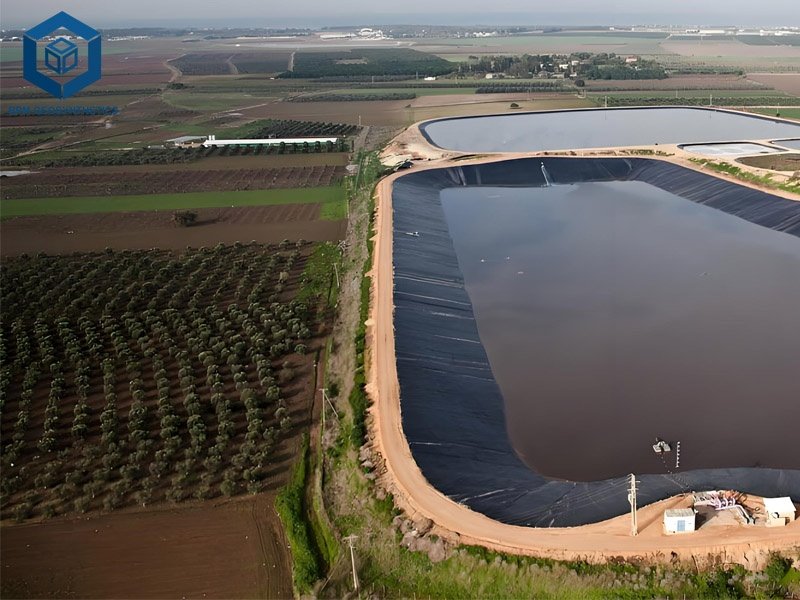
- Reservoirs & Canals: Choose GH-2 series HDPE (0.75–3.0mm) with a textured surface—this increases friction, preventing soil or water from sliding on slopes. For small community reservoirs, 1.0mm HDPE is sufficient.
- Ponds (Agricultural/Residential): LLDPE (0.5–1.0mm) is ideal for agricultural use (it resists fertilizers), while PVC (0.3–0.5mm) works for decorative residential ponds. Add UV stabilizers if the pond is exposed to direct sunlight.
3.3 Infrastructure & Horticulture
- Road/Railway Subgrades: Use composite membranes (two-cloth-one-film) with 0.5mm film and 300–500g/㎡ This prevents water from softening the subgrade, reducing potholes or track damage.
- Gardens & Sport Fields: Lightweight LLDPE (0.3–0.5mm) or drainage-integrated geocomposites work. For golf course bunkers, combine LLDPE with a geotextile layer to prevent sand from mixing with soil.
- Mining: Thick HDPE (≥1.5mm) is a must—it resists acidic mine drainage. Pair it with a geotextile underlayer to protect against sharp rock fragments.

4. Quality Verification & Compliance
4.1 Core Inspection Indicators
Always request test reports from suppliers, preferably with CMA (China Inspection Body and Laboratory Mandatory Approval) or ISO 17025 certification. Verify these key metrics:
- Thickness Uniformity: Variations should be ≤5% (e.g., a 1.0mm membrane should not be thinner than 0.95mm anywhere).
- Welding Performance: For HDPE, welded seams should have a tensile strength ≥80% of the parent material.
- Density: HDPE should have a density ≥940g/cm³ (ensures durability).
- Permeability: Confirm the permeability coefficient is ≤10⁻¹³ cm/s (critical for anti-seepage projects).
4.2 On-Site Testing Tips
After delivery, conduct simple on-site checks:
- Visual Inspection: Look for scratches, holes, or uneven thickness—these are signs of poor quality.
- Puncture Test: Use a sharp object (e.g., a screwdriver) with light pressure—quality membranes should resist puncturing.
- Seam Check: For welded seams, perform a “vacuum test” (use a vacuum pump to check for air leaks) or a “hydrostatic test” (apply water pressure to seams to detect leaks).
4.3 Supplier Evaluation
Choose reliable suppliers with:
- Certifications: ISO 9001 (quality management) and ISO 14001 (environmental management) are minimum requirements.
- Project Experience: Ask for case studies—suppliers who’ve worked on similar projects (e.g., landfill liners) are more trustworthy.
- After-Sales Support: Ensure they offer welding guidance or on-site troubleshooting. Avoid suppliers who can’t provide raw material source information (this may indicate low-quality recycled materials).
5. Common Mistakes to Avoid
5.1 Ignoring Material Specificity
A common error is using PVC for chemical-laden sites (e.g., mining ponds)—PVC degrades quickly here, leading to leaks. Another mistake is using thin membranes (<0.5mm) for heavy-duty projects like reservoirs—they puncture easily under soil pressure. Always match material to project demands.
5.2 Skipping Site Assessment
Failing to prepare the site before installation causes issues. Sharp debris (e.g., rocks, roots) can puncture membranes—ensure the subgrade is cleared and compacted to 93%+ density. Also, ignore ground movement: in areas with frost heave, use flexible LLDPE instead of rigid HDPE to avoid cracking.
5.3 Neglecting Seam Quality
Seams are the most common leak points. Skipping professional welding for HDPE (e.g., using tape instead) leads to failures. For PVC/LLDPE, ensure overlaps are at least 5cm—too-small overlaps reduce seam strength. Always test seams after installation.
5.4 Overlooking Long-Term Durability
Choosing cheap, uncertified membranes saves money upfront but costs more later. For example, un-stabilized HDPE degrades in UV light within 3–5 years, requiring full replacement. Invest in UV-stabilized materials (e.g., EPDM or HDPE with carbon black) for outdoor projects—they last 15+ years.