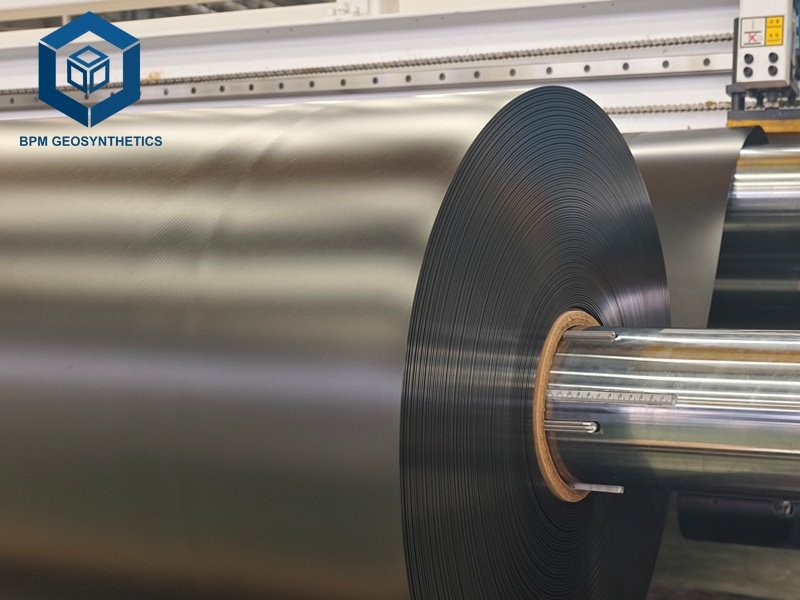
HDPE impermeable liner, or high-density polyethylene geomembrane, is one of the most widely used synthetic barrier materials in modern environmental and civil projects. It is made from high-purity HDPE resin through advanced extrusion or calendering process. It has become the preferred waterproof and containment solution across the world for decades. It brings plenty of practical advantages for different projects, far better than many traditional waterproof materials.
Extremely Low Permeability
This is the core advantage that makes HDPE liner stand out. Its hydraulic conductivity can reach as low as 1×10⁻¹² to 1×10⁻¹¹ cm/s. This level of permeability effectively blocks almost all liquid and gas migration. It prevents advective flow of leachate, sewage or stored water easily. When used as part of a composite liner system, it works with compacted clay or geosynthetic clay liners. The combined system achieves leakage rates 4 to 6 orders of magnitude lower than single clay liners. In actual operation, a well-installed HDPE liner system can keep leakage below 1 to 10 liters per hectare per day. This number is hundreds of times lower than the 1000 to 10000 liters per hectare per day of old single clay liners.
Outstanding Chemical Resistance
HDPE liner has very stable chemical molecular structure. It resists corrosion across a very broad pH range from 1.5 to 13. It does not degrade easily when contacting acids, bases, salts or various industrial chemical media. It can stay intact in harsh environments with landfill leachate, mining tailings, industrial wastewater and other corrosive fluids. It will not be eroded by ammonia-nitrogen, heavy metals, volatile organic compounds or other common contaminants in waste sites. This feature makes it very suitable for hazardous waste facilities, wastewater treatment plants and chemical storage areas. It will not break down and lose barrier function after years of contact with aggressive media.
Reliable Mechanical Performance
HDPE liner has excellent tensile strength ranging from 20 to 45 MPa. Its elongation at break is no less than 700% according to standard test requirements. It can adapt to slight displacement or deformation of the base layer without cracking. It also has great puncture resistance from 240N to 960N. It can resist puncture from gravel, sharp construction debris, root penetration and burrowing animals. The tear resistance of qualified products can reach over 200N. Textured HDPE liners for slopes can provide peak interface friction angle of 28 to 35 degrees. This greatly improves the slope stability for steep landfill sides or reservoir bank projects.
Long Service Life and Durability
High-quality HDPE liners add 2% to 3% carbon black and proper antioxidants during production. This gives them excellent UV stability. Even exposed in direct sunlight for a long time, they will not become brittle quickly. When buried or covered by soil, their proven service life can reach 50 to 100+ years. Qualified products meet GRI-GM13 standard, with oxidative induction time over 100 minutes for standard test and over 400 minutes for high-pressure test. Premium bimodal HDPE products can have environmental stress crack resistance over 5000 hours. They can retain over 85% of their original tensile strength after years of immersion in leachate. They perform well both in hot summer with high temperature and cold winter with freezing conditions. They will not swell and bulge or crack under large temperature differences.
High Cost-effectiveness
Compared with traditional concrete waterproofing or thick compacted clay liner, HDPE liner saves a lot of cost. The material itself has abundant global supply and stable reasonable price. Its installation process is fast and simple. Large width rolls up to 8 meters can reduce 15% to 30% of field seams. This cuts down the labor time and construction period greatly. The overall project cost can be much lower than traditional methods. The long service life also reduces later maintenance work. It avoids huge groundwater remediation cost that may reach 5 to 50 million dollars over 30 years. It also greatly reduces the volume of leachate that needs treatment. Each cubic meter of leachate treatment can cost 0.5 to 5 dollars, and HDPE liner can save a huge amount of this long-term expense.
Wide Adaptability for Scenarios
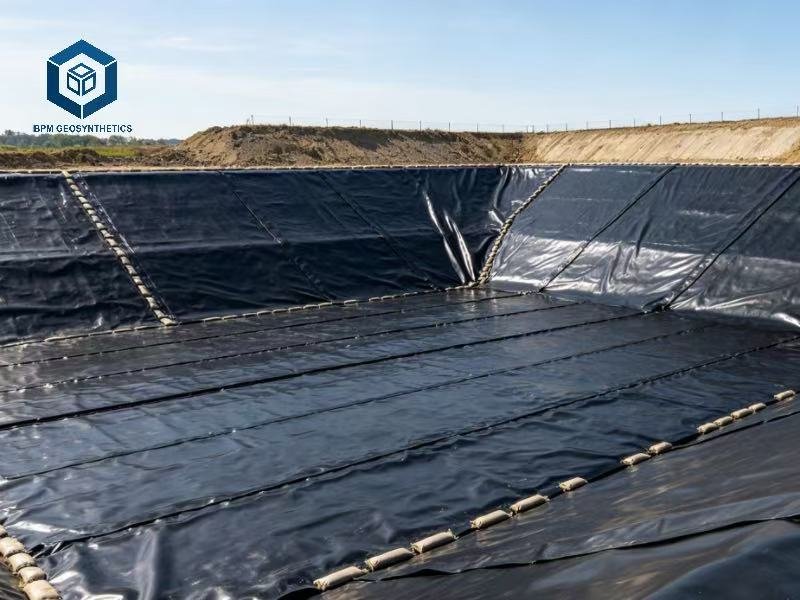
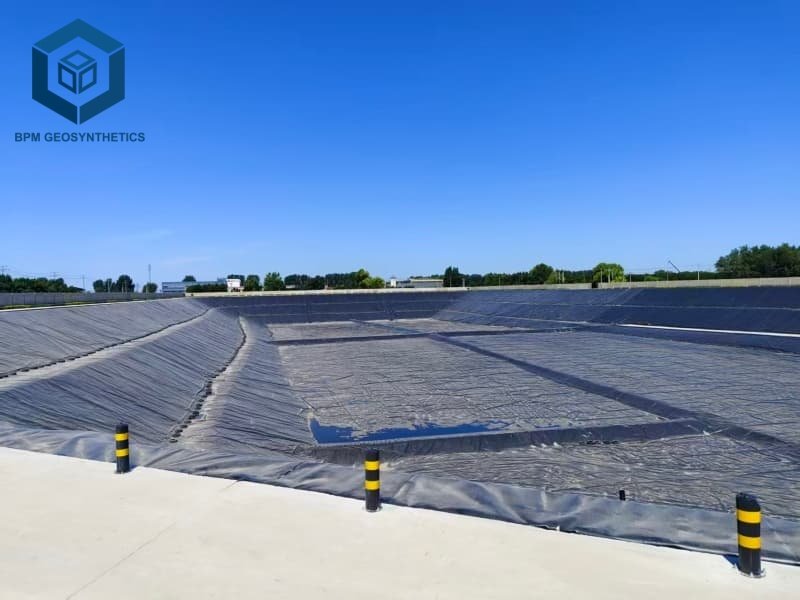
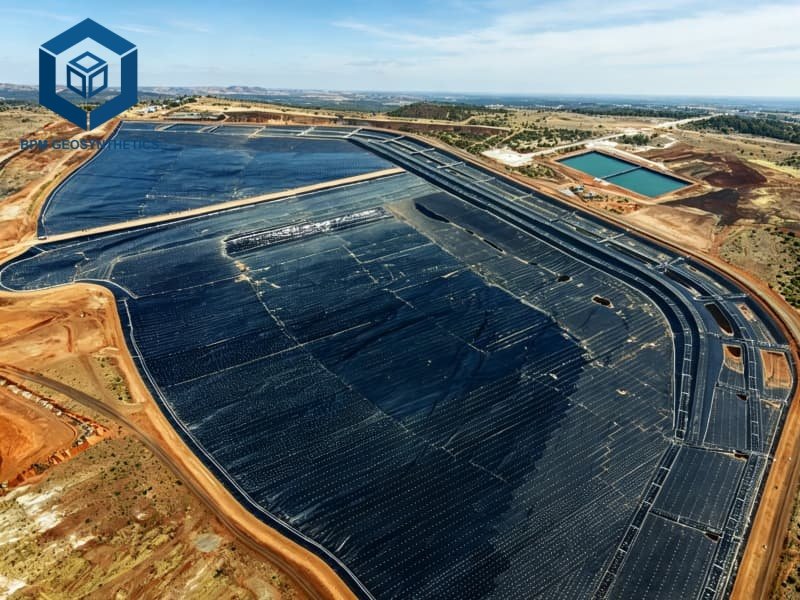
HDPE impermeable liner works for nearly all containment projects. It is the core barrier for municipal solid waste landfills and hazardous waste facilities. It is widely used in mining tailings ponds, industrial lagoons and wastewater treatment plants. It also performs well in aquaculture ponds, decorative water features and irrigation canal lining. It fits reservoir anti-seepage projects perfectly. It has low requirement for the flatness of the base layer. It can adapt to various complex terrain conditions. It meets strict regulatory requirements from EPA Subtitle D in the US, EU Landfill Directive and standards in many other regions.
HDPE impermeable liner is not just a simple plastic sheet. It is a mature, reliable and cost-efficient barrier solution. It balances performance, durability and economic benefits very well. That is why it still remains the gold standard of impermeable liner materials in the global market today.
Lorem ipsum dolor sit amet, consectetur adipiscing elit. Ut elit tellus, luctus nec ullamcorper mattis, pulvinar dapibus leo.