Introduction
Geomembranes serve as essential waterproof and containment solutions for landfills, ponds, mining sites, and agricultural projects. For project managers, contractors, and global buyers, understanding geomembrane installation cost helps you create accurate budgets, avoid unexpected overspending, and select cost-effective solutions.
Many buyers focus only on raw material prices and overlook key installation costs, resulting in 10–30% budget overruns in actual projects. This ultimate guide breaks down all core cost factors, the latest 2026 pricing benchmarks, and practical money-saving tips in plain language. You will get a clear, actionable cost reference for your upcoming geomembrane projects.
1. Key Cost Factors
Geomembrane installation costs do not follow a fixed standard. Five key factors directly control your total project spending. Every factor affects labor time, material consumption, and construction difficulty.
1.1 Material & Thickness
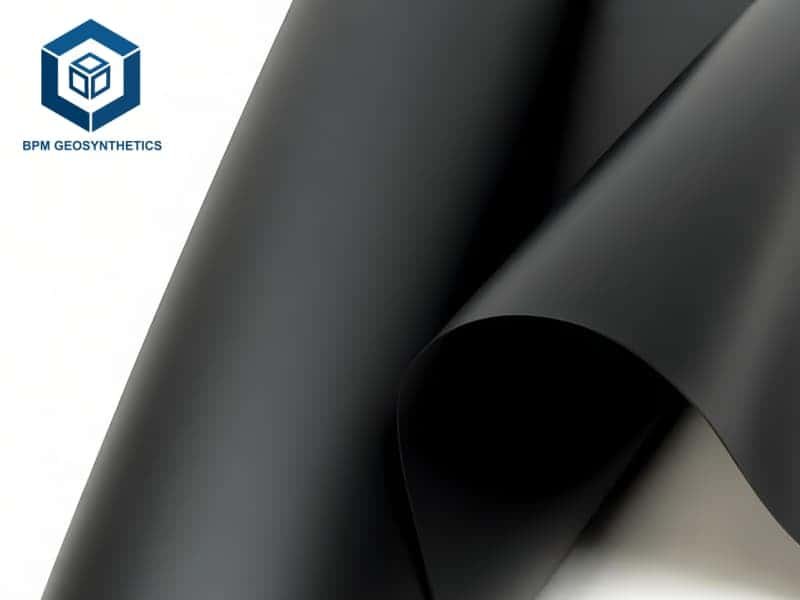
Material type is the biggest cost variable. HDPE, LLDPE, PVC, and EPDM geomembranes have different installation requirements and pricing. HDPE geomembranes are the most widely used option for industrial and environmental projects due to their high durability and stable performance.
Thickness also raises installation costs obviously. Thicker geomembranes require more manual handling, longer hot wedge welding time, and stricter seam testing. Thin membranes suit simple water containment projects, while thick ones fit harsh mining and landfill environments with higher installation fees.
1.2 Site Conditions
Flat, clean, and accessible sites cut installation time and labor costs greatly. In contrast, sloped terrain, uneven subgrade, remote locations, and poor weather conditions increase construction difficulty.
Crews need extra time for site leveling, obstacle cleaning, and safe deployment on complex sites. Remote projects also add transportation and onsite accommodation costs for workers, pushing up total installation expenses by 30% or more.
1.3 Installation Methods
Two mainstream installation methods dominate the market with different cost ranges. Hot wedge welding is the primary method for HDPE geomembranes. It creates tight, leak-proof seams and fits large-scale industrial projects, with stable and reliable long-term performance.
Adhesive bonding works for lightweight PVC and EPDM membranes on small projects. It costs less in labor but delivers weaker seam stability. You will face higher long-term maintenance costs if you prioritize low upfront installation fees blindly.
1.4 Regional Labor Costs
Regional labor gaps cause huge pricing differences in global geomembrane installation. Skilled worker hourly rates vary sharply across continents.
North American and European labor costs sit at $30–$50 per hour, while Asian markets offer more competitive rates at $10–$20 per hour. Professional crews guarantee standard seam integrity and reduce later repair costs, so cheap unskilled labor always brings hidden project risks.
1.5 Project Scale & Complexity
Large-scale projects enjoy obvious volume discounts. Construction teams improve work efficiency on continuous, large-area laying work, which cuts unit labor costs significantly.
Complex projects with multi-layer lining, corner detailing, pipe penetration treatment, and strict quality testing require extra working procedures. These customized demands add additional installation charges compared with standard single-layer laying projects.
2. 2026 Cost Price Benchmarks
We sort out real, industry-verified pricing ranges to help you make quick budget judgments. The data below covers material plus standard installation fees, excluding tax and long-distance freight.
Basic flat-site HDPE geomembrane projects cost $4–$12 per square meter for full installation. Simple pond and agricultural water storage projects fall in this range with fast construction and low failure risks.
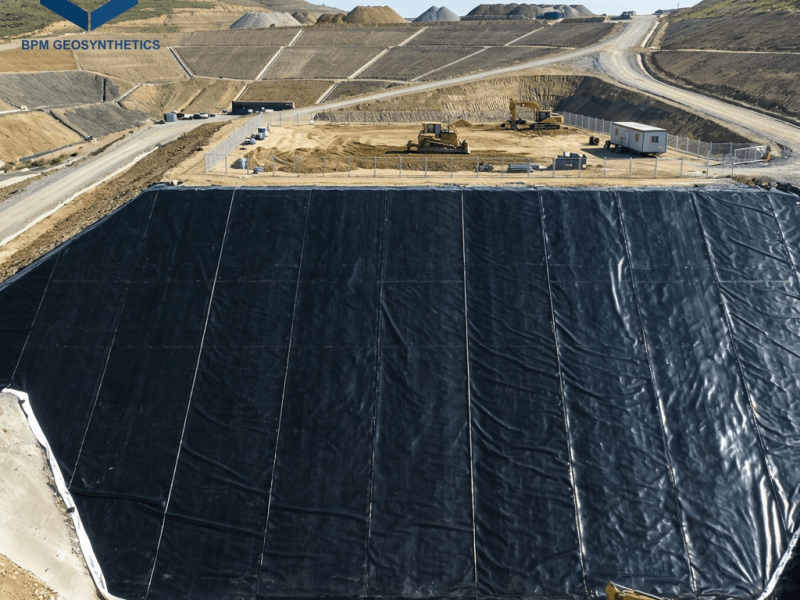
Standard landfill and industrial containment projects with single composite lining cost $20–$40 per square meter. These projects need strict site preparation and professional seam inspection.
High-standard hazardous waste and double-layer lining projects cost $60–$90 per square meter. They require full-process quality monitoring, anti-corrosion treatment, and professional acceptance testing.
3. Overlooked Hidden Costs
Most budget errors come from neglected hidden fees. These small items accumulate and break your overall project budget easily.
Site preparation is a typical hidden cost. Workers need to level the ground, remove sharp stones, and lay protective geotextile before geomembrane laying. Poor pretreatment causes membrane piercing and leakage, which leads to expensive rework.
Seam testing and quality inspection fees also count. Professional air pressure testing and destructive sampling ensure 100% leak-proof performance. Formal inspection avoids huge compensation losses caused by later project leakage.
Auxiliary material costs include welding strips, fixing accessories, and edge sealing materials. Many buyers only calculate membrane costs and ignore these matching materials, resulting in incomplete project budgeting.
4. Practical Cost-Saving Tips
You can effectively control total spending without sacrificing project quality with these actionable tips.
First, match membrane specifications with project demands. Do not over-specify ultra-thick membranes for simple pond projects, and avoid using thin membranes for industrial anti-seepage work. Reasonable material selection balances cost and performance perfectly.
Second, complete site cleaning and leveling in advance. A qualified construction foundation shortens installation time, reduces welding errors, and cuts rework costs greatly.
Third, cooperate with integrated suppliers. Manufacturers that provide both geomembrane production and one-stop installation services offer more favorable overall pricing than separate material purchasing and team hiring.
Fourth, arrange construction in suitable weather. High temperatures, heavy rain, and strong wind delay construction progress and affect welding quality. Proper schedule arrangement avoids efficiency loss and repeated construction.
Fifth, sign standardized construction contracts. Clear construction standards, testing scope, and warranty terms avoid temporary price increases and hidden charges during project execution.
5. Costly Installation Mistakes
Many project owners face unexpected cost hikes not from standard construction fees, but from avoidable installation mistakes. These common errors lead to rework, early membrane damage, and extra maintenance expenses, severely affecting your long-term project budget. We summarize the most frequent mistakes and corresponding solutions to help you cut unnecessary costs.
5.1 Wrong Installation Methods
Some construction teams use unified welding or bonding methods for all geomembrane types, regardless of material properties. For example, adhesive bonding on high-strength HDPE membranes causes weak seam adhesion, while over-welding thin PVC membranes leads to membrane burning and cracking. These wrong operations cause immediate leakage problems and require full or partial re-laying, doubling your labor and material costs.
Always tailor installation techniques to your geomembrane material. Stick to hot wedge welding for HDPE and LLDPE membranes, and use professional adhesive bonding only for lightweight flexible membranes. This simple rule keeps your construction qualified and avoids rework losses.
5.2 Poor Site Protection
Workers often overlook minor sharp objects, uneven ground, or residual gravel on the construction site before laying geomembranes. Even tiny punctures or scratches on the membrane surface will expand under water pressure and soil tension after project completion. Small damages evolve into large-scale leakage, requiring expensive repair and partial replacement.
Complete a full-site inspection and thorough ground treatment before installation. Lay protective geotextile on rough subgrades to form a buffer layer. This low-cost pre-treatment effectively prevents membrane damage and saves huge post-construction repair costs.
5.3 Inadequate Seam Testing
Seams are the weakest parts of any geomembrane lining system. Many teams only conduct random visual checks to save time, skipping professional pressure testing and sampling inspection. Unqualified seams with gaps or weak bonding will cause persistent leakage, which is hard to locate and fix after the project is put into use.
Implement full seam testing for every construction section. Standard quality inspection takes little extra time but ensures 100% lining tightness. It eliminates hidden leakage risks and avoids high-cost later maintenance and environmental compensation losses.
5.4 Improper Scheduling
Rushing construction progress in unsuitable weather is another costly mistake. Installing or welding geomembranes in heavy rain, strong wind, or extremely low temperatures affects seam stability and membrane fitting performance. Unqualified construction results in unstable project quality and forces repeated construction.
Arrange construction schedules according to weather conditions and strictly follow standardized construction cycles. Steady and orderly construction ensures one-time project qualification and maximizes cost savings.
Conclusion
Geomembrane installation costs depend on material specifications, site conditions, construction methods, labor rates, and project complexity. A clear understanding of these factors helps you eliminate budget blindness, avoid hidden risks, and select the most cost-effective construction solution.
Price is important, but stable construction quality and long-term project safety bring greater value. If you need customized installation cost quotes, professional project solutions, or reliable geomembrane product support, feel free to contact our team. We provide one-stop services for global geomembrane projects of all scales.