1. Introduction
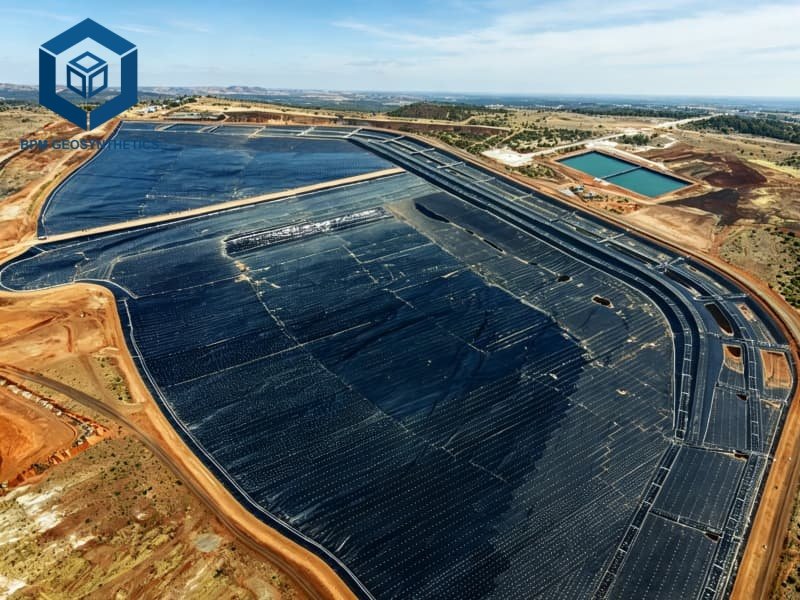
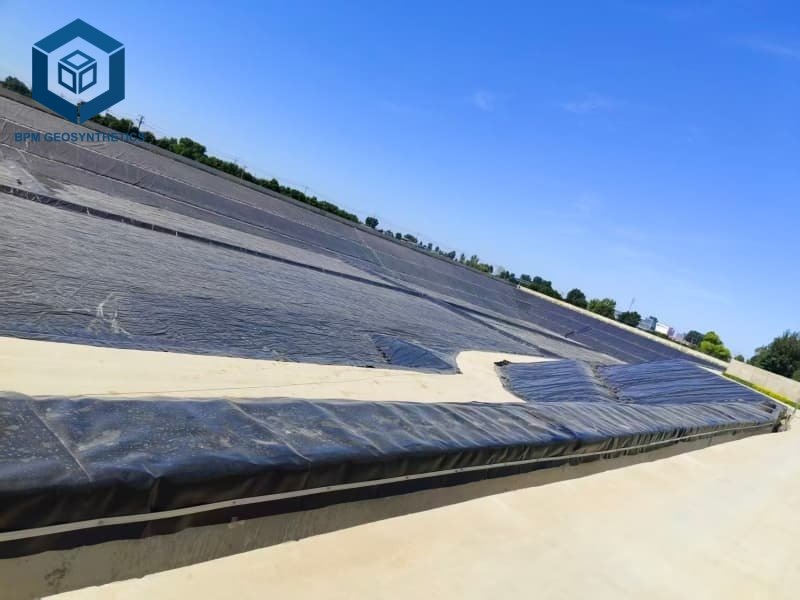
HDPE liner is a highly reliable geomembrane for containment projects, widely used in landfills, mining, aquaculture, wastewater.
Correct HDPE liner specifications decide the success or failure of your containment system. Many buyers struggle to match liner specs to their site conditions and project standards.
This guide breaks down every core specification you need for HDPE liner selection. It covers material standards, thickness, surface texture, mechanical properties and installation notes.
Our team at The Best Project Material Co.,Ltd supplies HDPE liners to global clients.
We follow international testing standards to guarantee consistent product performance. This article will help engineers, procurement managers and contractors make informed choices.
2. What Is HDPE Liner?
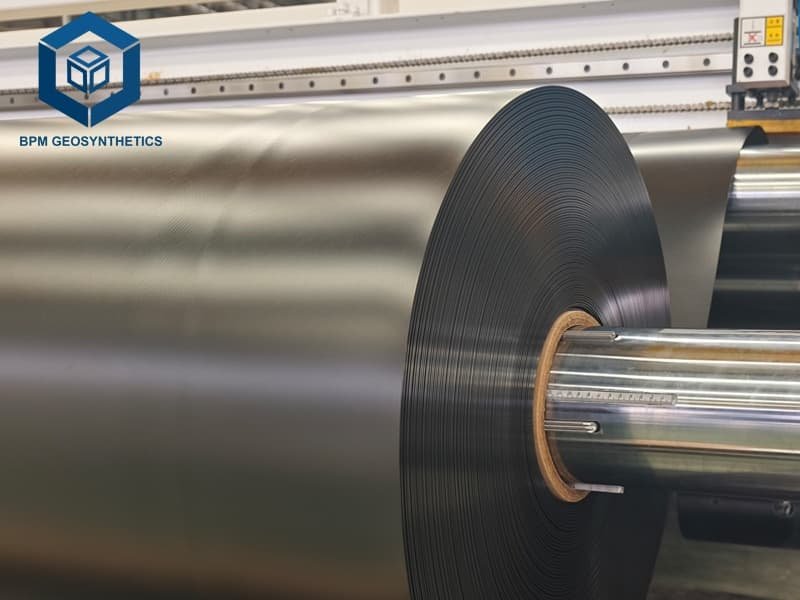
HDPE stands for High-Density Polyethylene, a thermoplastic resin with stable molecular structure. HDPE liner, also called HDPE geomembrane, is a sheet formed by extrusion or calendering.
It is widely used to prevent liquid leakage and isolate contaminated soil or water. Raw material quality directly shapes the final HDPE liner specifications and service life.
Virgin HDPE resin is preferred over recycled material for critical containment projects. Virgin resin delivers better chemical resistance, UV stability and long-term tensile performance.
Additives such as carbon black are mixed into the resin for anti-UV protection. Carbon black content usually ranges from 2% to 3% for standard exposed grade HDPE liner.
High-quality HDPE liner can resist most acids, alkalis, oils and common industrial chemicals. It remains flexible at low temperatures and does not easily crack under normal ground settlement.
3. Core International Standards for HDPE Liner Specifications
Standard documents define the test methods and minimum requirements for HDPE liner. GRI GM13 is the most widely accepted standard for HDPE geomembrane liners globally.
This standard sets mandatory mechanical, physical and endurance test indexes for HDPE liner. ASTM test methods are adopted inside GM13 for laboratory performance verification.
Some regional projects also reference GB/T, EN and ISO geomembrane standards. You must confirm the required standard before confirming HDPE liner specifications with suppliers.
A liner that meets GM13 is suitable for municipal landfill, mining heap leach and tailings ponds. Projects with lower risk, such as simple fish ponds, may use non-GM13 HDPE liner.
But non-standard liners carry higher risk of early aging, tearing and leakage failure. Our factory strictly implements GM13 for all of our premium HDPE liner production batches. Each shipment comes with an official factory test report matching your ordered specs.
4. HDPE Liner Thickness Specifications
Thickness is the first and most frequently checked item among HDPE liner specifications. Thickness is measured in millimeters (mm) for global engineering communication.
Common standard thickness options include 0.75 mm, 1.0 mm, 1.5 mm, 2.0 mm and 3.0 mm. Thinner HDPE liner like 0.75 mm fits aquaculture ponds and decorative water features.
1.0 mm HDPE liner works for simple wastewater lagoons and small irrigation reservoirs.
1.5 mm HDPE liner is the popular choice for municipal landfill cover and mid-size lagoons.
2.0 mm HDPE liner is widely used for landfill bottom liner and mining leachate ponds.
3.0 mm HDPE liner is specified for high-risk tailings ponds and harsh mining environments.
Thickness tolerance is controlled within ±5% under GM13 standard requirements.
Do not only look at nominal thickness; verify average and minimum thickness in test reports. Sharp stones, heavy loads and high ground movement demand thicker HDPE liner.
Thicker liner costs more, yet it cuts long-term repair and leakage risk greatly.
5. Smooth vs Textured HDPE Liner Surface Specifications
Surface type is another key part of HDPE liner specifications for slope stability design. Smooth HDPE liner has a flat, glossy surface on both sides after extrusion production.
It offers excellent chemical resistance and low friction against liquid media. Smooth liner is easy to weld with hot wedge and extrusion welding equipment.
It is the default selection for flat pond bottoms and vertical tank lining work.
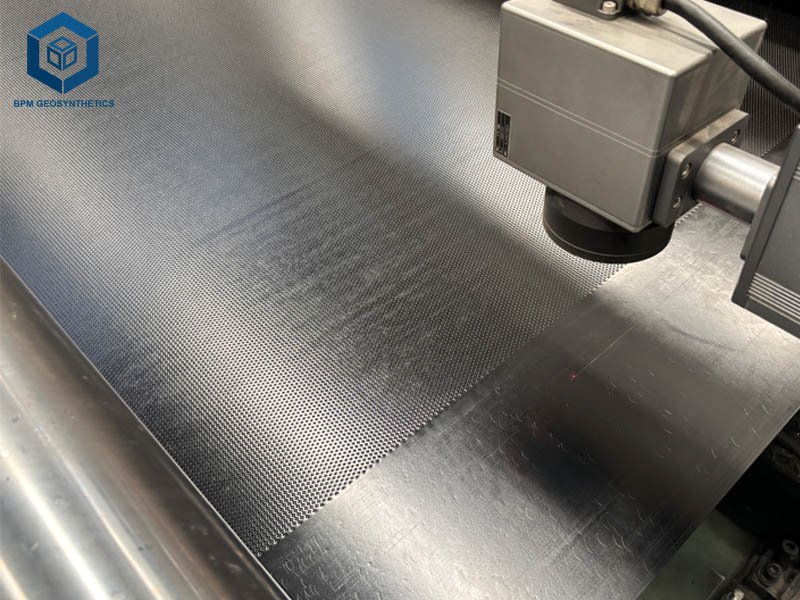
Textured HDPE liner has rough granular texture on one side or both sides. Texture is formed by co-extrusion or embossing during manufacturing.
The rough surface increases friction angle between liner and adjacent geotextile or soil. This feature prevents liner sliding on steep slopes in landfill and mining projects.
Single-sided textured liner is more common than double-sided textured HDPE liner. You need to specify smooth, single-textured or double-textured when placing orders.
Slope angle, overburden load and subgrade material decide your surface requirement. A wrong surface choice can cause liner slippage and total containment system failure.
6. Mechanical Property Specifications (GRI GM13 Indexes)
Mechanical properties form the technical backbone of formal HDPE liner specifications. Tensile yield strength and tensile break strength are two critical tensile indexes.
For 1.5 mm GM13 HDPE liner, yield strength reaches a minimum of 20 N/mm. Break elongation for qualified GM13 HDPE liner is at least 700% in machine direction.
High elongation means the liner can stretch slightly without immediate rupture. Tear resistance shows how much force is needed to expand a small cut on the liner.
Puncture resistance reflects the liner’s ability to resist sharp object penetration. Puncture test simulates stone or debris impact during backfilling and installation.
Hydrostatic resistance test checks if the liner holds water pressure without leakage. Seam strength is equally important as the base sheet mechanical performance.
Weld seams must not fail before the parent sheet under standard tensile testing. Our QC team samples every production roll to run these mechanical lab tests.
We provide full test data sheets for clients to submit to their engineering reviewers.
7. Density & Melt Index Specifications of HDPE Resin
Resin density is a basic physical index inside HDPE liner specifications. Qualified HDPE geomembrane resin density sits between 0.940 g/cm³ and 0.965 g/cm³.
Higher density improves chemical resistance and long-term dimensional stability. Melt flow index (MFI) describes how easily the HDPE resin flows under heat.
Low MFI resin is preferred for geomembrane because it delivers better stress crack resistance. Stress crack resistance (ESCR) measures resistance against slow crack growth.
ESCR failure is a hidden risk that appears years after project completion. GM13 sets strict ESCR requirements for long-term containment service.
Low-quality blended or recycled HDPE often fails ESCR testing quickly. Never ignore resin-related specs only because thickness looks acceptable.
The best HDPE liner starts with stable virgin resin and controlled MFI values.
8. UV Resistance & Aging-Related HDPE Liner Specifications
UV stability is vital for liners exposed directly to sunlight outdoors. Carbon black additive is the main UV shield in standard HDPE liner.
UV-stabilized HDPE liner can stay exposed for many years without rapid degradation. Some projects specify additional anti-aging stabilizers for tropical high-sun regions.
Buried HDPE liner under soil cover has much lower UV aging pressure. If the liner will remain exposed, you must clearly state UV requirement in specs.
Outdoor exposed liner without UV additives will turn brittle and crack fast. Accelerated aging test reports can prove the UV performance of your HDPE liner.
Many buyers forget this specification and face unexpected site damage later. Our team will remind you to confirm exposure condition at the inquiry stage.
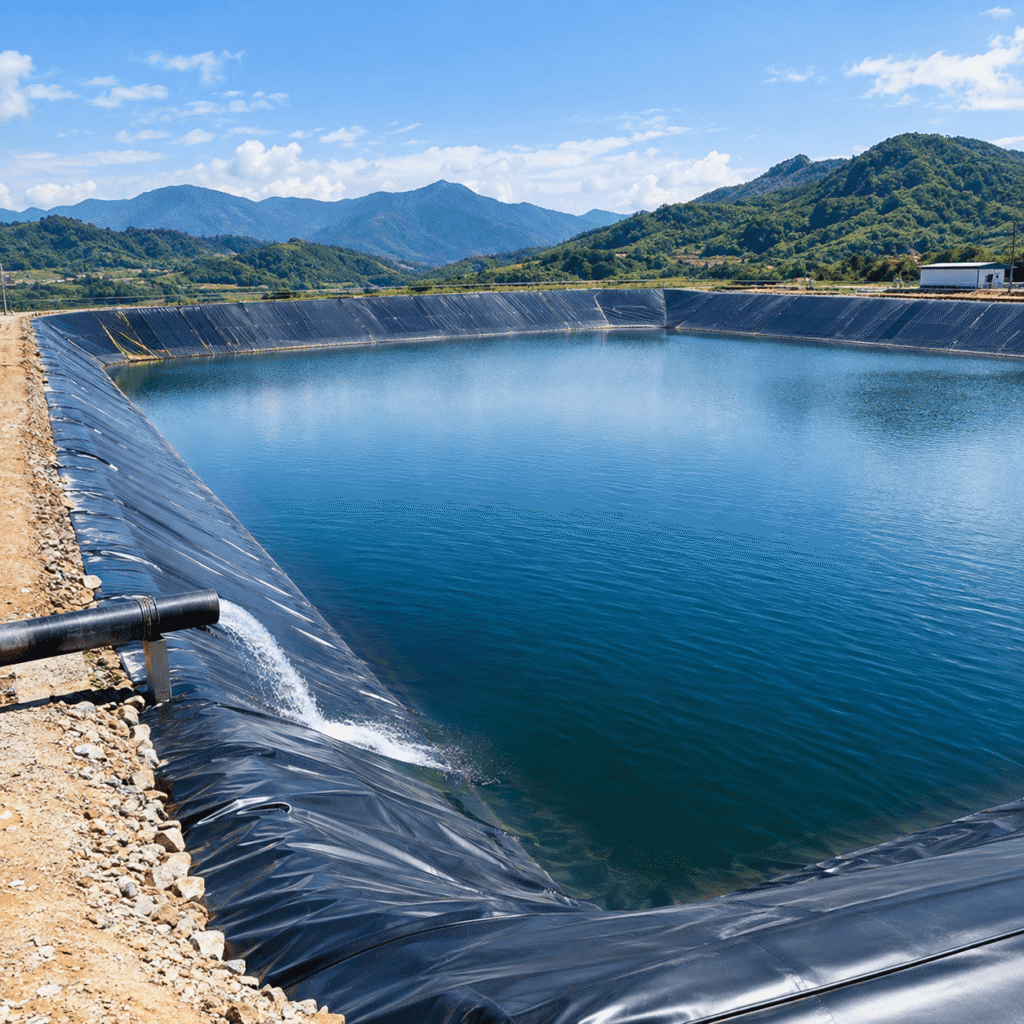
9. Quality Control & Test Report Requirements
When you buy HDPE liner, always ask for a full set of specification test reports. The report should match the exact batch you receive, not a generic old report.
Each report lists thickness, tensile, tear, puncture, ESCR and carbon black content. Third-party laboratory testing is available for independent verification.
Our factory runs in-house testing for every batch before shipment. We mark batch codes clearly so you can trace the whole production record.
Reject any HDPE liner shipment that cannot provide compliant test documentation. Clear HDPE liner specifications and traceable reports protect your project liability.
Many international tender projects require these documents for acceptance. We are familiar with tender document requirements for geomembrane supply
10. Common Mistakes When Confirming HDPE Liner Specifications
The first mistake is only stating thickness without mentioning GM13 standard. A 1.5 mm non-GM13 liner is much cheaper but fails long-term containment duty.
The second mistake is ignoring surface type for steep slope landfill or mining. Smooth liner on steep slopes may slide even if thickness is correct.
The third mistake is forgetting UV requirement for permanently exposed liner.
The fourth mistake is accepting recycled blended HDPE for high-risk projects.
The fifth mistake is miscalculating roll width and creating too many field seams.
The sixth mistake is skipping protective geotextile on rocky subgrade.
These mistakes lead to costly liner replacement and project delay. Our sales team reviews your specs carefully before formal order confirmation.
We flag potential mismatches and suggest safer adjustments for your project.
11. Why Choose The Best Project Material Co.,Ltd For HDPE Liner
We specialize in geosynthetic materials including HDPE liner, geotextile and GCL. Our production line strictly follows GRI GM13 HDPE liner specifications.
We serve clients across Southeast Asia, Africa, Europe, South America and Central Asia. We maintain stable stock for regular specs and arrange fast production for bulk orders.
Our documents include commercial invoice, packing list and batch test certificate. We work closely with freight forwarders to arrange safe container loading.
Our sales and technical team can communicate technical details fluently in English. We focus on transparent specs, stable quality and honest pricing for long cooperation.
We do not cut raw material standard to compete on low price only. For your next containment project, contact us for HDPE liner quotation today.
12. Conclusion
HDPE liner specifications are the foundation of a reliable liquid containment system. Standard, thickness, surface texture, mechanical indexes and roll size all matter.
Matching specs to project risk level keeps your site safe and controls budget well. GM13 remains the gold standard for high-performance HDPE liner globally.
Always verify test reports and avoid common specification misunderstandings. At The Best Project Material Co.,Ltd, we understand global geomembrane project needs.
We provide HDPE liner that fully meets your defined HDPE liner specifications. Reach out to our team to discuss your project and receive a detailed offer.